
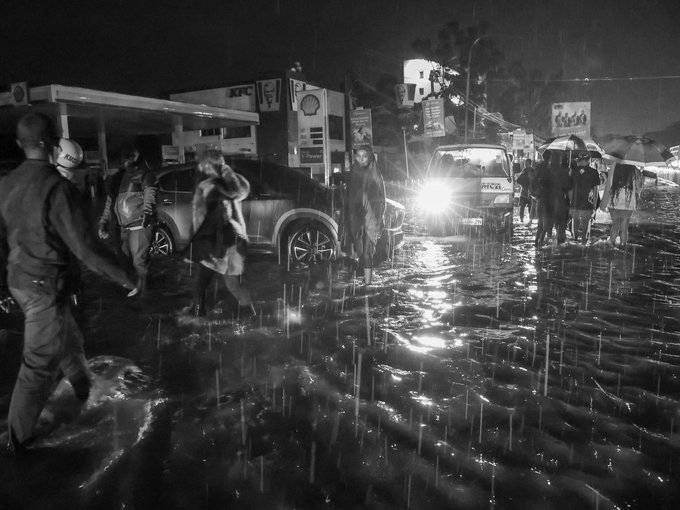
10 dead, flights disrupted and military deployed after heavy rains pound Kenya's capital overnight
At least 10 people have died and severe flooding has paralyzed Kenya’s capital after heavy overnight rains overwhelmed drainage systems, submerged streets and disrupted transport. Authorities warn the toll could rise as search and rescue operations continue.
Nairobi Regional Police Commander George Seda said eight fatalities were swept away by floodwaters, including some trapped in vehicles, and two died from electrocution . Over 100 vehicles were damaged , many stranded or overturned on key roads, prompting emergency teams to work through heavy congestion.
The Kenya Red Cross and Kenya Defence Forces (KDF) have been deployed to assist rescue and evacuation operations, especially in heavily affected estates such as Embakasi, Pipeline, Mukuru Kwa Njenga, Kibra, Mathare, Huruma, Lang’ata and Westlands. Floodwaters cut off multiple neighbourhoods, forcing residents to wade through knee‑high water.
Public Service Cabinet Secretary Geoffrey Ruku coordinated multi‑agency emergency meetings and established response centres nationwide, urging citizens to stay safe near swollen rivers and waterlogged roads. Nairobi County Governor Johnson Sakaja activated disaster management teams, provided emergency hotlines and warned residents to avoid flood-prone areas.
Transport disruptions extended to air travel, with Kenya Airways reporting flight delays and diversions to Mombasa due to flooding near the capital’s airport. Toll fees on the Nairobi Expressway were waived to ease gridlock.
Major roads including Uhuru Highway, Mombasa Road, Mbagathi Way, Thika Superhighway, Jogoo Road and Lang’ata Road remained impassable. The Kenya Meteorological Department forecasts heavy rainfall through March 9, raising the risk of further flooding and flash floods.
Residents blamed chronic drainage problems for the severity of the flooding, with social media posts showing submerged vehicles and homes. Emergency teams continue to assess damage and evacuate stranded residents, warning that the situation remains fluid and casualties may rise.