
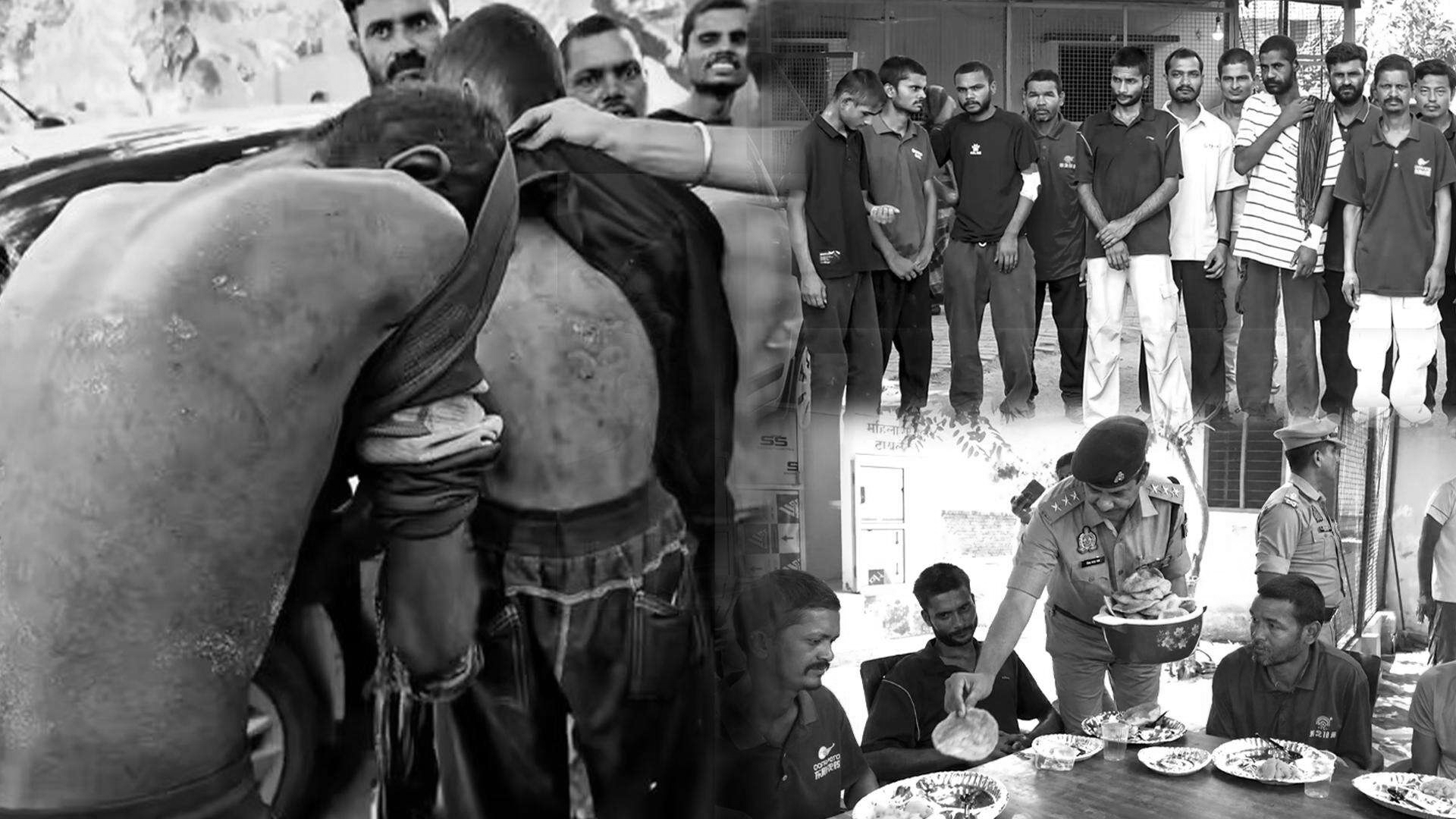
12 Workers Rescued as NHRC Cracks Down on Alleged Bonded Labour Horror in UP
The National Human Rights Commission (NHRC) has stepped in after disturbing allegations of bonded labour, illegal confinement and prolonged physical abuse emerged from a paper plate manufacturing unit in Muzaffarnagar district of Uttar Pradesh , prompting fresh scrutiny of labour exploitation practices that persist despite decades of legal safeguards.
Taking suo motu cognisance of media reports, the NHRC has issued notices to the Uttar Pradesh Chief Secretary and the Director General of Police , seeking a detailed report within two weeks. The Commission observed that the allegations, if found true, point to a grave violation of human rights and labour laws.
According to reports, 12 labourers were allegedly held captive at a factory in Mandi village and forced to work till midnight without adequate food or wages for nearly one-and-a-half years . The case came to light after one worker reportedly escaped and lodged a complaint with the Titawi Police Station , leading to the rescue of the remaining labourers.
Medical examinations reportedly revealed bruises, cuts, fractures and signs of prolonged physical abuse . Investigators have also found evidence suggesting that one worker may have died , while inquiries are underway to determine whether additional deaths occurred at the facility.
The rescued workers are said to be from Uttar Pradesh, Bihar, Uttarakhand, Rajasthan, Haryana, Chhattisgarh and Jharkhand , while a few are citizens of Nepal . Authorities believe they were lured from railway stations, bus stands and other public places with promises of employment, regular wages, food and accommodation. Once at the factory, their mobile phones and identity documents were allegedly confiscated, preventing contact with their families. Reports further claim that pit bull dogs were used to intimidate workers and deter escape attempts .
The NHRC has directed the Muzaffarnagar District Magistrate to conduct an inquiry in accordance with the Bonded Labour System (Abolition) Act, 1976 and the Ministry of Labour and Employment's standard operating procedures. It has also ordered immediate registration of the rescued workers on the e-Shram portal and implementation of rehabilitation measures outlined in the Commission's Advisory 2.0 issued in December 2021.
The case is particularly significant as India marks nearly 50 years of the Bonded Labour System (Abolition) Act , which outlawed bonded labour and extinguished bonded debts. Despite legal protections under the Act and Article 23 of the Constitution , cases of forced labour continue to surface in sectors such as brick kilns, construction, agriculture and small manufacturing units.
The Muzaffarnagar incident also comes amid broader NHRC scrutiny of labour exploitation in Uttar Pradesh. Earlier this year, the Commission reviewed 216 alleged bonded labour cases linked to brick kilns across the state, highlighting concerns over delayed identification, rescue and rehabilitation of victims.
As investigations continue, attention is likely to focus on possible trafficking networks, accountability of factory operators and the effectiveness of labour monitoring mechanisms. The outcome could become a key test of India's commitment to eliminating modern forms of slavery and protecting vulnerable migrant workers from exploitation.