
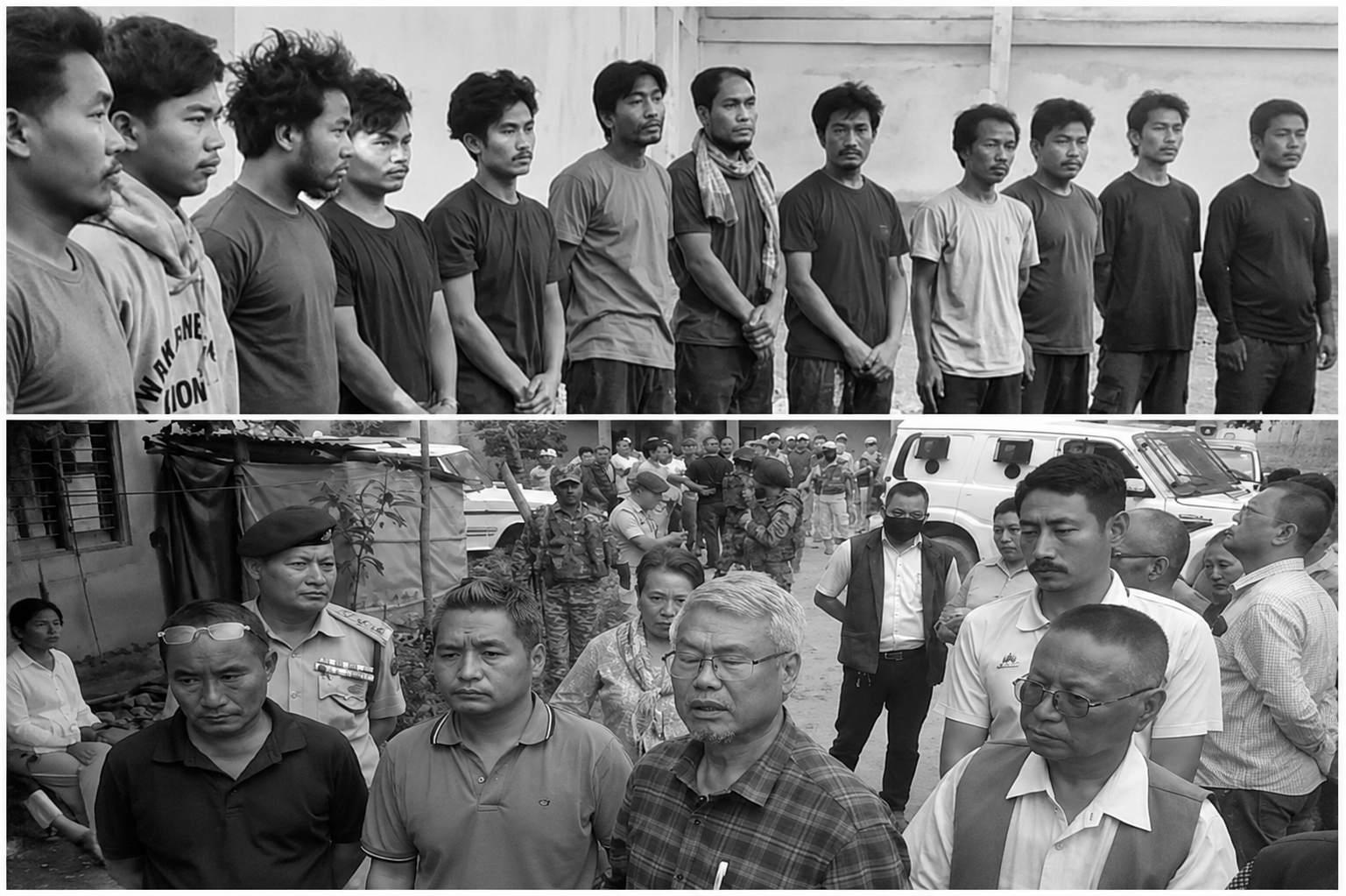
14 Kuki Hostages Freed After Month-Long Captivity in Manipur
In a significant breakthrough for peace efforts in Manipur, 14 Kuki individuals abducted nearly a month ago were released safely on Tuesday, bringing relief to their families and communities. The development marks a rare positive moment in a state that continues to grapple with ethnic tensions, displacement, and security challenges nearly three years after violence first erupted.
The hostages were allegedly abducted on May 13 in Senapati district following the killing of three Kuki church leaders in an ambush in neighboring Kangpokpi district . The attack heightened tensions between Kuki and Naga groups, raising fears of a fresh cycle of retaliatory violence in the hill districts.
Officials said all 14 hostages were handed over safely at the Senapati district headquarters in the presence of police and security personnel. Their release was facilitated by the United Naga Council (UNC) , the apex body of the Naga community in Manipur, along with local civil society organizations. According to UNC leaders, appeals from the Central and state governments, church bodies, and tribal organizations helped pave the way for the hostages' release.
While the safe return of the captives has been widely welcomed, the broader situation remains far from resolved. Reports indicate that six Naga civilians are still missing , and their fate continues to be a source of concern. The Manipur High Court has sought updates from the government regarding efforts to trace them.
The latest episode underscores the deep divisions that continue to affect Manipur. The conflict has largely involved the Meitei community , which constitutes roughly half of the state's population and is concentrated in the Imphal Valley, and the Kuki-Zo tribes , who primarily inhabit the hill districts. Despite a decline in large-scale violence, mistrust between communities remains high.
The humanitarian toll is equally alarming. Tens of thousands of people continue to live in relief camps , unable to return home because of security concerns and damaged properties. Although rehabilitation efforts are underway, many families remain displaced.
The unrest has also weighed on economic development. While projects such as the Manipur IT Special Economic Zone are progressing, the state has yet to attract major private-sector industrial investments. Analysts say restoring lasting peace will be critical for rebuilding investor confidence and ensuring long-term growth.
For now, the release of the 14 hostages offers a welcome sign of progress. Yet, with missing persons still unaccounted for and thousands displaced, Manipur's path to reconciliation remains a work in progress.