
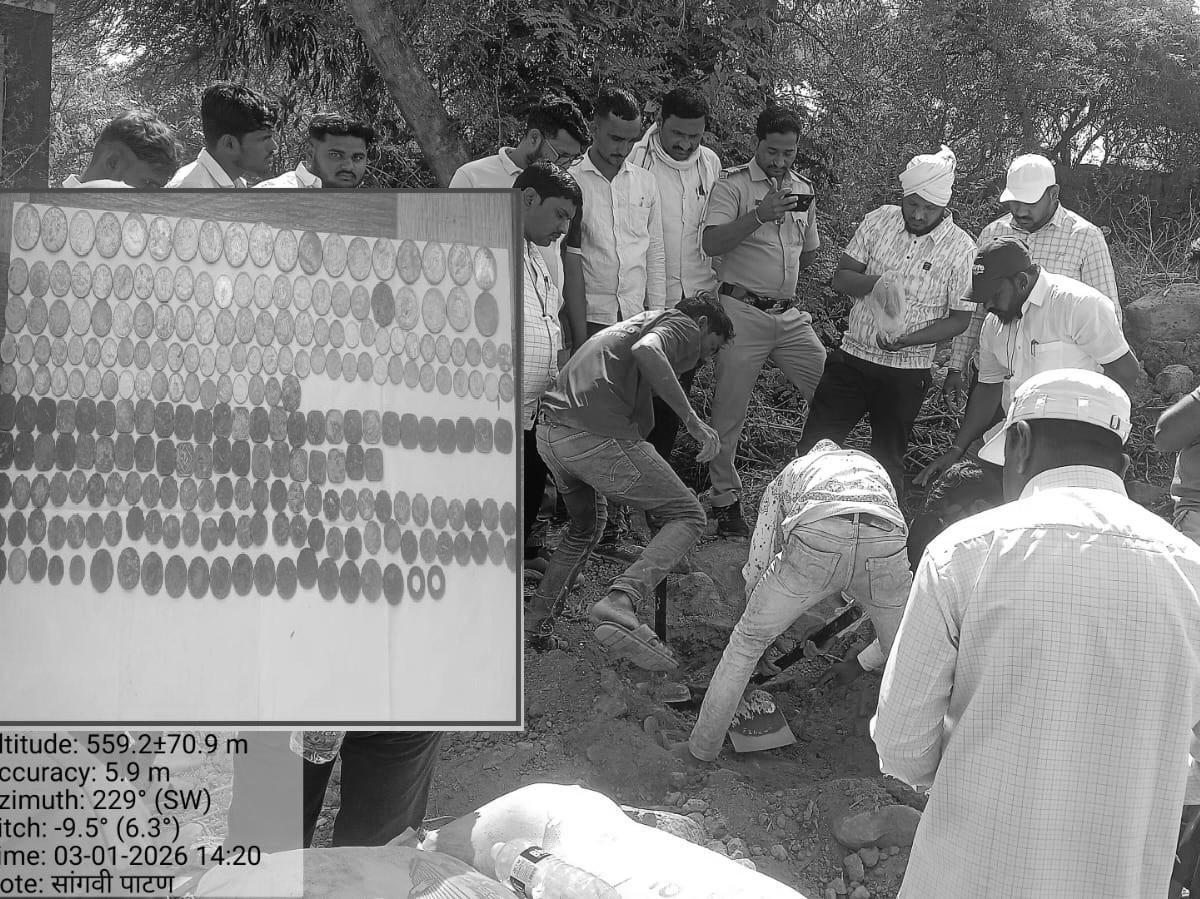
250 British-era coins from 1941 unearthed at construction site in Beed
A cache of British-era silver coins was unearthed at a house construction site in Maharashtra’s Beed district, once again highlighting how accidental discoveries of buried currency continue to surface across India. The incident occurred on Saturday in Sangvi (Patan) village in Ashti tehsil, where a group of children playing on a mound of excavated soil stumbled upon an earthen pot hidden beneath the ground.
Unaware of its value, the children mistook the Re 1 coins for play tokens, broke open the pot and began pocketing them. The landowner noticed the unusual find and immediately informed local authorities. Officials later reached the site and secured the coins.
Ashti tehsildar Vaishali Patil confirmed that authorities have seized 250 silver coins dating back to 1941 . She said the coins are made of pure silver and collectively weigh between four and five kilograms. The recovered coins are now being examined to determine their historical and monetary significance .
These Indian finds are part of a global pattern of accidental coin discoveries that have enriched understanding of the past. In Europe, archaeologists and hobbyists have uncovered large hoards from ancient times, including Roman and British coins, offering insights into trade, conquest and monetary systems centuries or millennia old. Notable examples include the Worcestershire Conquest Hoard , a Romano-British jar of more than 1,300 gold and silver coins from the reign of Nero that was found during construction work in England, and the Beau Street Hoard , one of Britain’s largest coin caches with over 17,000 Roman silver coins discovered near the Roman Baths in Bath.
Officials added that further scrutiny by numismatics experts will help establish the rarity and heritage value of the Beed coins. The incident serves as a reminder that remnants of India’s colonial and pre-colonial past often remain hidden beneath construction sites, waiting to be rediscovered unexpectedly.