
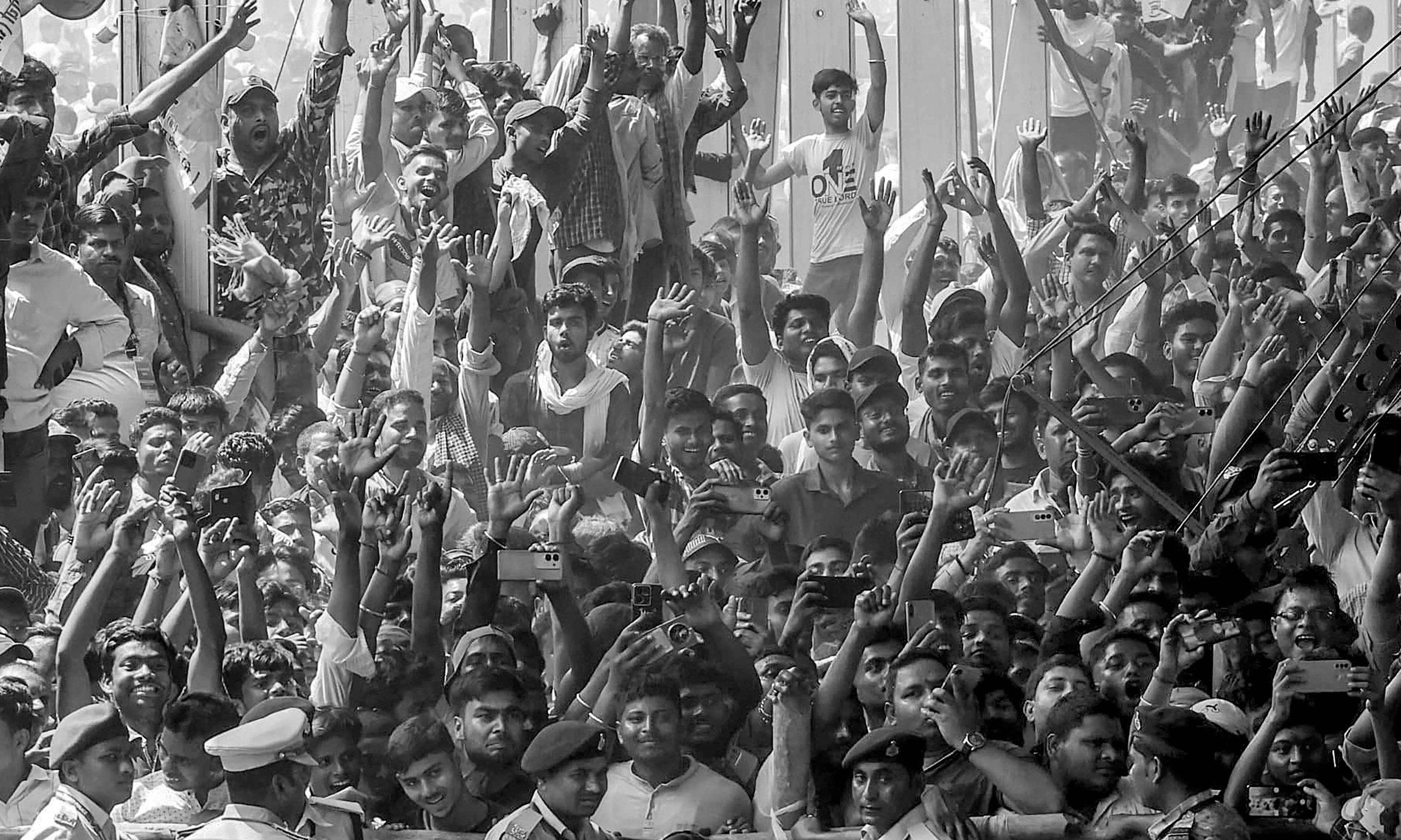
26% of India’s Population Aged 10–24, UNFPA Report Finds
India is home to one of the world's largest youth populations, with more than one in four people aged between 10 and 24, presenting the country with a significant opportunity to accelerate economic growth, strengthen its workforce and emerge as a global manufacturing and technology hub. However, inadequate employment opportunities, skill gaps and gender disparities remain major challenges to converting this demographic advantage into a sustainable economic dividend, according to the United Nations Population Fund (UNFPA) and recent economic assessments.
The State of the World Population Report 2026, titled Succeeding Generations: Empowering Young People to Chart the Future, estimates India's population at 147.66 crore, ahead of China's 141.29 crore. People aged 10–24 constitute 26% of the population, while 24% are aged 0–14, 17% are aged 10–19, 69% are in the 15–64 age group and 8% are above 65. India's fertility rate is estimated at 1.9 births per woman, while the NFHS-6-based estimate is 2.0, close to the replacement level of 2.1. State-wise fertility ranges from 1.0 in Sikkim to 2.7 in Bihar.
The report's Demographic Futures Survey 2026 found that 83% of Indian respondents were optimistic about the future, although 47% expressed concerns about economic insecurity, conflict and inequality. Nearly 85% of childless respondents aged 35–39 wanted to become parents, highlighting the influence of financial and employment security on family decisions.
Employment remains a major concern. The PLFS 2025 recorded youth unemployment at 9.9%, with urban unemployment at 13.6% and rural unemployment at 8.3%. Around 25% of people aged 15–29 were outside employment, education or training, while only 5% had received formal vocational or technical training.
The RBI projects India's working-age population share to reach 65.1% in 2031 before declining to 64.9% by 2036. Population is expected to reach 150 crore by 2036 and peak at around 170 crore in the early 2060s. Telangana's working-age share is projected at 67.8% in 2026, while Andhra Pradesh's stands at 66.9%.
Women's workforce participation remains another challenge, with female labour force participation at 40%, against 79.1% for men. Meanwhile, the IMF estimates that 26% of Indian workers are in occupations highly exposed to artificial intelligence, creating opportunities as well as displacement risks.
UNFPA also reported maternal mortality of 87 deaths per one lakh live births, skilled birth attendance of 91.3%, and unmet family-planning needs of 8.5%. Modern contraceptive use declined to 52.7%, while traditional method use increased to 16.4%. Intimate partner violence affected 22.3% of women, and 64% owned personal mobile phones.
UNFPA Representative Andrea M. Wojnar said young people were central to India's future and their perspectives must shape development policies. The report underscores that employment generation, education, healthcare, vocational training and women's economic participation will determine whether India can translate its demographic advantage into sustained economic growth.