
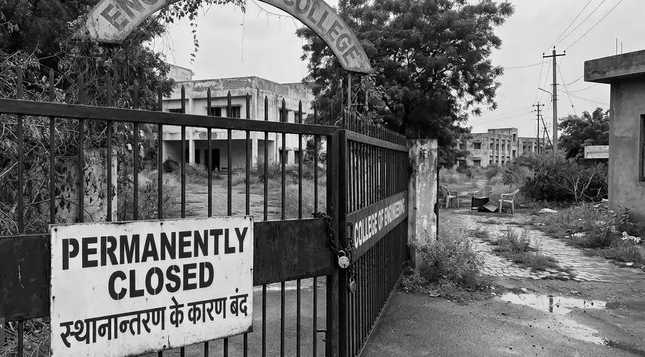
58 Engineering Colleges Shut in 2025-26 as AICTE Rationalises Technical Education
The closure of 58 engineering and technical institutions across India during the 2025-26 academic year reflects the changing higher education landscape, marked by falling enrolments, employability concerns, and the rationalisation of technical education institutions.
According to the All India Council for Technical Education (AICTE), the institutes have been granted progressive closure , meaning they will stop admitting first-year students , while existing students will be allowed to complete their degrees.
A senior AICTE official said the move is part of the regulator's effort to maintain quality standards. Institutions face closure due to low student intake, inability to maintain required faculty, and non-compliance with infrastructure and operational norms.
The closures also highlight the challenges facing engineering education, as many colleges struggle to attract students amid changing career preferences, growing interest in emerging fields, and increasing focus on industry-ready skills and employability . The AICTE's actions are aimed at aligning technical education capacity with actual demand and improving the overall quality of institutions.
Among the 58 colleges , Uttar Pradesh and Maharashtra recorded the highest number of closures with 12 each, followed by Madhya Pradesh (8), Telangana (4), Punjab (4), Andhra Pradesh (3), Rajasthan (3), Gujarat (2), Karnataka (2), Tamil Nadu (2), and one each in Haryana, Odisha, Uttarakhand, and West Bengal. Three institutions were government-aided , while the remaining 55 were privately financed .
The rationalisation extended beyond campuses, with over 950 engineering and technical courses also discontinued during the year. Under progressive closure , institutions are phased out gradually, ensuring currently enrolled students can complete their studies.
The latest closures underscore a broader shift in India's higher education ecosystem , where quality, relevance, and employability are increasingly taking precedence over simply expanding the number of engineering colleges.