
₹611 Crore Road Package to Bolster Arunachal's Border Infrastructure
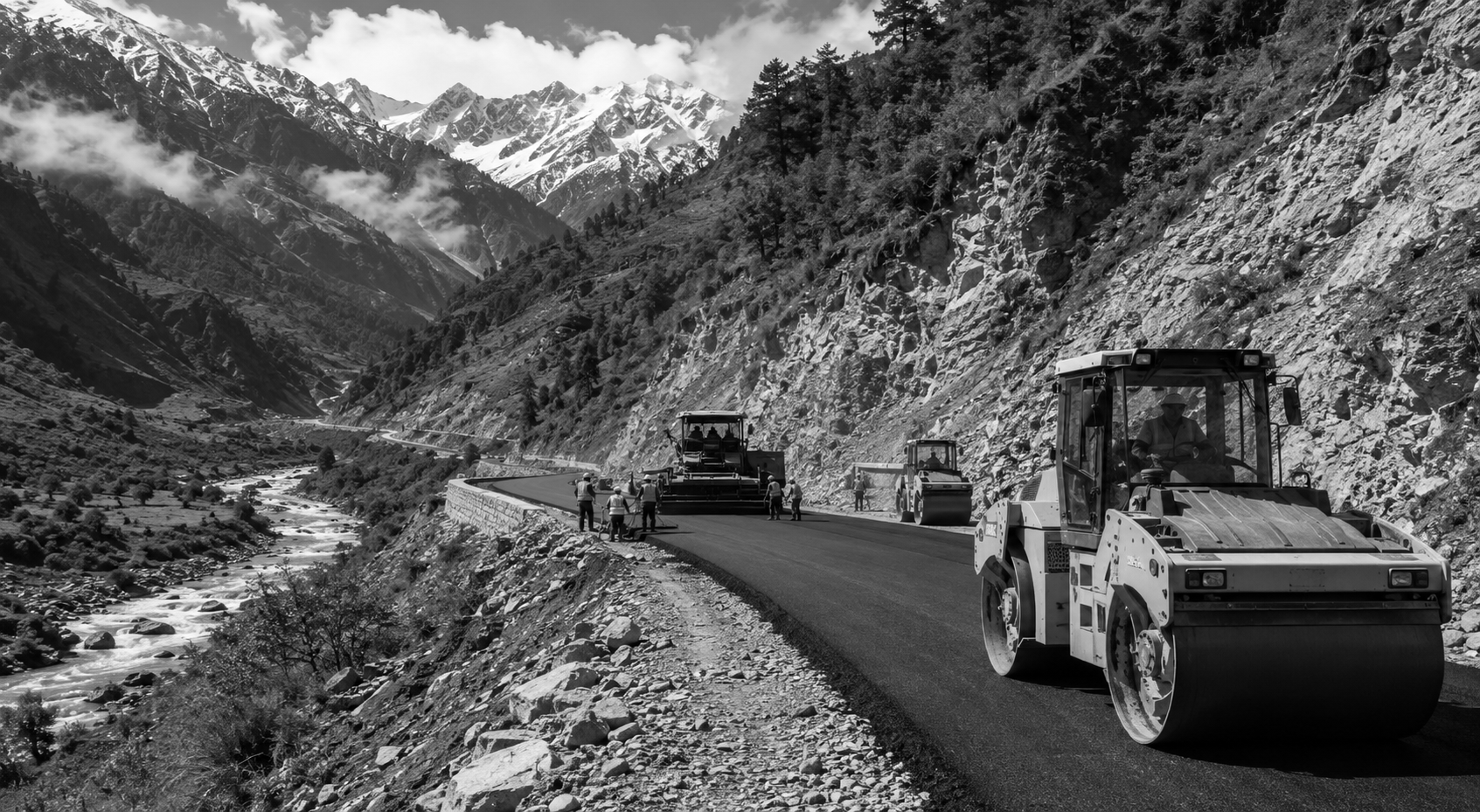
The Central Government has approved 17 road infrastructure projects worth ₹611.17 crore for Arunachal Pradesh , reinforcing its push to improve connectivity in remote border areas while strengthening the state's strategic and economic importance. Cleared under the Central Road and Infrastructure Fund (CRIF) 2026-27 , the projects are expected to enhance road access across 12 districts, facilitate faster movement of people and goods, and complement India's broader border infrastructure programme along the frontier with China.
Announcing the approval on X, Chief Minister Pema Khandu described it as another milestone in Arunachal Pradesh's development journey and thanked Prime Minister Narendra Modi and Union Road Transport and Highways Minister Nitin Gadkari for their continued support. The approval follows a proposal submitted by the state's Public Works Department (PWD) . While the state had sought sanction for projects worth ₹592.50 crore , the Centre approved works valued at ₹611.17 crore , underscoring its focus on accelerating infrastructure development in the strategically important northeastern state.
The sanctioned projects include the construction and improvement of district roads and village connectivity routes across East Kameng, Pakke Kessang, Papum Pare, Lower Siang, East Siang, Changlang, Longding, Tirap, Lower Dibang Valley, Kamle, West Kameng and Upper Siang . Major works include the Ningcho-Langpia Road , Latsum Pate-Namorah Road , Hara Happa-Upper Nyorch Road , Gengi-Subansiri Ferry Ghat Road , Mirem-Resing Road , the MV Road near Assam Rifles Camp to Miao Singpho village , Longding-Nokjan Road , Thembang-Lachang Road , Hamba Pinda-Kamsa Road , and the improvement of the NH-513-Gobuk-Harkam via Herak Army Camp Road , among several others.
The approval comes amid India's sustained efforts to strengthen border infrastructure following the 2020 India-China military standoff in eastern Ladakh. Since then, the Centre has accelerated investments in roads, tunnels, bridges and airfields across Himalayan and northeastern states to improve both civilian connectivity and military logistics.
Arunachal Pradesh occupies a strategically significant position, sharing a 1,126-km border with China , besides international boundaries with Myanmar and Bhutan . As China continues to claim the state as part of what it calls "South Tibet," infrastructure development has assumed greater strategic importance. Improved road connectivity enables quicker movement of security forces, equipment and emergency supplies while supporting the development of border villages.
Although funded as civilian infrastructure, many of the CRIF projects have dual-use value , enhancing logistics for the Indian Army , Border Roads Organisation (BRO) and Indo-Tibetan Border Police (ITBP) , while also improving disaster response in landslide- and flood-prone regions.
The projects complement major ongoing initiatives such as the 1,600-km Trans-Arunachal Highway (NH-13) , the proposed Arunachal Frontier Highway (NH-913) running close to the Line of Actual Control (LAC) , and the Sela Tunnel , which provides all-weather access to Tawang. Together, these projects form part of the Centre's long-term strategy to integrate Arunachal Pradesh with the national transport network while reinforcing frontier infrastructure.
Beyond their strategic significance, the new roads are expected to reduce travel time, improve access to healthcare, education and government services, strengthen market access for farmers and horticulture producers, boost tourism, and improve last-mile connectivity under the Vibrant Villages Programme . Officials said the projects will generate new economic opportunities while enhancing connectivity and resilience across one of India's most challenging and strategically vital regions.