
75% Seed Subsidy, ₹802 Crore El Niño Relief Plan to Shield Telangana Farmers
With El Niño disrupting the southwest monsoon and pushing Telangana into a severe rainfall deficit, the state government has unveiled an ₹802.92 crore contingency plan aimed at protecting farmers, conserving water and sustaining agricultural activity during the ongoing Kharif season. As part of the strategy, Chief Minister A. Revanth Reddy announced that the government will supply quality seeds for alternative crops at a 75% subsidy, while urging farmers to diversify beyond water-intensive crops.
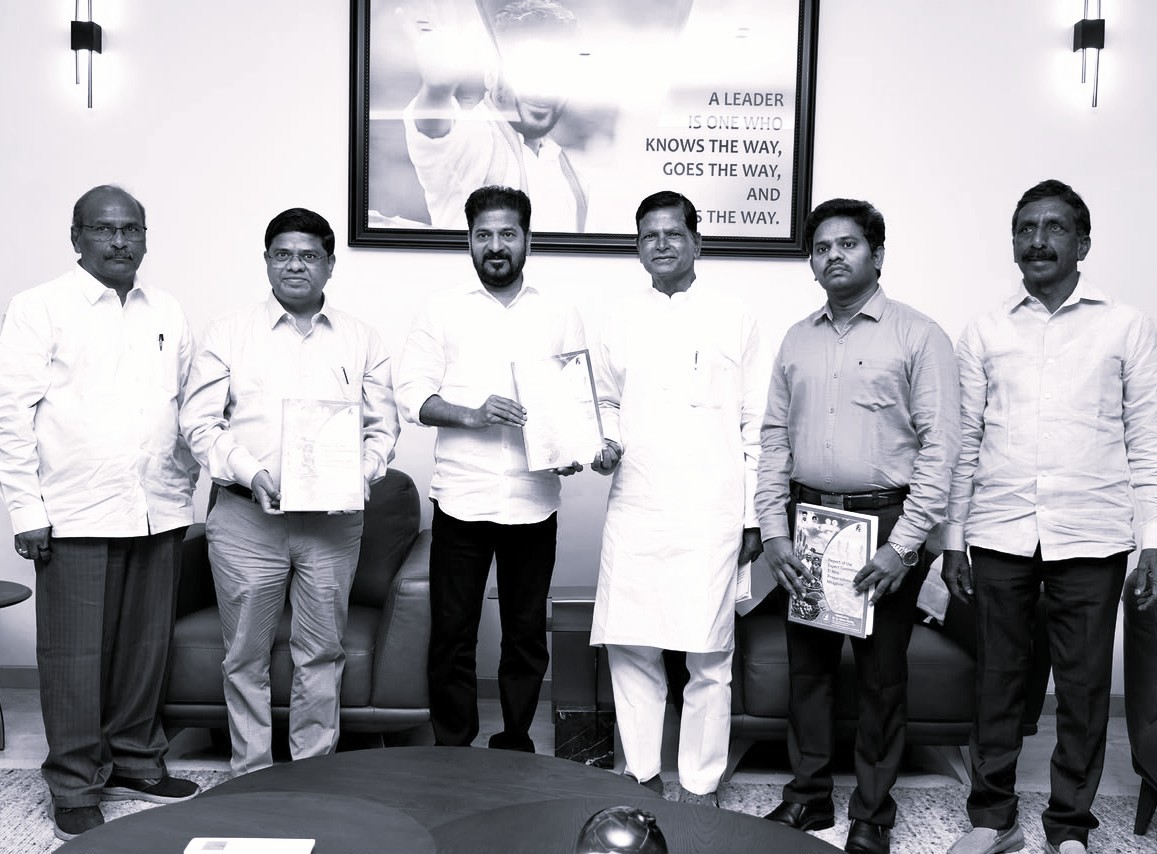
The announcement followed a review of a comprehensive report prepared by an expert committee headed by State Planning Commission Vice-Chairman G. Chinna Reddy, which assessed the impact of deficient rainfall and proposed immediate interventions to minimise crop losses and secure rural livelihoods.
The report revealed that Telangana has received only 234.8 mm of rainfall against the normal 333.9 mm as of July 27, resulting in a 30% rainfall deficit. As many as 26 of the state's 33 districts are experiencing drought-like conditions, reducing the Kharif cultivated area to 74.56 lakh acres, down from 79.49 lakh acres during the corresponding period last year. While cotton and soybean acreage remains close to normal, paddy cultivation has dropped sharply because of inadequate rainfall and declining water availability.
To reduce the impact of the dry spell, the committee recommended promoting pulses, oilseeds, millets, vegetables and fodder crops across 32 lakh acres. Around ₹330 crore has been proposed for subsidised seed distribution, while ₹452.8 crore has been earmarked to provide 75-90% subsidy for drip and sprinkler irrigation systems, improving water-use efficiency and protecting standing crops.
The committee also suggested rescheduling crop loans in drought-hit regions, extending fresh credit to farmers, shifting to alternative crops and increasing government support for crop insurance premiums. It further recommended establishing fodder banks, supplying subsidised fodder seeds, organising cattle camps and expanding MGNREGS works, including farm ponds, check dams, tank desilting and groundwater recharge, to provide employment while strengthening water conservation.
During the review, Revanth Reddy stressed that farmers should adopt market-driven crops, particularly vegetables, which offer quicker returns and lower water consumption. He directed officials to link vegetable growers with the centralized kitchens supplying breakfast and midday meals in government schools, creating a stable market for farmers while ensuring fresh produce for students.
The Chief Minister also called for greater promotion of organic farming, stronger direct procurement from farmers and enhanced field-level support through agricultural extension officers. He assured that the departments of Agriculture, Horticulture, Animal Husbandry, Cooperation and Marketing would work in coordination to ensure farmers receive timely seeds, technical guidance, financial assistance and market access, reaffirming the government's commitment to helping the farming community overcome the challenges posed by El Niño.