
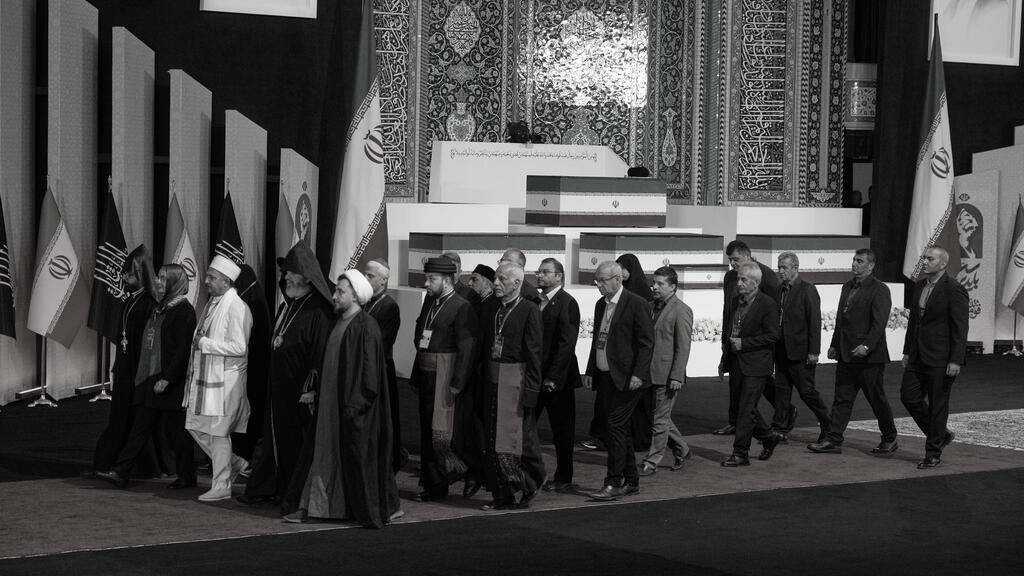
A Final Journey Across Iran: Ayatollah Ali Khamenei's Funeral Begins
Iran's dayslong funeral for slain Supreme Leader Ayatollah Ali Khamenei began Friday in Tehran , opening a week of mourning that will carry his body across Iran and into Iraq before burial in his hometown of Mashhad . Khamenei , 86, was killed on February 28 in a joint US-Israeli strike that opened their war with Iran, and his funeral was delayed for months as fighting raged.
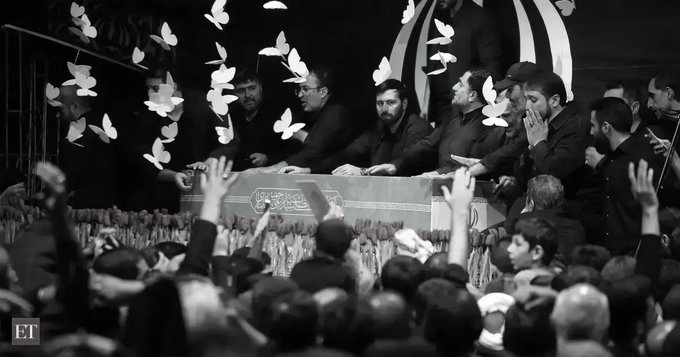
Ahead of the public ceremonies, a smaller service was held Thursday night near the late leader's former Tehran residence. State media video showed his coffin resting within a hall decorated with rows of red tulips and paper butterflies hung from the ceiling, as black-clad mourners, identified as families of those killed in the 2025 twelve-day war and the recent conflict, threw scarves and other items for attendants to brush against the coffin, a common practice in Iran. Photos published by state media also showed Gen. Ahmad Vahidi , head of Iran's Revolutionary Guard, attending a funeral planning meeting and sitting beside the casket, his first public appearance since February 8, weeks before the war began. Vahidi is believed to be part of a small group in direct contact with Iran's new Supreme Leader Ayatollah Mojtaba Khamenei and has emerged as a key voice shaping Iran's negotiating stance.
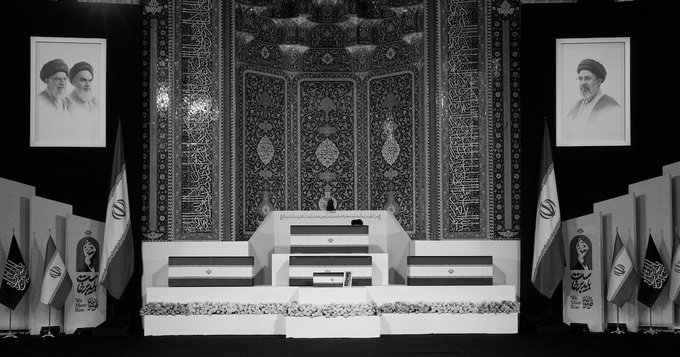
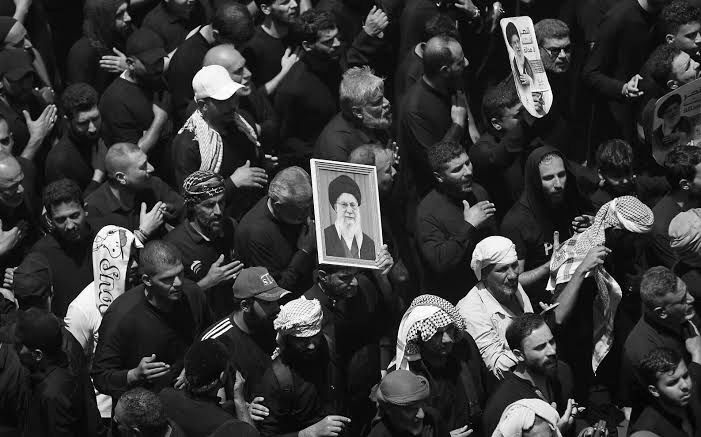
His coffin arrived at Tehran's Grand Mosalla prayer complex on Friday, draped with the red flag from the Imam Reza Shrine in Mashhad, one of Shia Islam's holiest sites and a symbol of the martyrdom of Imam Hussein . Public viewing will continue through July 6, followed by a mass procession through Tehran before ceremonies move to Qom , Najaf and Karbala , ending with burial at the Imam Reza Shrine in Mashhad on July 9. Officials estimate 15 to 20 million people could participate, describing the funeral as a symbolic response to the US-Israeli campaign . Parliament Speaker Mohammad Bagher Ghalibaf urged mourners to "rise up" and "demand revenge," while President Masoud Pezeshkian appealed for a massive public turnout to demonstrate national unity.
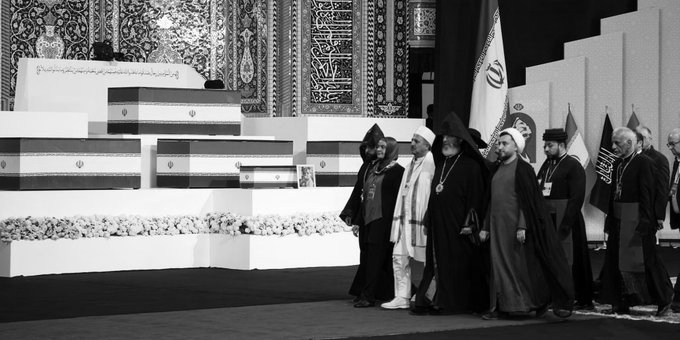
Representatives from more than 100 countries are expected, including Pakistan Prime Minister Shehbaz Sharif , senior Chinese lawmaker He Wei , Russian Security Council Deputy Chairman Dmitry Medvedev , and Taliban Foreign Minister Amir Khan Muttaqi , along with delegations from India and Bangladesh . No European nations that backed the US-Israel war were invited.
India's delegation includes Minister of State for External Affairs Pabitra Margherita and Bihar Governor Syed Ata Hasnain , who are attending officially on behalf of the Indian government. Former External Affairs Minister Salman Khurshid is participating separately as the Congress party's representative following invitations extended by Iran to Mallikarjun Kharge and Pawan Khera .
Whether Mojtaba Khamenei will appear publicly remains uncertain. Wounded in the strikes that killed his father, he has not been seen since the war began and is expected to skip the funeral due to security concerns after Israel's Defence Minister reportedly said he was "marked for death." Iran's Revolutionary Guard has warned that any attack during the funeral would invite a "decisive and more crushing response," while authorities have closed Tehran's airspace . The large gathering has also revived memories of deadly stampedes during the funerals of Ayatollah Khomeini in 1989 and Gen. Qassem Soleimani in 2020.
The commemorations are unfolding amid an uneasy pause between Washington and Tehran . Although a US naval blockade was lifted on June 18 under a bilateral memorandum, negotiations in Qatar over Iran's nuclear programme and the Strait of Hormuz continue even as Tehran uses the funeral to project resilience, unity and defiance.