
ABDM Crosses 93.95 Crore Health Accounts, Boosting India's Digital Healthcare Ecosystem
India’s ambitious effort to create a nationwide digital healthcare network has achieved another major milestone, with the Ayushman Bharat Digital Mission (ABDM) emerging as one of the largest digital health ecosystems in the world. According to the Union Health Ministry, more than 93.95 crore Ayushman Bharat Health Accounts (ABHA) have been created across the country, while over 105 crore health records have been digitally linked to the platform, reflecting the rapid expansion of India’s digital public health infrastructure.
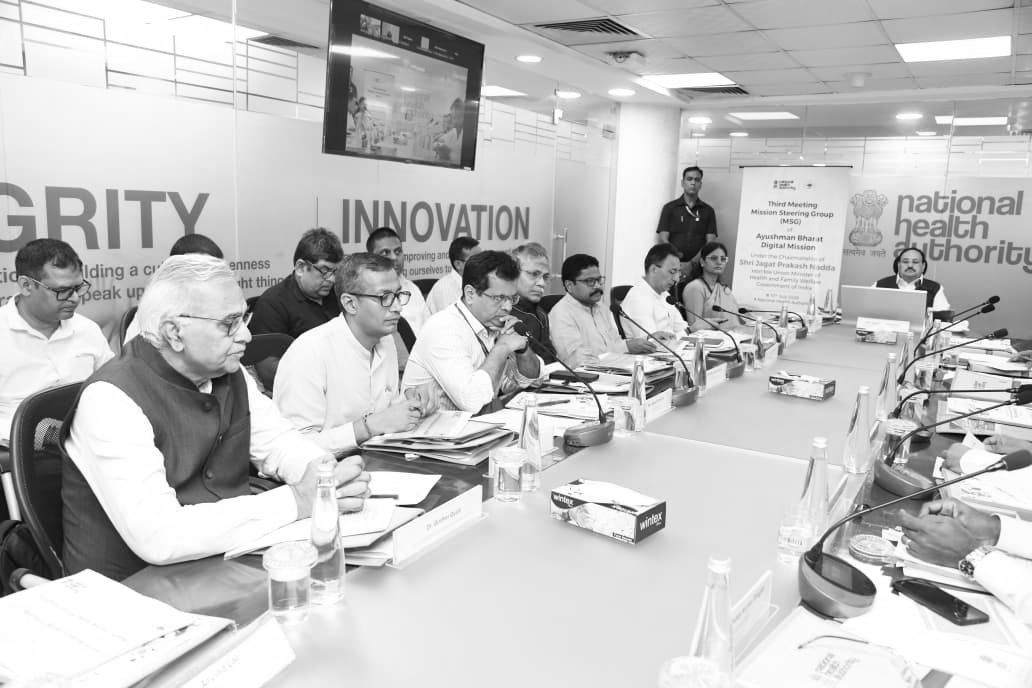
The achievements were reviewed during the third meeting of the Mission Steering Group chaired by Union Health Minister J. P. Nadda. The meeting assessed the progress of the mission, reviewed decisions taken during earlier consultations and discussed the roadmap for further strengthening India’s digital health ecosystem as part of the broader vision of Viksit Bharat 2047 .
Launched in September 2021, ABDM was conceived as a national digital health framework designed to transform healthcare delivery by creating a secure, interoperable and citizen-centric system that connects patients, hospitals, healthcare professionals, laboratories, pharmacies, insurers and government programmes through a common digital platform. The mission seeks to improve access to healthcare services, reduce administrative burdens, enhance efficiency and enable individuals to securely manage their health information.
At the centre of the initiative is the Ayushman Bharat Health Account (ABHA) , a unique digital health identifier that allows citizens to create and maintain a longitudinal digital health record. The ABHA system enables individuals to securely store, access and share their medical information with healthcare providers based on consent. By giving patients greater control over their health data, the system aims to improve continuity of care and ensure that medical histories are available when needed, regardless of where treatment is sought.
The latest figures released by the ministry indicate the growing scale of adoption. Alongside the creation of nearly 94 crore ABHA accounts, more than 5.33 lakh health facilities and 9.85 lakh healthcare professionals have been registered on national digital health registries. These registries form the backbone of the digital ecosystem by creating verified databases of healthcare institutions and practitioners across the country.
The Health Facility Registry serves as a comprehensive repository of hospitals, clinics, diagnostic centres and other healthcare establishments, while the Healthcare Professionals Registry provides authenticated information about doctors and other healthcare workers. Together, these registries help improve transparency, facilitate interoperability and make it easier for patients to access healthcare services.
The ministry also reported that approximately 2.72 lakh healthcare facilities have adopted ABDM-enabled software systems. These facilities are using digital tools to manage patient records, appointments, registrations and clinical information, helping reduce paperwork and improve operational efficiency.
One of the most visible outcomes of the mission has been the introduction of Scan and Register services in hospitals and healthcare facilities. According to the ministry, around 24 crore scan-and-register tokens have been generated so far. The feature allows patients to scan a QR code and complete outpatient registration digitally, reducing waiting times, minimizing paperwork and improving the overall patient experience.
Healthcare administrators believe that such digital solutions can significantly improve service delivery, particularly in high-volume public hospitals where long queues and administrative delays have traditionally posed challenges. Faster registration processes also help healthcare providers focus more on patient care and less on manual documentation.
A key objective of ABDM is to create an interoperable healthcare ecosystem in which information can move seamlessly and securely between different stakeholders. Unlike fragmented systems where patient records remain confined to individual hospitals or clinics, ABDM enables consent-based sharing of health information , ensuring that patients can authorize access to their records when consulting different healthcare providers.
This interoperability has the potential to transform healthcare outcomes. Doctors can access previous prescriptions, diagnostic reports and treatment histories, enabling more informed decision-making and reducing duplication of medical tests. Patients, meanwhile, benefit from continuity of care, particularly when they move between cities, states or healthcare providers.
The mission has often been compared to the transformation brought about by digital payment infrastructure in India. Just as interoperable payment platforms helped create a seamless financial ecosystem, ABDM aims to establish a similarly connected framework for healthcare. Through the Unified Health Interface (UHI) , citizens can discover healthcare services, connect with providers, schedule appointments and access digital health solutions across multiple platforms.
The UHI is designed as an open network that encourages innovation while ensuring interoperability. It allows different healthcare applications and service providers to interact within a common framework, creating opportunities for telemedicine services, digital consultations and integrated healthcare delivery.
Another important component of the mission is the National Health Claims Exchange (NHCX) , which seeks to streamline the processing of health insurance claims. By creating a digital platform that connects hospitals, insurers and beneficiaries, the system aims to reduce delays, improve transparency and simplify claims management. Efficient claims processing can help lower administrative costs and improve the overall experience for both patients and healthcare institutions.
The mission’s progress has also been strengthened through integration with several major government healthcare programmes. During the review meeting, members of the Mission Steering Group noted the growing integration of ABDM with flagship initiatives such as Ayushman Bharat Pradhan Mantri Jan Arogya Yojana (PM-JAY) , Central Government Health Scheme (CGHS) , Employees' State Insurance Corporation (ESIC) and Nikshay , the national platform for tuberculosis management.
Such integration helps create a more connected healthcare ecosystem by linking service delivery, beneficiary identification, treatment records and programme management. It also supports better monitoring and more effective implementation of public health initiatives.
The ministry highlighted that ABDM is expanding rapidly across states and Union Territories through initiatives such as Model Districts , Model Facilities and Aarogya Setu 2.0 . These programmes are intended to accelerate adoption, demonstrate best practices and encourage wider participation among healthcare providers.
Aarogya Setu 2.0, in particular, has evolved beyond its original role and now serves as a broader citizen-facing digital health platform. It supports ABHA creation, access to personal health records, digital registration services and other healthcare-related functionalities. By bringing multiple services together on a single platform, it seeks to make digital healthcare more accessible and convenient for citizens.
During the meeting, Nadda emphasized the transformative role of Digital Public Infrastructure (DPI) in improving healthcare delivery. He noted that digital systems can help bridge gaps in access, improve continuity of care and empower citizens through secure access to their health information.
The minister stressed that technology should remain a powerful enabler in the pursuit of Universal Health Coverage , ensuring that quality healthcare becomes more accessible, affordable and efficient. At the same time, he underlined the importance of inclusiveness, accessibility and ease of use so that digital transformation benefits every section of society.
The Mission Steering Group reviewed progress on several decisions taken during previous meetings, including capacity-building initiatives, strengthening state-level implementation mechanisms, enhancing integration across government programmes, encouraging greater participation by private healthcare providers and promoting international collaboration in digital health.
The inclusion of private healthcare providers is particularly important because a significant share of healthcare services in India is delivered through the private sector. Greater participation from private hospitals, clinics and diagnostic centres can help expand the reach and effectiveness of ABDM while ensuring that citizens experience seamless access to services regardless of where they seek treatment.
International collaborations are also expected to play a role in the mission’s evolution. India’s experience in building large-scale digital public infrastructure has attracted global attention, and the ABDM framework is increasingly being viewed as a model for digital health transformation in developing and emerging economies.
Despite the significant progress achieved so far, policymakers recognize that the next phase of the mission will require a stronger focus on adoption and utilization. Creating digital infrastructure is only the first step; ensuring that citizens, healthcare providers and institutions actively use the system is essential for realizing its full benefits.
Challenges such as digital literacy, connectivity gaps and varying levels of technological readiness across regions will need continued attention. Expanding awareness, training healthcare workers and strengthening digital infrastructure in rural and underserved areas will be critical to ensuring equitable access.
Another important priority is maintaining data privacy and cybersecurity . As digital health records become more widespread, protecting sensitive personal information will remain essential. ABDM has been built around consent-based data sharing principles, giving citizens control over how their health information is accessed and used. Continued investment in security frameworks, governance mechanisms and technological safeguards will be necessary to maintain public trust.
Experts believe that a secure and interoperable digital health ecosystem can generate long-term benefits beyond individual patient care. Aggregated and anonymized health data can support evidence-based policymaking, strengthen disease surveillance, improve resource allocation and enable faster responses to public health emergencies. Digital systems can also support research, innovation and the development of new healthcare technologies.
The mission is expected to contribute significantly to the growth of India’s health technology sector by creating opportunities for startups, software developers, digital health service providers and innovators. From artificial intelligence-based diagnostics and remote patient monitoring to telemedicine and personalized healthcare solutions, a robust digital ecosystem can accelerate the adoption of emerging technologies.
Concluding the meeting, Nadda said that while India has successfully established a strong digital health infrastructure under ABDM, the focus must now shift towards maximizing adoption and utilization across the country. He described the mission as a critical pillar in India’s long-term development journey and emphasized that strengthening the healthcare sector is essential to achieving the goals of Viksit Bharat 2047.
The minister expressed confidence that continued collaboration among the Centre, states, Union Territories, healthcare providers, technology partners and other stakeholders would help build a resilient, inclusive and future-ready healthcare system . As the number of digital health accounts, linked records and participating institutions continues to grow, ABDM is increasingly reshaping how healthcare is delivered, accessed and managed across India.
With nearly 94 crore health accounts already created and a rapidly expanding network of healthcare facilities and professionals connected to the platform, the Ayushman Bharat Digital Mission represents one of the most significant digital transformation initiatives in the country’s healthcare history. By combining technology, interoperability, citizen empowerment and public-private collaboration, the mission is laying the foundation for a healthcare ecosystem that is more connected, efficient and responsive to the needs of a growing nation.