
Adani Reviews ₹40,000 Crore Power Projects in Jharkhand, Bihar
Adani Group Chairman Gautam Adani ’s recent visit to power project sites in Jharkhand and Bihar underscores a major strategic push into eastern India, with investments exceeding ₹40,000 crore aimed at strengthening energy infrastructure, accelerating regional industrial growth, and deepening cross-border electricity cooperation.
At Godda in Jharkhand, a tribal-dominated district, Adani reviewed operations at the 1,600 MW ultra-supercritical thermal power plant , commissioned in recent years at an investment of over ₹16,000 crore. The facility holds unique strategic importance as it supplies electricity exclusively to Bangladesh under a long-term bilateral agreement, making it India’s first transnational power project of its kind. Beyond energy diplomacy, the project has generated thousands of direct and indirect jobs, enhanced rail logistics for coal transport, and improved connectivity in a historically underserved region. Its ultra-supercritical technology ensures higher efficiency and lower emissions compared to older coal plants, aligning with evolving environmental and efficiency standards.
However, the project has not been without controversy. In Bangladesh, concerns have been raised over tariff costs and billing structures, leading to calls for renegotiation and discussions over payment mechanisms. These developments highlight the financial and geopolitical complexities that accompany cross-border energy trade, even as such partnerships remain critical for regional energy security.
In neighbouring Bihar, Adani reviewed progress on the proposed 2,400 MW ultra-supercritical power project at Pirpainti near Bhagalpur , a ₹27,000-crore investment expected to be commissioned within the next four to five years. The plant is designed to support the state’s rapidly growing industrial base and urban electricity demand. Adani Power secured a 25-year supply agreement for the project through competitive bidding, positioning it as a cornerstone of Bihar’s long-term power planning. Once operational, the project is expected to improve grid reliability, attract manufacturing investment, and create substantial employment during both construction and operational phases.
Together, these projects position the Adani Group among the largest private infrastructure investors in eastern India a region rich in natural resources but historically lacking large-scale industrial capital. Expanded power capacity is expected to strengthen mining, manufacturing, and logistics sectors while improving energy access and reliability.
India’s electricity demand continues to rise sharply due to urbanisation, industrial expansion, and rising household consumption. While renewable energy is expanding rapidly, thermal power remains essential for base-load stability and grid reliability. Investments in high-efficiency thermal plants therefore play a transitional role in supporting economic growth while the energy mix evolves.
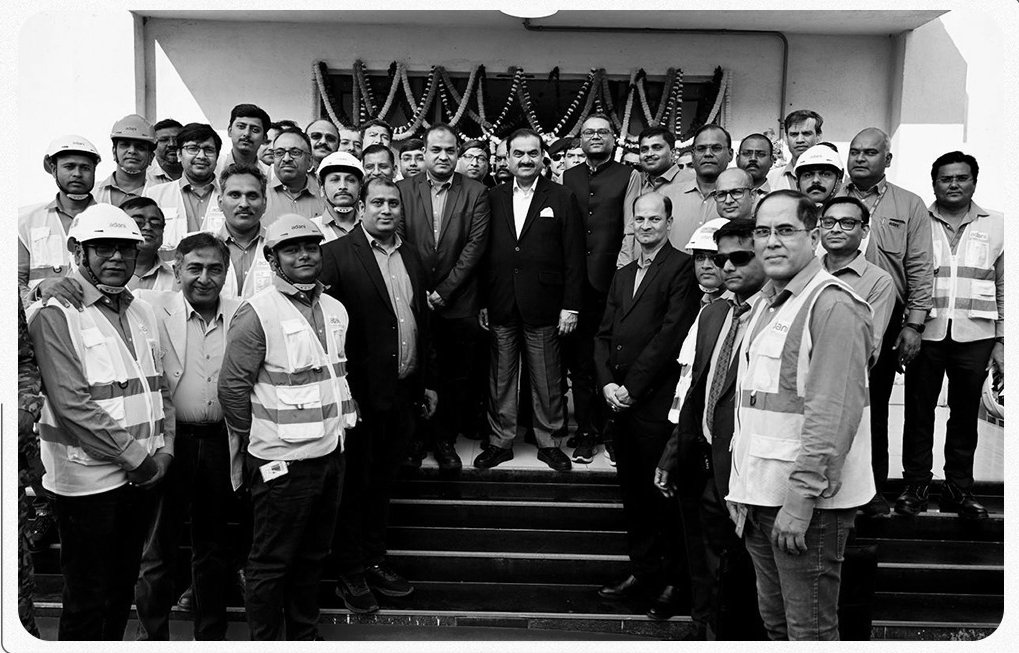
During his visit, Adani interacted with engineers, technicians, and frontline workers at the Godda facility and met tribal women from nearby communities, highlighting the projects’ local employment and social outreach dimensions.
Earlier in the day, he visited the revered Baba Baidyanath Dham temple in Deoghar , one of the twelve Jyotirlingas and a major pilgrimage centre in eastern India. Offering prayers, he expressed his wish for the nation’s prosperity and described the visit as the fulfilment of a long-pending spiritual desire.
Taken together, the Jharkhand and Bihar projects reflect a broader vision: strengthening energy security, enabling industrial growth in underdeveloped regions, and positioning eastern India as a vital engine of economic expansion while reinforcing regional cooperation in South Asia.