
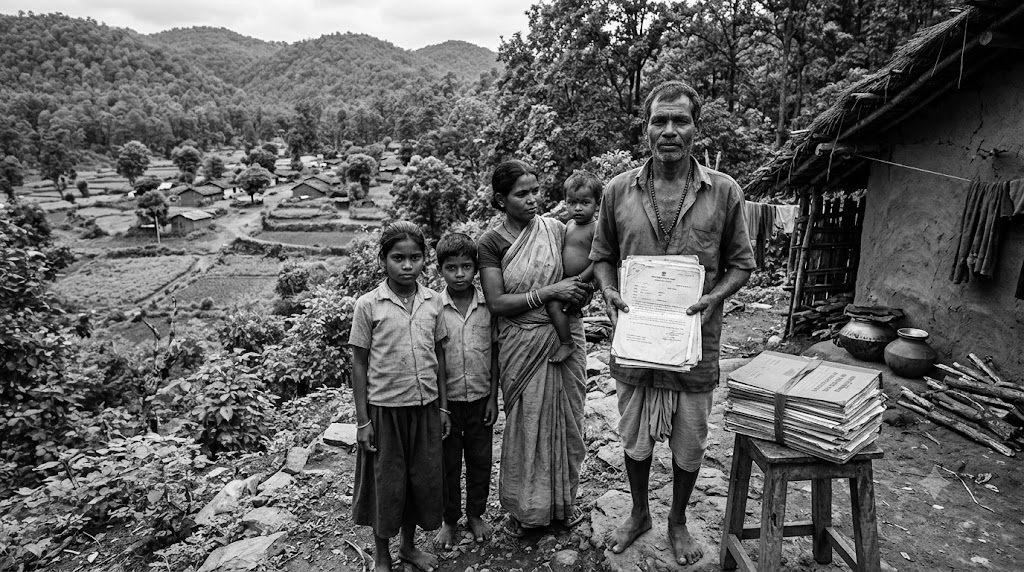
After 19 Years, Forest Rights Act Gets Time-Bound Push as 10.45 Lakh Claims Remain Pending
Nearly 19 years after the Forest Rights Act came into force, the Centre has stepped up efforts to push states towards time-bound implementation, with around 10.45 lakh claims still pending and 18.13 lakh rejected across the country.
At a regional review conference held in Srinagar on October 23, the Ministry of Tribal Affairs asked states and Union Territories to prepare district-wise action plans identifying the stage and cause of delays in each pending claim, along with the authority responsible for resolving it. The move is aimed at improving accountability in implementing a law intended to correct historical injustice against tribal communities and other traditional forest dwellers.
As of August 31, 2026, around 54 lakh claims had been received nationwide, of which 43.56 lakh, or 80.64%, had been disposed of. The Centre said 25.42 lakh titles had been distributed, covering nearly 238 lakh acres. However, the large backlog highlights the distance between recognising forest rights in law and ensuring eligible families receive them.
The Forest Rights Act, 2006, came into force on January 1, 2008. It recognises eligible Scheduled Tribes and other traditional forest dwellers’ rights over traditionally occupied forest land and resources. Yet, the Act and its Rules do not prescribe a statutory deadline for deciding claims, the Centre acknowledged in a parliamentary reply in August.
The latest push calls for regular monthly progress reports, scrutiny of rejected claims through written, reasoned orders and protection of claimants’ right to appeal. States have also been asked to speed up digitisation and ensure recognised rights are incorporated into revenue and forest records.
Implementation rests primarily with state and Union Territory administrations. The Gram Sabha examines claims and makes recommendations, Sub-Divisional Level Committees scrutinise them, and District Level Committees take the final decision. Delays at these stages can leave families waiting for formal recognition of rights they may have relied on for generations.
The challenge extends beyond individual land titles. Habitat rights have been recognised for only 11 of India’s 75 Particularly Vulnerable Tribal Groups.