
After 241 Days in Space, Soyuz MS-28 Brings US-Russian Crew Home in Perfect Landing
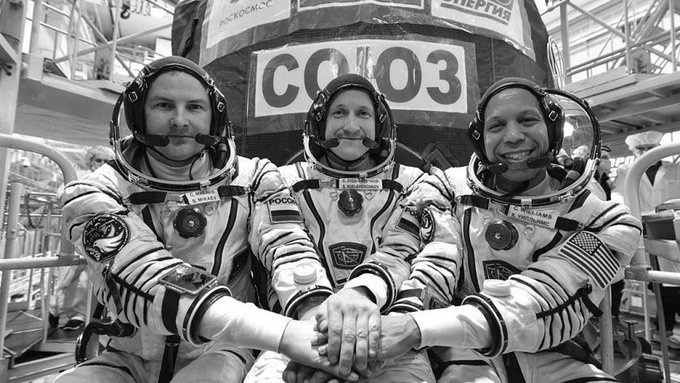
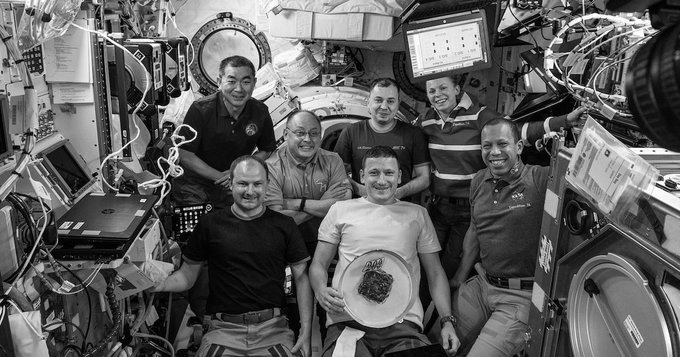
NASA astronaut Chris Williams and Russian cosmonauts Sergey Kud-Sverchkov and Sergei Mikaev safely returned to Earth on Sunday, bringing an end to a 241-day mission aboard the International Space Station (ISS) that combined cutting-edge scientific research with international cooperation in space.
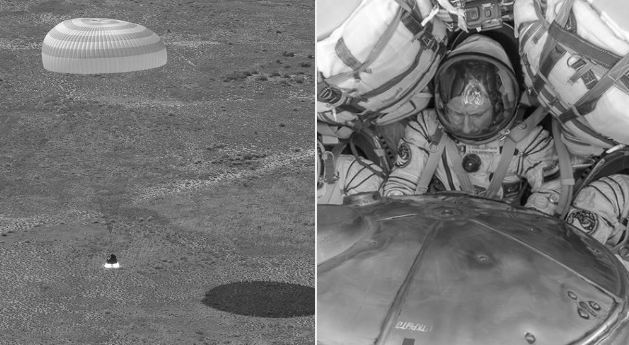
Their Soyuz MS-28 spacecraft undocked from the station's Rassvet module before making a flawless parachute-assisted landing in the steppes southeast of Dzhezkazgan, Kazakhstan. After a controlled deorbit burn and a fiery descent through Earth's atmosphere, the capsule touched down safely, where recovery teams quickly reached the crew for medical assessments and post-landing procedures.
The mission saw the trio complete 3,856 orbits of Earth and travel more than 102 million miles since launching on November 27, 2025. It marked the first spaceflight for Williams and Mikaev, while Kud-Sverchkov completed his second mission and served as commander of Expedition 74.
Following the landing, the astronauts underwent routine health checks before being assisted into reclining chairs to begin readjusting to Earth's gravity. They were welcomed with fresh fruit, satellite phone calls to their families and traditional matryoshka dolls presented by the Russian recovery team. Kud-Sverchkov expressed gratitude to the recovery personnel, saying he felt better with every passing moment and praised the smooth landing.
Beyond the successful return, the expedition delivered significant scientific achievements. Williams participated in research aimed at improving cancer treatments and advancing in-space manufacturing of materials used in high-performance computers and electronic devices. He also worked on experiments involving DNA-inspired materials that form more uniformly in microgravity, offering potential benefits for future technologies.
Williams completed two spacewalks totaling more than 13 hours, helping prepare the station for future power upgrades and replacing a faulty joint on the Canadarm2 robotic arm. Meanwhile, Kud-Sverchkov tested a specialized lower-body negative pressure suit designed to help astronauts adapt more quickly to Earth's gravity after extended stays in space.
After completing medical evaluations, Williams departed for Houston, while Kud-Sverchkov and Mikaev returned to Star City near Moscow. Their mission once again underscored the enduring collaboration between the United States and Russia aboard the ISS, even as political relations on Earth remain strained.