
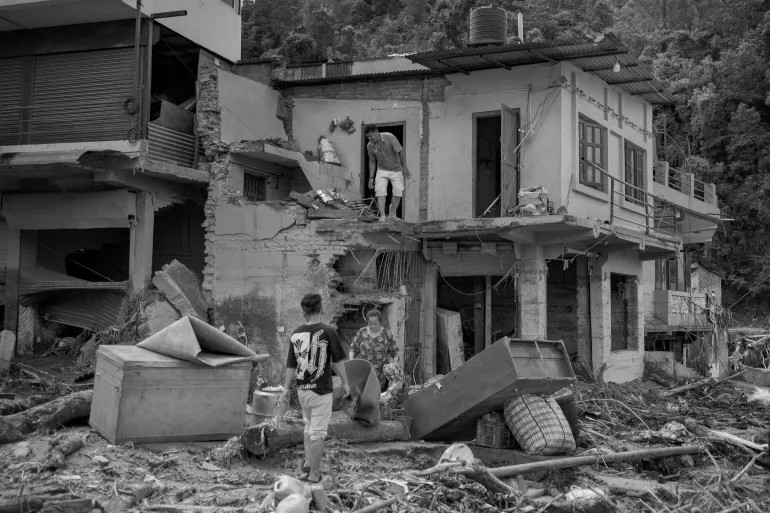
After Nepal Floods, Displaced Families Face a Second Crisis in Temporary Shelters
Nepal’s August 26 floods have evolved from a rescue emergency into a humanitarian crisis, with thousands of survivors now dependent on temporary shelters. The devastation along the Bhote Koshi Trishuli river system has destroyed homes, roads, bridges, water networks and infrastructure, leaving families facing uncertainty over both survival and their future.
The Nepal Army, Nepal Police and Armed Police Force have mounted search-and-rescue operations, using ground teams, helicopters and specialised personnel to reach isolated communities. Rescuers have searched mud-filled settlements and damaged hydropower facilities, while authorities have established relief camps and holding centres. Schools and public buildings are being used as temporary accommodation in Rasuwa and Nuwakot. International assistance, including support from India and China, has added specialised rescue and relief capacity.
Yet needs inside the shelters are severe. Clean drinking water is among the most urgent concerns. Flood damage to canals and pipelines has disrupted supplies around Trishuli Hospital and neighbouring settlements. Crowded shelters with inadequate sanitation are raising fears of waterborne and other infectious diseases, particularly among children and vulnerable groups.
Food, clothing and other basic necessities are still urgently required. Many families lost virtually everything and have little money to replace essential items. Medicines are another critical gap, especially for people with chronic conditions who cannot safely interrupt treatment. Pregnant women, new mothers and children require additional maternal and medical support.
Healthcare facilities have been damaged, while washed-out roads and unstable terrain make it difficult to move doctors, medicines and patients. Search teams must continue looking for missing relatives, adding enormous psychological strain to families.
The next phase requires more than emergency distribution. Authorities need to restore water systems, roads, bridges, electricity, communications, schools and health facilities, while providing safe sanitation and sustained food and medicine supplies. Displaced families will need temporary housing, cash support and psychological care.
Long-term rehabilitation will require rebuilding homes and infrastructure and improving disaster preparedness. With the region still vulnerable to renewed flooding and landslides, international financial and technical support will remain essential.