
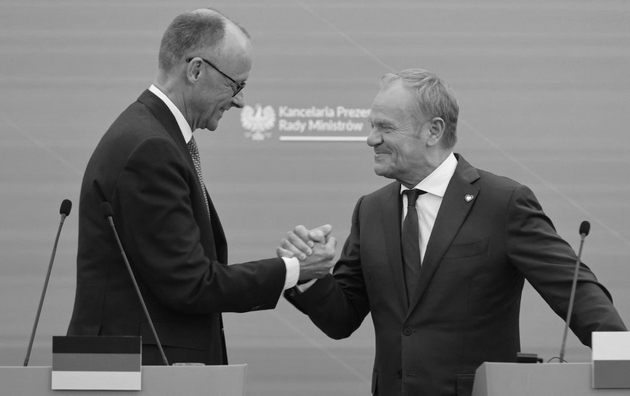
After Securing UK Alliance, Poland Signs Major Defence Pact With Germany Against Russia
Germany and Poland signed a major defence cooperation agreement on Wednesday, deepening military ties as Europe confronts growing security challenges from Russia and uncertainty over the future extent of US military engagement on the continent.
The agreement, approved by the German cabinet last week, was signed on the 35th anniversary of the 1991 German-Polish Treaty on Good Neighbourship and Friendly Cooperation. The move comes just weeks after Poland signed a landmark security agreement with the United Kingdom, highlighting Warsaw's efforts to strengthen alliances across Europe as concerns over regional security intensify.
The new pact expands cooperation in military mobility, defence infrastructure, crisis management, cyber security, emerging technologies and defence-industrial partnerships. It also provides for closer coordination against hybrid threats , including cyberattacks and sabotage, while placing particular emphasis on protecting the Baltic Sea region , a strategically sensitive area for NATO.
Relations between Berlin and Warsaw have become increasingly pragmatic since Russia's full-scale invasion of Ukraine in 2022. As Washington weighs a possible reduction in its military presence in Europe, Poland has pushed for greater responsibility from European allies in securing NATO's eastern flank.
Germany, meanwhile, is rebuilding the Bundeswehr after decades of underinvestment and aims to become a leading military power within Europe. Security analysts note that NATO's defence plans assign Germany a central role in protecting the Baltic states, making close cooperation with Poland increasingly important.
Despite the growing partnership, historical tensions continue to influence domestic politics. The agreement reaffirms commitments already contained in NATO and European Union treaties but stops short of creating new bilateral mutual-defence guarantees. Foreign Minister Radoslaw Sikorski has argued that a broader treaty would face political resistance under President Karol Nawrocki , whose supporters remain wary of closer ties with Germany.
Prime Minister Donald Tusk has also pressed for Poland to be included in major European discussions on Ukraine and regional security.