
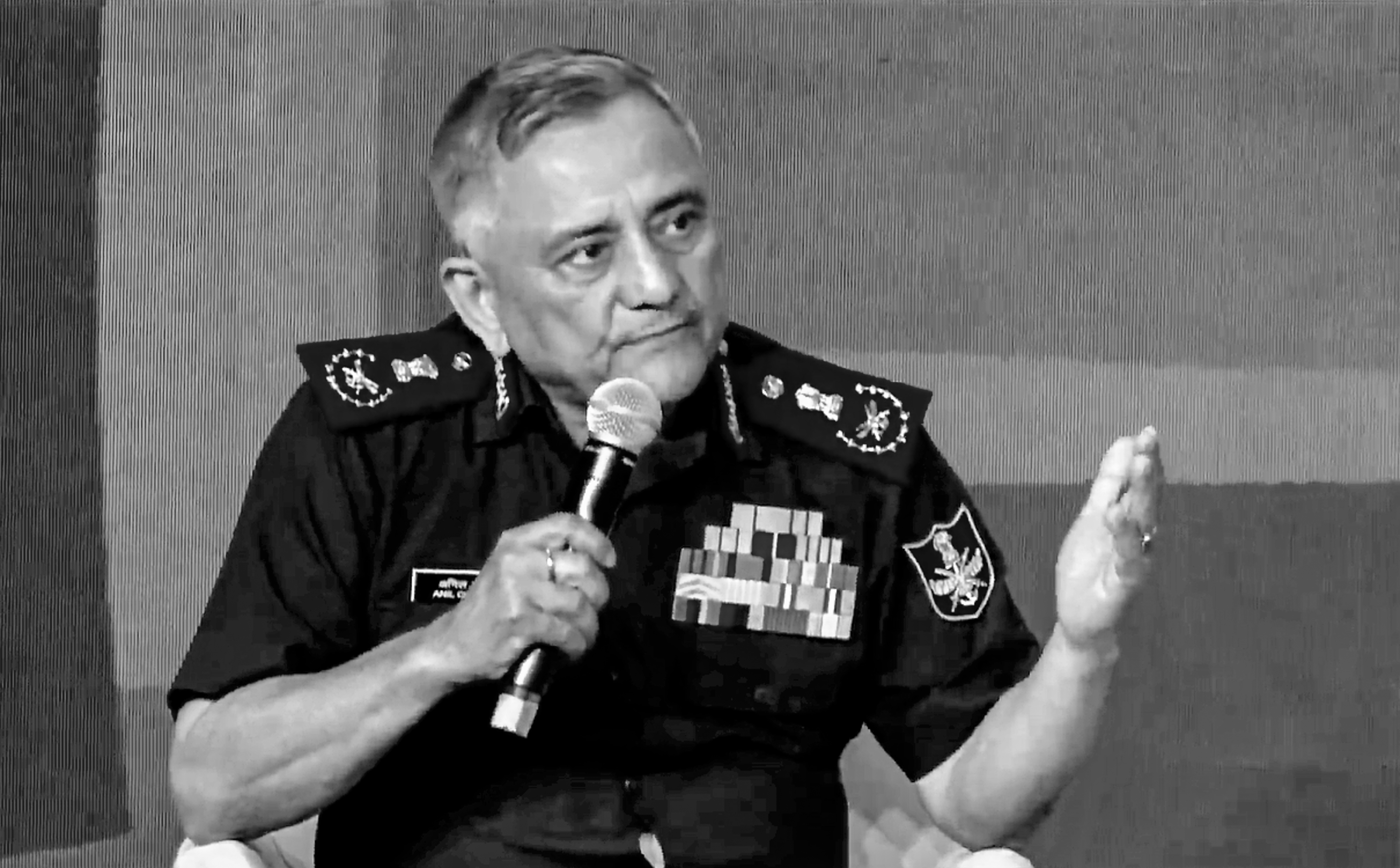
AI, Autonomous Systems to Shape Future Warfare: CDS Anil Chauhan
Chief of Defence Staff General Anil Chauhan on Saturday said the world is at the cusp of a major transformation in warfare , where artificial intelligence (AI) and autonomous systems will play a decisive role in shaping future military operations.
Speaking during a panel discussion at the Raisina Dialogue , Gen Chauhan highlighted how rapid technological advances are changing the nature of global conflicts. The session, titled “The Tech Triad,” focused on the relationship between nuclear power, AI, and autonomous weapon systems .
Emphasising the growing significance of emerging technologies, the CDS said that AI is already influencing ongoing conflicts around the world . While traditional military strength once relied largely on platforms such as tanks, aircraft, ships, and submarines, modern warfare increasingly depends on data, networks, and intelligence systems, he noted.
“Artificial intelligence is going to play a major role in warfare tomorrow, and so would autonomous systems,” Gen Chauhan said. He added that such technologies are critical for speed and accuracy in decision-making, which are essential for success in combat situations.
“Unless you have automated systems , it becomes difficult to make decisions on time. In combat, if you want to win, there are only two things: timely decisions and right decisions and AI and autonomous systems help achieve that,” he said.
Gen Chauhan also highlighted the massive energy requirements associated with AI-driven systems. According to him, the growing use of AI in defence and other sectors will require significant power resources , particularly to run large data centres that support complex algorithms and computing systems.
In this context, he noted that nuclear energy and AI complement each other , especially when it comes to powering data infrastructure needed for advanced technological systems.
Responding to a question from the moderator, the CDS said energy has always been closely linked to national security . He pointed out that in modern conflicts, even resources such as oil, gas, and rare earth elements are increasingly being weaponised.
“Everything is getting weaponised in current warfare, including oil and gas and rare earth elements,” he said, adding that the world is witnessing a major shift where technology and energy security are becoming central to military capability .
At the same time, Gen Chauhan acknowledged that India is still in the early stages of integrating AI into its defence framework . He said the country is currently taking “baby steps” in this direction and is yet to fully define how it intends to deploy AI in military operations.
“As of now, to say that we will have power structured solely to fuel the armed forces’ need for AI would be premature. But there will certainly be a requirement for dedicated power infrastructure to support AI systems for the military in the future,” he said.
Also participating in the panel was Romeo S. Brawner Jr. , who said several lessons can be drawn from conflicts across the world. One key takeaway, he noted, is that AI and AI-enabled autonomous systems will shape the future of warfare .
Gen Brawner also outlined some AI-related initiatives in the Philippines’ military , stressing that such technologies will be crucial for building credible defence capabilities and effective deterrence. He further underlined the importance of developing independent energy infrastructure to support these emerging technologies.