
Air India’s $1.5 Billion Funding Push Puts Tata And Singapore Airlines To The Test
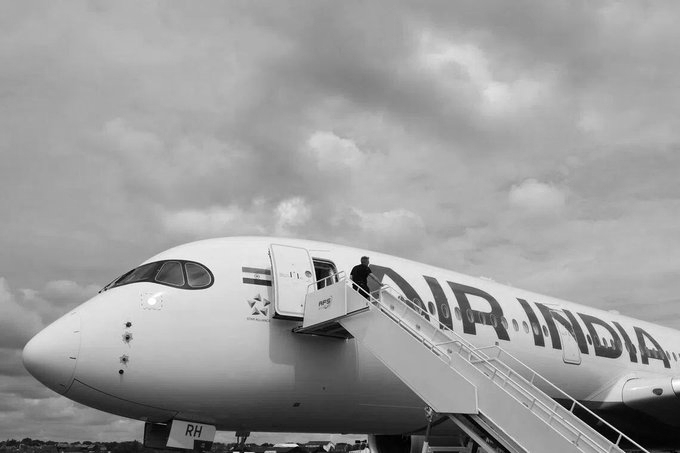
Air India’s latest attempt to raise around $1.5 billion from its owners is turning into a crucial test of the Tata-Singapore Airlines partnership, with the two shareholders taking increasingly cautious positions over how much more money should go into the loss-making carrier.
Tata Sons, which owns 74.9 per cent of Air India, has approved about $1.1 billion, broadly representing its share of the proposed funding. Singapore Airlines (SIA), which owns the remaining 25.1 per cent, has yet to approve its contribution. Sources say SIA is seeking stronger governance rights, greater influence and performance targets before committing additional capital.
The tougher stance reflects the scale of Air India’s financial challenge. Air India and Air India Express reported a combined $2.33 billion loss for the financial year ended March 2026, more than double the previous year’s loss. The losses have also affected SIA’s own financial results.
For SIA, the issue is not simply whether it can afford another investment. The airline currently has more than S$10 billion in cash reserves and substantial undrawn credit facilities, but its board must balance Air India’s requirements against its own aircraft purchases, operations and other investment needs. SIA has said any fresh investment will be evaluated under its disciplined capital allocation framework.
The disagreement also highlights a governance gap. Despite its 25.1 per cent stake, SIA currently has only one board seat at Air India. Its demand for greater influence suggests it wants more say in the turnaround if it is expected to keep providing capital.
Air India’s transformation has been expensive and complicated, involving fleet renewal, network expansion, technology upgrades and operational integration. The airline has simultaneously faced high fuel costs, rupee depreciation, supply-chain problems, Pakistani airspace restrictions, Middle East disruption and the fallout from last year’s crash.
The leadership is also changing, with former Ethiopian Airlines chief Tewolde Gebremariam taking over as CEO. Safety, financial discipline and rebuilding passenger confidence are among the new leadership’s priorities.
The bigger question now is whether another large capital infusion can finally move Air India from a capital-intensive turnaround to a financially sustainable airline. Tata has indicated that the transformation could take years. For SIA, the next investment may therefore depend not just on Air India needing money, but on seeing clearer evidence that the money is producing measurable results.