
‘All in a Flash’: 100 Years of Indian History Through Photographs of Tragedy, Politics and Beauty
A single photograph can preserve a moment that history might otherwise struggle to explain. From the devastation of the 1984 Bhopal gas tragedy and the horrors of communal and caste violence to the quiet beauty of the Himalayas and iconic encounters between world leaders, a new book brings together more than a century of India’s history through the lens of news photographers.
Titled “All in a Flash: News Photography in India,” the book by veteran journalist Binoo K John, published by Niyogi Books, explores how photographs have documented the country’s tragedies, political transformations, cultural milestones and everyday life. Priced at Rs 2,499, it is available at online and offline bookstores.
Divided into five parts, the book features images captured by celebrated photographers as well as those whose work has received less recognition. Together, these photographs offer a visual account of India’s past, revealing not just what happened, but also the human emotions and circumstances behind historic events.
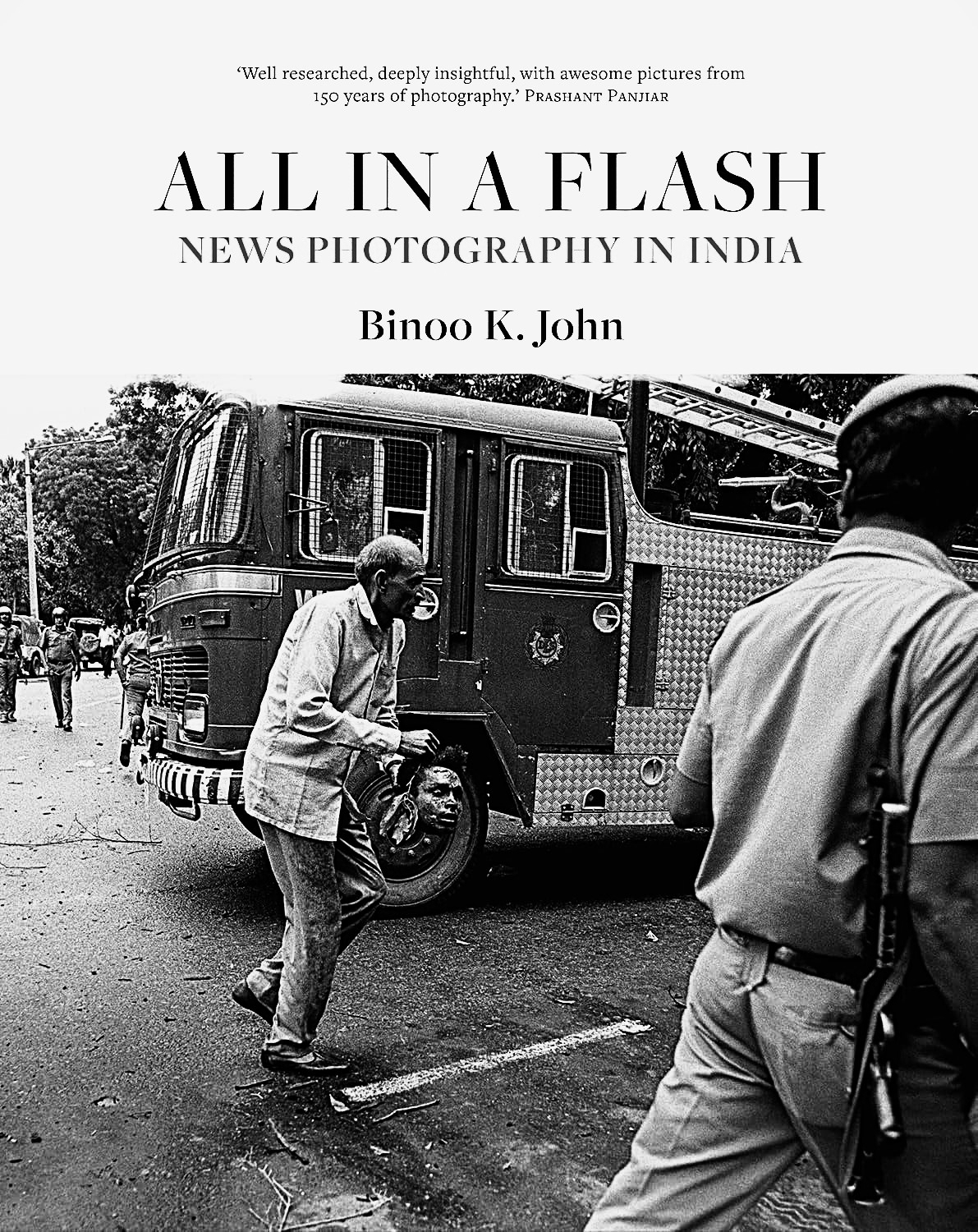
The book opens with a chapter titled “The Dead and the Dying,” confronting readers with some of the darkest moments in the country’s history. Among its most striking images is a photograph by Virendra Singh of The Indian Express, showing a policeman carrying a severed head after the 1993 blast at the Indian Youth Congress office in Delhi. The image also appears on the book’s cover.
John describes the photographer’s decision to remain at the scene despite the danger as an embodiment of the courage required to document history as it unfolds.
Other photographs revisit the 1987 Hashimpura massacre, the Khalistan movement in Punjab in 1984, the 1996 midair collision over Charkhi Dadri and the aftermath of the Bhopal disaster. Images of the 1981 Mainpuri caste violence, in which 10 Dalits were killed, further underline the devastating human cost of social conflict.
The book also captures the suffering caused by the Covid-19 pandemic. A photograph taken by PTI’s Atul Yadav shows a distressed migrant worker on Delhi’s Nizamuddin Bridge in May 2020, his mobile phone held to his ear. Images by Danish Siddiqui and Ritesh Shukla document the makeshift cremation grounds that emerged as India struggled with mounting deaths.
Moving beyond tragedy, the book explores the intersection of photography, power and public memory. Its chapter on the Taj Mahal brings together images of the monument as a symbol of architectural beauty and a backdrop for diplomatic encounters and celebrity visits, including Princess Diana’s iconic 1992 visit.
Another section, “Access to Power”, features photographs of Mahatma Gandhi, Jawaharlal Nehru, Indira Gandhi, Manmohan Singh and Narendra Modi, among others, offering glimpses of political leaders at defining moments in Indian history.
The book also turns its attention to ordinary people and landscapes. One memorable photograph by PTI’s Arun Sharma captures voters walking down a Himalayan hillside in Tashigang, Himachal Pradesh, during the 2024 Lok Sabha elections, illustrating the extraordinary effort involved in exercising democratic rights in remote regions.
From wildlife photographs and portraits of women to images of political rallies and public figures, the collection moves between the extraordinary and the everyday.