
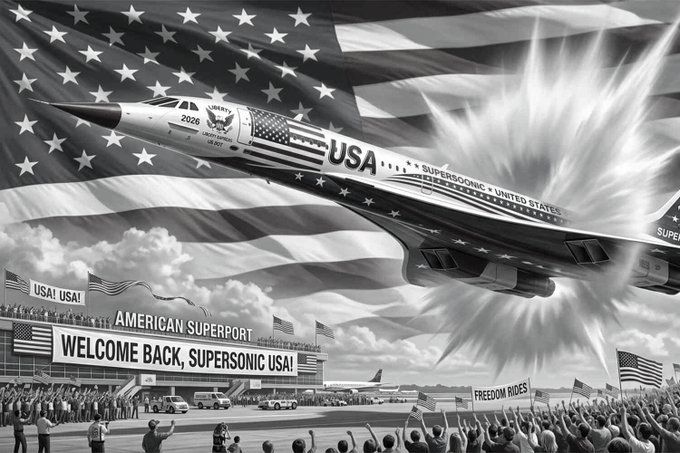
America Wants to Fly Fast Again: US Plans Return to Supersonic Flights, to Reverse 53-Year-Old Ban
The United States has taken its most concrete step yet towards ending a 53-year-old ban on supersonic flight over land , with the Department of Transportation unveiling a proposed rule that replaces the blanket 1973 prohibition with a noise-based standard. The original ban was imposed by the FAA after Concorde-era test flights triggered a wave of public complaints in the late 1960s and early 1970s, with sonic booms rattling windows, cracking plaster and, in some cases, damaging structures across communities beneath supersonic flight paths, concerns serious enough that Congress and regulators moved to bar civilian aircraft from exceeding Mach 1 over US soil altogether, confining such speeds to oceanic routes and isolated test corridors.
The new draft rule, titled "Enabling Supersonic Overland Flight," would allow aircraft to fly faster than Mach 1 (767 miles per hour) over US territory provided the sonic boom overpressure at the surface stays below 0.11 pound per square foot , a threshold operators must demonstrate through measurement, modelling or other approved methods. A second rule, expected later this year, will cover landing and takeoff noise standards, with both to be finalised by mid-2027 .
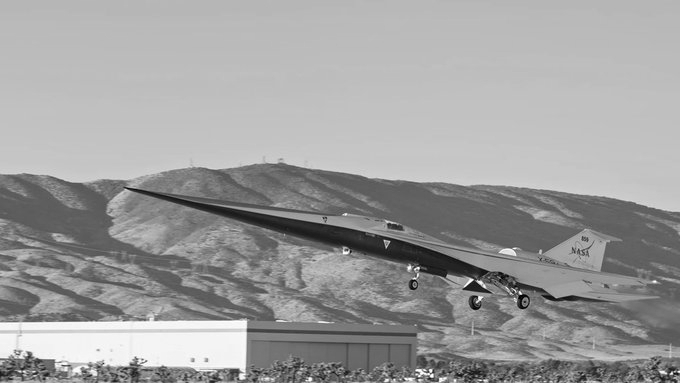
The move follows a June 2025 executive order by President Trump directing the FAA to repeal the ban, and gained momentum after the House of Representatives passed the Supersonic Aviation Modernisation Act by voice vote in March. It also builds on NASA's X-59 experimental aircraft , which reached 713 mph (Mach 1.1) at 43,400 feet without producing the disruptive boom that grounded Concorde-era ambitions. The X-59 relies on a technique called "Mach cutoff," where aircraft design, altitude, speed and atmospheric conditions combine to bend the sonic boom back into the atmosphere before it reaches the ground.
FAA Administrator Bryan Bedford said advances in aerospace engineering and noise reduction would "eliminate the old sonic boom," while Transportation Secretary Sean Duffy framed the rule as ushering in a "Golden Age of Travel." Boom Supersonic , whose XB-1 demonstrator has broken the sound barrier six times without an audible ground boom using its "Boomless Cruise" approach, stands to benefit most directly, alongside Spike Aerospace, both of which are eyeing sub-four-hour transatlantic routes. The FAA estimates the rule change would save industry about $1.57 million and the agency itself over $850,000 in flight-authorisation processing.
Concorde , jointly operated by Air France and British Airways , once crossed the Atlantic in 3.5 hours at twice the speed of sound but was confined to oceanic routes and retired in 2003 due to prohibitive operating costs, a cautionary precedent that still looms over the current push. The FAA has acknowledged it cannot yet estimate the full cost of the avionics operators may need to prove compliance, and has opened the proposal for public comment before any final repeal takes effect.