
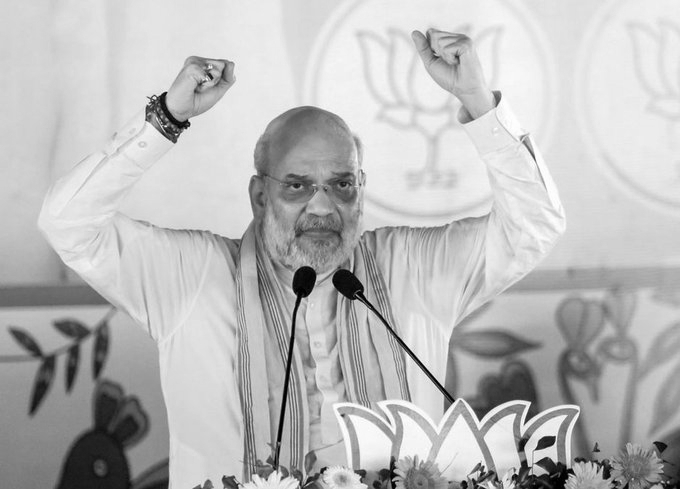
Amit Shah Signals Near-End of AFSPA in Northeast Amid Oil Deal Protests
Union Home Minister Amit Shah on Thursday said the Armed Forces (Special Powers) Act (AFSPA) may be withdrawn from almost the entire Northeast next year, except for one or two states , citing a marked improvement in the security situation.
Speaking at the signing of a tripartite MoU between the Centre, Assam and Nagaland for oil and mineral exploration in disputed border areas, Shah said the shrinking AFSPA footprint reflects greater peace and stability in the region. He added that since 2019, 12 peace accords have been signed, contributing to an around 80% decline in violence .
However, the agreement triggered opposition from seven Naga organisations under the Naga National Political Groups (NNPG) , which said the move violates the 2017 “Agreed Position” signed with the Centre. The group asserted that ownership and control over natural resources are part of the settlement framework and warned that any exploration before a final political agreement would be “illegal” and a “betrayal” of Naga rights .
The NNPG Working Committee said it would oppose extraction of crude oil from Naga areas until a political settlement is formally concluded, and also objected to any revenue-sharing arrangement between Assam and Nagaland , claiming the disputed zone belongs historically and legally to the Naga homeland.
The Centre has been engaged in parallel negotiations with Naga groups, including the NSCN-IM , which signed a framework agreement in 2015 after a ceasefire in 1997. While talks were declared concluded in 2019 by the government’s interlocutor, a final settlement remains pending amid unresolved demands, including a separate flag and constitution.
Despite the opposition, Shah described the MoU as a historic step that will unlock long-stalled oil and mineral exploration in the Assam-Nagaland border belt and boost regional development.