
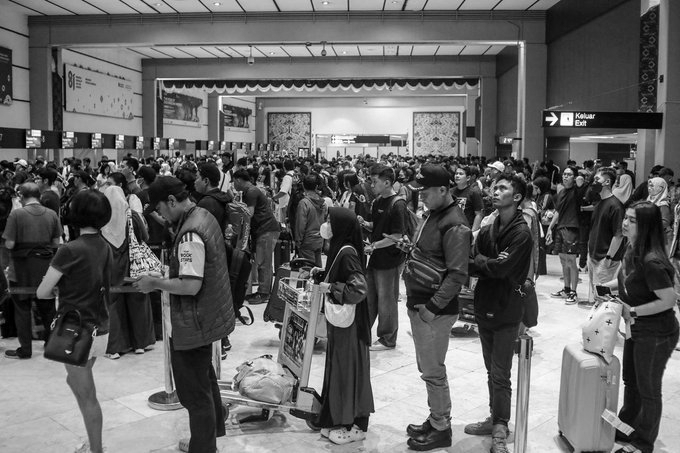
Anak Krakatau Eruption Leaves 270,000 Travellers Stranded As Seven Indonesian Airports Shut
Indonesia’s Anak Krakatau volcano continued to disrupt air travel on Monday, September 7, with seven airports remaining closed as volcanic ash lingered over parts of western Indonesia, despite signs that the eruption was easing. More than 2,300 flights have been disrupted and over 270,000 passengers affected, according to the latest reports.
Jakarta’s main Soekarno-Hatta International Airport remained closed on Monday, with operations suspended until 6 pm local time because of volcanic ash. Halim Perdanakusuma Airport in Jakarta was also closed. Lion Group said several flights to and from both airports had been cancelled through 6 pm, citing official aviation warnings and continuing ash hazards.
The disruption has spread well beyond Jakarta. Flights have been delayed, cancelled or diverted across Indonesia, while airlines including Singapore Airlines and other international carriers have adjusted services. Authorities have also reopened Atung Bungsu Airport in South Sumatra, while several alternative airports have extended operating hours to help handle stranded passengers.
The eruption, which intensified over the weekend after increased activity since July, produced ash plumes reaching as high as 50,000 feet (15,200 metres). The eruption itself has since subsided, but officials said the volcano remains moderately active, with continuing ash emissions and minor seismic activity. Authorities warned that further eruptions remain possible.
The ash has also affected daily life. Schools in Jakarta, West Java, Banten and Lampung have shifted to remote learning as a precaution, while residents have been advised to wear masks and limit exposure to volcanic ash. Authorities are continuing to monitor air quality, weather conditions and the movement of ash clouds.
Indonesia’s disaster authorities have also taken steps to reduce the impact of ash, including weather modification efforts intended to encourage rainfall and clear ash from affected areas. Officials have stressed that aviation decisions will continue to depend on wind direction, ash concentrations and safety assessments.
There has been no evacuation order and no immediate tsunami threat, according to authorities. Residents and visitors have nevertheless been told to remain at least 3 kilometres from the crater and stay alert for volcanic bombs, ashfall and lava-related hazards.