
Andhra Pradesh Leads Country In PM SHRI Fund Utilisation, Says Minister Nara Lokesh
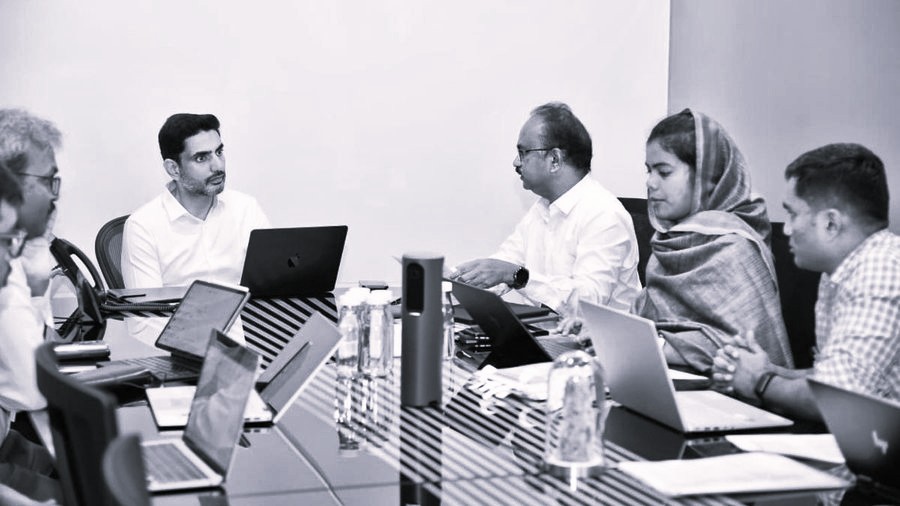
Andhra Pradesh has emerged as the top-performing state in the country in the utilisation of PM SHRI funds , Education Minister Nara Lokesh announced during a late-night review meeting with senior education officials.
The Minister said the achievement reflects the state’s focused efforts to strengthen government school infrastructure under the centrally sponsored programme PM SHRI Scheme, which aims to upgrade 14,500 government schools nationwide in line with the National Education Policy 2020 standards. The initiative is expected to benefit nearly 1.8 million students across India.
Praising officials for the milestone, Lokesh directed them to sustain the momentum and accelerate ongoing infrastructure upgrades, including the construction of 844 smart kitchens across the state this year, drawing inspiration from successful models implemented in YSR Kadapa district.
Officials informed the Minister that distribution of ‘Sarvepalli Radhakrishnan Vidyarthi Mitra Kits’ had already begun for school students and should be completed ahead of the upcoming large-scale parent–teacher meetings. Similar kits are also being provided to 2.03 lakh junior college students , they added.
Special focus was placed on strengthening welfare support in residential schools. The Minister reviewed conditions in Kasturba Gandhi Balika Vidyalayas (KGBVs) and instructed officials to immediately install 53,180 bunk beds across 430 institutions to improve accommodation facilities for over 1.06 lakh girl students. He also suggested expanding similar infrastructure improvements to residential schools and colleges across the state.
In a significant welfare directive, Lokesh instructed officials to extend the ‘Thalliki Vandanam’ scheme , which provides annual financial assistance of ₹15,000 to students, to include orphaned children. He proposed a structured mechanism to ensure benefits reach them directly through guardians or district collectors, with funds securely deposited in bank accounts and made accessible only after completion of education to ensure long-term financial security.
The Minister also reviewed regulatory reforms in private unaided schools, calling for the removal of unnecessary restrictions in the approval process. He emphasised greater transparency by mandating that fee structures be displayed prominently on school premises and published online for public access.
To improve accessibility of learning materials, Lokesh suggested that textbooks published by the Telugu Academy be made available on major e-commerce platforms such as Amazon and Flipkart, ensuring wider reach for students and parents.
Highlighting regional disparities, the Minister called for focused interventions in educationally lagging districts including Kurnool, Anantapur, Markapuram, Alluri Sitarama Raju, and Polavaram. He directed officials to assess teacher availability and implement targeted action plans to improve student pass percentages.
He further stressed maintaining at least 95% student attendance statewide, ensuring high-quality implementation of the midday meal programme, and strengthening bilingual academic support without neglecting Telugu language instruction. Special bridge courses in mathematics, science, and Telugu were also recommended for academically weaker students.
Finally, Lokesh instructed officials to expedite the establishment of modern Chromebook-enabled computer labs in high schools to enhance digital learning infrastructure across the state.