
Andhra Pradesh to Revive 789 Lift Irrigation Schemes with Rs 632 Crore
Andhra Pradesh Chief Minister N. Chandrababu Naidu has directed officials to revive all defunct lift irrigation schemes across the state, with the government earmarking Rs 632.07 crore to restore 789 schemes. He has set June next year as the deadline for completing the repairs and instructed officials to ensure that all facilities are operational before the next Kharif season.
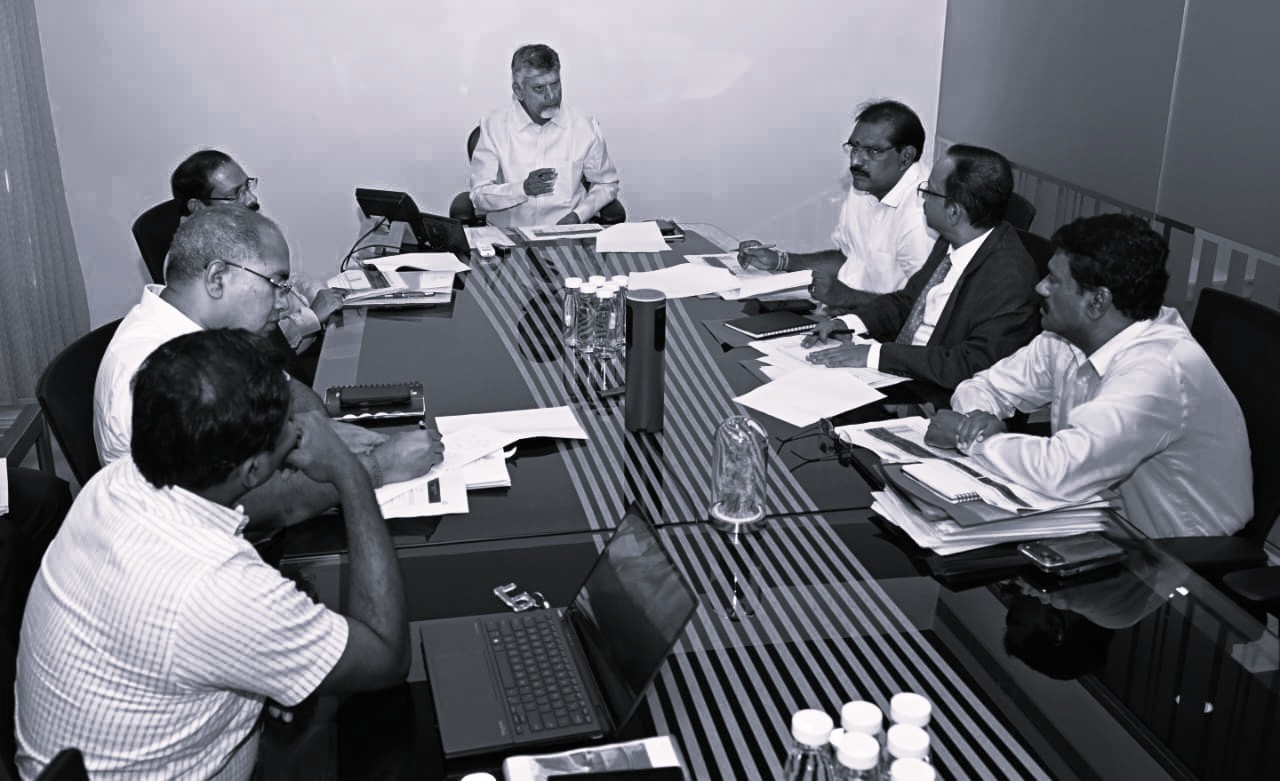
The directions were issued during a review meeting on irrigation projects and lift irrigation schemes at his camp office in Undavalli on Wednesday. Officials informed the Chief Minister that the restoration programme would improve irrigation facilities across approximately 7.4 lakh acres. Naidu stressed the need to assess the condition of every scheme on the ground, invite tenders immediately and begin repair works without further delay.
He also asked officials to examine the possibility of handing over the maintenance and regular monitoring of these schemes to the Jalaharathi Corporation. A dedicated division should be established for this purpose, with a Chief Engineer or Superintending Engineer appointed in every district to oversee the progress of works.
The meeting also discussed ways to utilise government land under the Water Resources Department for renewable energy generation. Of the 5,565 acres available with the Irrigation Department, 4,061 acres have been identified for solar power projects with a potential capacity of 877.3 MW. Another 25.8 MW could be generated through installations across 110 acres at 84 locations under the Irrigation Development Corporation. Together, these proposals offer the potential to generate 903.1 MW of solar power.
Naidu also called for exploring solar and hydropower generation opportunities along irrigation canals. He emphasised uninterrupted electricity supply to lift irrigation schemes during the agricultural season and asked officials to examine the possibility of selling surplus power to the grid.
Separately, the Chief Minister directed officials to complete 36 priority irrigation projects within two-and-a-half years, assuring that the government would release funds as required. He called for better coordination among departments to prevent delays.
He further proposed examining the feasibility of establishing a Water Regulatory Commission, similar to the Electricity Regulatory Commission, to streamline water allocation among agriculture, industries, power generation and transportation. Referring to major proposals such as the Ganga-Cauvery river-linking project, he stressed the need for an effective mechanism to regulate water distribution.