
AP's First-of-Its-Kind BC Protection Act to Strengthen Social Justice
Andhra Pradesh government has announced plans to enact what it describes as India's first BC Protection Act, a landmark legislation aimed at protecting the social dignity, economic security and constitutional rights of Backward Classes (BCs). The proposed law is expected to provide a dedicated legal framework to curb caste-based discrimination and ensure faster justice for victims.
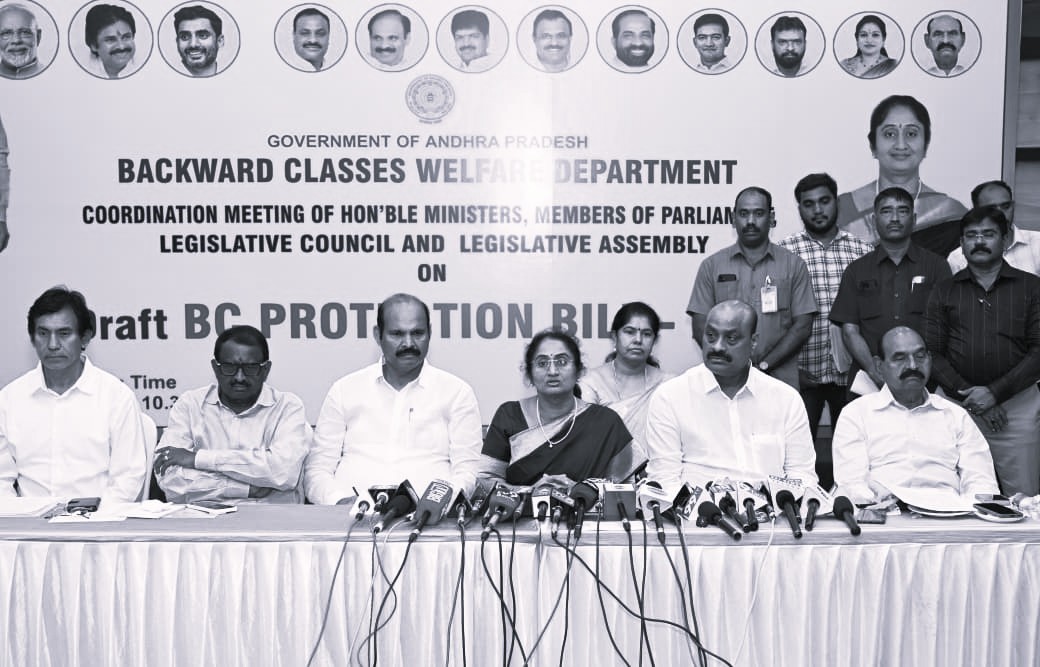
The announcement was made by BC Welfare Minister S. Savitha and Agriculture Minister Kinjarapu Atchannaidu after reviewing the draft legislation with public representatives, BC leaders and senior officials in Vijayawada.
Addressing the media, S. Savitha said the coalition government was fulfilling a key election promise by finalising the Bill. She said the proposed law would impose stringent penalties on those who insult, intimidate or harass individuals based on their caste identity or traditional occupation. To ensure the swift disposal of cases, the government also plans to establish special courts under the Act.
Savitha said the draft legislation will be shared with BC organisations across the State to seek suggestions before being sent to the National Commission for Backward Classes (NCBC). Following its approval, the government intends to introduce the Bill in the Andhra Pradesh Legislative Assembly.
Speaking on the occasion, Kinjarapu Atchannaidu said the legislation was drafted after nearly two years of consultations, fulfilling a commitment made during Nara Lokesh's Yuva Galam padayatra. He also said the coalition government is working to restore 34% BC reservation in local bodies through the Rajiv Ranjan Mishra Dedicated BC Commission, reversing the reduction made by the previous administration.
The review meeting was attended by Ministers Anagani Satya Prasad, Kolusu Parthasarathy, Kollu Ravindra, Kondapalli Srinivas and N.M.D. Farooq, along with MPs, MLAs, MLCs and senior officials, offered suggestions to further strengthen the proposed legislation before it is introduced in the Assembly.