
Assam Flood Fury: Did Human Actions Open the Floodgates? Mining and Deforestation Under Scanner
The floodwaters may be receding across Assam, but the questions left behind by one of the state's worst flood seasons continue to rise.
According to the Assam State Disaster Management Authority (ASDMA), the number of affected people has declined to 1.22 lakh across five districts, down from 1.28 lakh a day earlier. However, two more deaths in Sivasagar and Golaghat, including a boy who drowned in floodwaters, pushed the season's toll to 89.
Sivasagar remains the worst-hit district with nearly 60,000 people affected, followed by Charaideo (31,000) and Jorhat (20,000). Across the state, 365 villages remain submerged, while more than 15,342 hectares of farmland have been damaged. Relief operations continue through 55 camps and distribution centres sheltering nearly 18,000 people, while over 26,500 domestic animals and poultry have also been affected. The Dhansiri River at Numaligarh continues to flow above the danger mark, with fresh rainfall triggering renewed warnings.
As Assam battles the aftermath, attention has turned to what intensified the disaster.
Chief Minister Himanta Biswa Sarma has urged caution against drawing conclusions without scientific evidence. Responding to concerns over mining activities in neighbouring Nagaland, he said Assam does not have jurisdiction to regulate operations across the border. However, he has backed a detailed study involving satellite imagery and technical institutions, including the IITs, to examine whether mining, deforestation or other factors played a role.
The Chief Minister has also pointed to other possible contributors, including heavy runoff from neighbouring hills, rising Brahmaputra levels and highway embankments affecting natural drainage.
Meanwhile, opposition parties including the Congress, Raijor Dal and Assam Jatiya Parishad, along with organisations such as the Krishak Mukti Sangram Samiti (KMSS), have alleged that illegal coal and stone mining and large-scale deforestation along the Assam-Nagaland border worsened the floods.
They claim mining weakened hill slopes, reduced water absorption capacity and may have triggered sudden surges into rivers like the Dikhow, flooding areas such as Sivasagar, Charaideo and Jorhat. Experts have also noted that land degradation can increase runoff, though the exact impact remains to be scientifically determined.
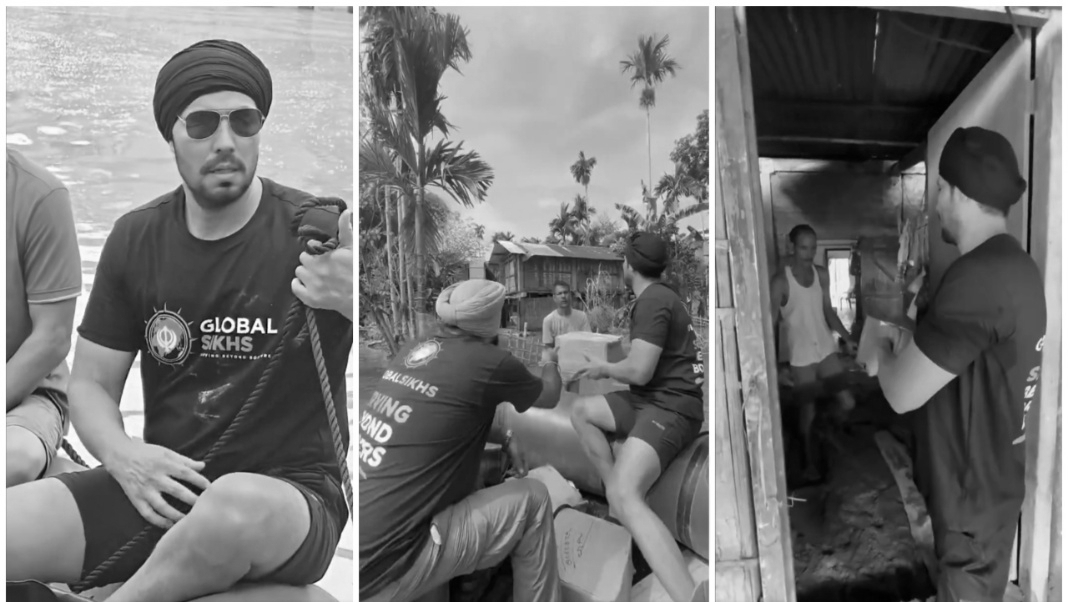
Amid the debate, actor Randeep Hooda, working with the NGO Global Sikhs in Sivasagar, has highlighted the humanitarian crisis on the ground. Travelling by boat through flooded villages, he reached stranded families and distributed supplies. Calling the devastation "beyond imagination", Hooda said many families remained trapped even after several days, with water still above knee level in several areas.
He also questioned whether the disaster was entirely natural, suggesting that mining and large-scale deforestation along the Assam-Nagaland border may have contributed to the scale of devastation.
With 89 lives lost and thousands rebuilding their lives, Assam's flood crisis has now become a search for answers, one that only a detailed scientific assessment can resolve.