
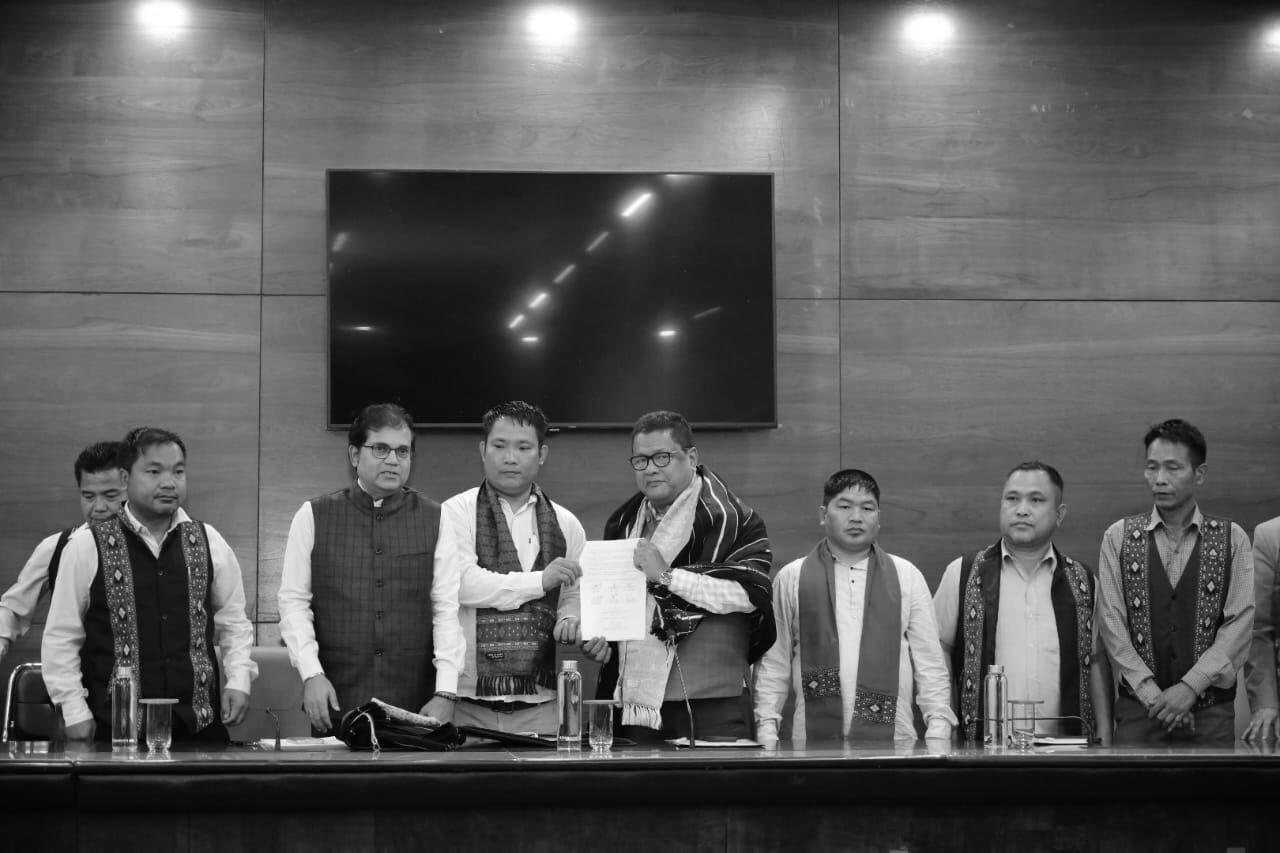
Assam signs peace with four armed groups after 14 years of talks
After decades of ethnic insurgency , the Assam government formalised memoranda of settlement with four armed organisations: the United Kukigam Defence Army, the Kuki Revolutionary Army, the Kuki Liberation Organisation/Kuki Liberation Army, and the Hmar Peoples' Convention-Democratic. Education Minister Ranoj Pegu was among the state representatives present. Officials called it the end of ethnic militancy in Assam .
The backstory matters. All four organisations had laid down their weapons in 2012 , signing Suspension of Operations agreements in the presence of the then Union Home Minister and Assam Chief Minister. That was not surrender — it was a calculated bet that dialogue could deliver what armed struggle had not. Sunday's accord is the state's answer to that bet, arrived at through years of tripartite negotiations among the groups, the state government, and the Centre.
The settlement is substantive. Two community-specific bodies — the Kuki Welfare and Development Council and the Hmar Welfare Development Council , both headquartered in Guwahati — will prepare development proposals and coordinate welfare initiatives through the state's Transformation and Development Department, backed by dedicated budget provisions. Development schemes targeting Kuki and Hmar-dominated areas are included, with explicit protections for cultural, linguistic, and ethnic identities . Former cadres will receive rehabilitation support, and families of militants who died during the conflict will be offered financial compensation — a belated but meaningful acknowledgement of human cost.
Assam's approach follows a well-worn Northeast logic: recognise identity, channel aspirations through institutional frameworks, and replace guns with councils. The Bodoland Territorial Council settlement offers a precedent, as do various autonomous council arrangements across the region. That model has a reasonable record, and the fourteen-year runway from ceasefire to final accord suggests patience and genuine seriousness on both sides.
But celebration should not precede scrutiny. The welfare councils are headquartered in Guwahati, far removed from the hills and villages where Kuki and Hmar communities actually live. Urban administrators making development decisions for remote communities is a recipe for plans that look good on paper and land awkwardly on the ground. The "illustrative list" of development schemes is, by its own description, non-binding — without enforceable timelines and independent oversight, such lists have a habit of becoming monuments to good intentions. The compensation framework for families of slain militants has not been made public in its specifics, leaving eligibility and amounts open to dispute . And the declaration that ethnic militancy has ended is premature optimism: the structural grievances that originally drove these groups toward arms — land rights, political representation, economic marginalisation — are not dissolved by a signature.
The accord is a foundation, not a finish line. Its true measure will not be found in the headlines, but in the schools, roads, and economic security visible in Kuki and Hmar villages in the years ahead.