
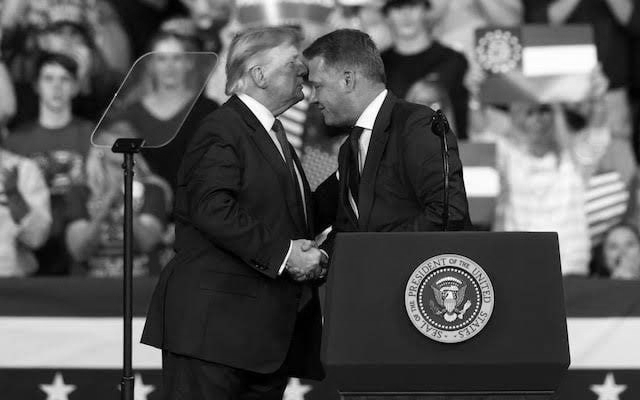
Audi CEO Faces Backlash In Germany After Appearing With Trump At Rally
Audi chief executive Gernot Döllner is facing sharp criticism in Germany after appearing alongside US President Donald Trump at a campaign rally in Georgia to announce plans for the luxury carmaker’s first American factory, a proposed $4.2 billion investment that still requires approval from Volkswagen’s supervisory board.
Döllner joined Trump at the rally in Perry on Saturday, October 24, where the US president presented the proposed plant as evidence that his administration’s tariffs were bringing manufacturing jobs to America. The facility is expected to produce around 200,000 SUVs annually and create approximately 4,500 jobs. Construction is planned to begin in 2027, with production targeted for the early 2030s.
Christiane Benner, head of Germany’s powerful IG Metall union and deputy chair of Volkswagen’s supervisory board, described Döllner’s appearance as deeply embarrassing, politically unacceptable and unworthy of the company. She accused him of violating Audi’s internal political neutrality rules.
Audi’s code of conduct prohibits public appearances alongside political parties or politicians contesting elections during the three months before an election. Döllner had signed the guidelines, making the appearance particularly controversial ahead of the November 3 US midterm elections.
Volkswagen works council chief Daniela Cavallo also criticised the episode, arguing that Döllner’s participation in Trump’s event conflicted with the group’s stated values. Employee representatives have been demanding greater job security at German factories alongside a clear strategy for the North American market.
The proposed investment is intended to strengthen Audi’s US presence and reduce exposure to import tariffs, which cost the company approximately €1.2 billion last year. Trump has repeatedly promoted tariffs as a tool to encourage domestic manufacturing.
However, the plan comes as parent company Volkswagen Group pursues a major restructuring programme that includes plans to cut around 100,000 jobs and reduce excess production capacity. The group is also facing mounting pressure from losses in China and the costly transition to electric vehicles.
The potential American factory has raised concerns over the contrast between expanding production in the United States and reducing capacity in Germany. Audi’s Neckarsulm plant is among Volkswagen Group facilities facing potential closure from the beginning of the next decade.
Despite the controversy, analysts have argued that establishing US production makes strategic sense. The final decision now rests with Volkswagen’s supervisory board, which must weigh the investment against the group’s wider financial and employment priorities.