
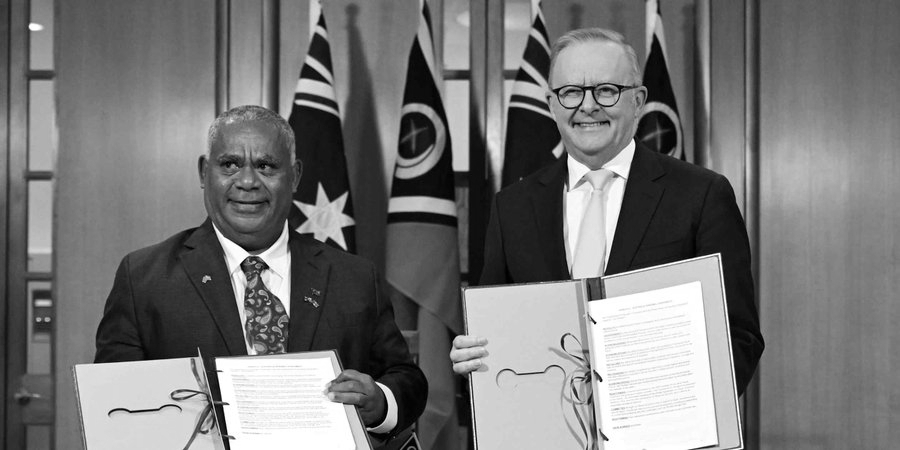
Australia, Vanuatu Sign Nakamal Agreement to Enhance Pacific Security and Counter China
Australia and Vanuatu on Monday signed the Nakamal Agreement , a long-awaited bilateral security and economic pact aimed at strengthening cooperation and reinforcing stability in the Indo-Pacific , while limiting the possibility of foreign military expansion in the Pacific island nation.
Signed by Australian Prime Minister Anthony Albanese and Vanuatu Prime Minister Jotham Napat , the agreement commits Vanuatu to not allowing foreign military bases or military infrastructure on its territory and to protecting critical infrastructure from militarisation, foreign interference and unauthorised access. Unlike an earlier draft, the final pact does not give Australia veto powers over Vanuatu's dealings with third countries, though consultations on critical infrastructure projects are required.
Albanese described Australia as Vanuatu's "largest and most comprehensive economic, security and development partner," while Napat said the agreement reflected the two countries' shared vision for a peaceful and prosperous Pacific.
The pact is widely seen as part of Australia's broader strategy to strengthen partnerships across the Indo-Pacific amid China's growing diplomatic and infrastructure presence in the region. By preventing foreign military bases in Vanuatu, the agreement is expected to curb Beijing's ability to expand its strategic footprint in the South Pacific.
Under the treaty, Vanuatu will prioritise policing cooperation with Pacific Islands Forum members but is not barred from engaging Chinese police. It will also seek disaster assistance first from Australia, New Zealand and France.
Napat said Vanuatu is separately negotiating the Namele Agreement with China, describing it as a development cooperation pact rather than a security deal. He said the agreement would be released publicly once it receives approval from Beijing. Australia is expected to disclose the financial details of the Nakamal Agreement before December.