
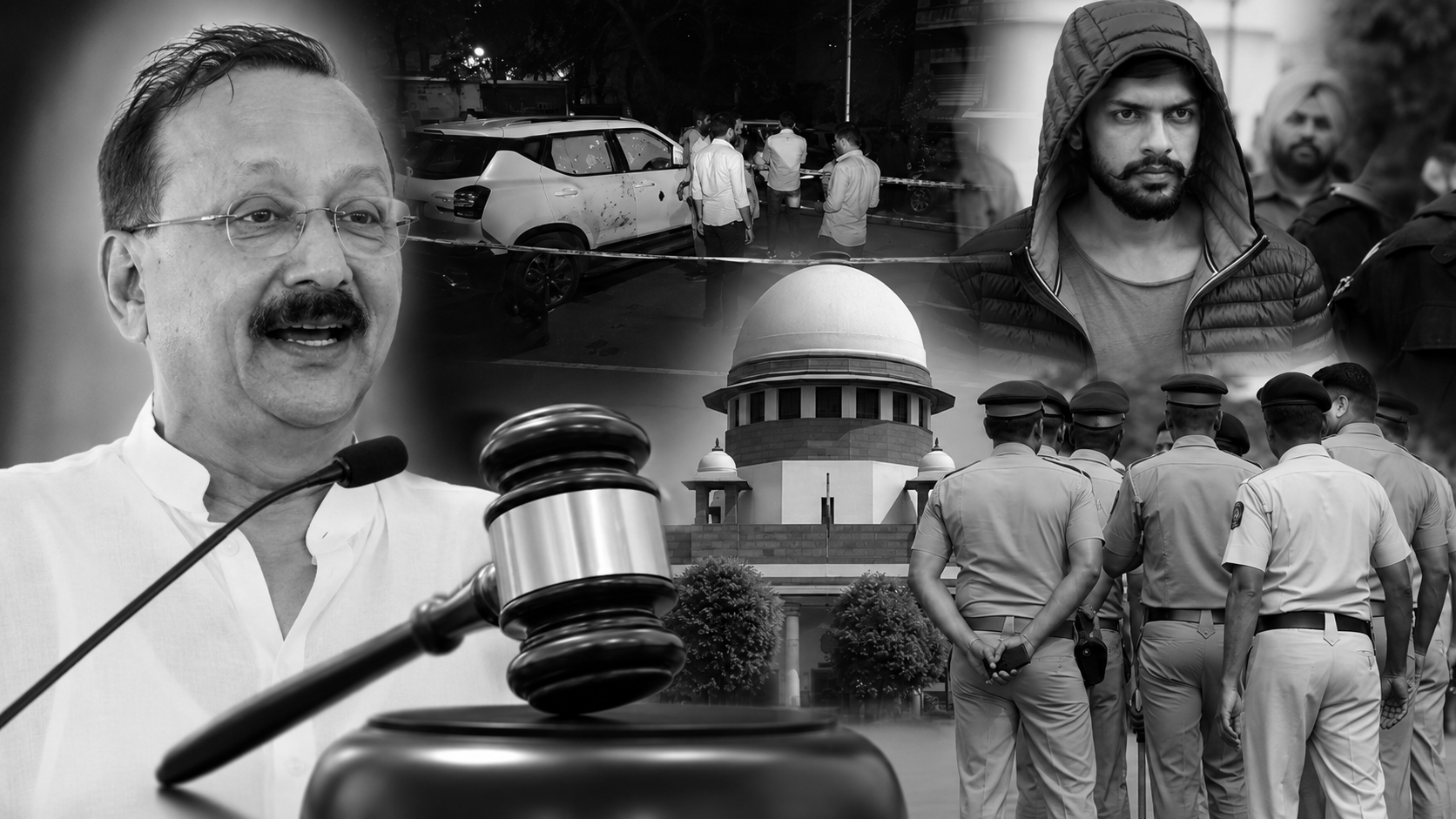
Baba Siddique Murder Case: Court Pulls Up Mumbai Police Over Anmol Bishnoi Custody
A special court hearing cases under the Maharashtra Control of Organised Crime Act (MCOCA) on Friday strongly criticized the Mumbai Police for failing to secure the custody of jailed gangster Anmol Bishnoi , a key accused in the murder of former Maharashtra minister and NCP leader Baba Siddique . The court directed the investigating agency to initiate all legal steps to bring Bishnoi before it and submit a strict compliance report by July 24 , observing that such action was the police's statutory responsibility and not something the judiciary should have to remind them about.
Special MCOCA Judge Satyanarayan R. Navander , while hearing a plea filed by Siddique's family, remarked that securing the custody of an accused, conducting investigations, interrogating suspects and placing them on trial are the exclusive responsibilities of law enforcement agencies. The judge termed it an "unfortunate situation" that the court had to issue directions in a serious murder prosecution, stressing that investigators must proactively exhaust all legal remedies available to them.
The case relates to the October 12, 2024 assassination of Baba Siddique , 66, who was shot multiple times outside the office of his son Zeeshan Siddique in Mumbai's Bandra East. He later succumbed to his injuries at Lilavati Hospital. The high-profile killing sent shockwaves through Maharashtra's political circles and triggered a massive investigation into an alleged organized crime conspiracy.
During the probe, investigators linked the murder to the Lawrence Bishnoi gang , a criminal syndicate accused of involvement in extortion, contract killings and organized crime across several states. Police subsequently invoked MCOCA , enabling them to investigate the wider conspiracy, financial links and criminal network behind the attack. Several alleged shooters, facilitators and logistics providers were arrested, and charges of murder, criminal conspiracy and organized crime were later framed against 27 accused , formally paving the way for trial.
Among the principal accused is Anmol Bishnoi , younger brother of jailed gangster Lawrence Bishnoi . After being deported from the United States in November 2025 , he was arrested by the National Investigation Agency (NIA) in a separate terror-gangster syndicate case and is currently lodged in Tihar Jail in New Delhi. Investigators consider him an important figure in the alleged conspiracy behind Siddique's killing.
Despite Anmol being in Indian custody, the Mumbai Crime Branch had not secured his custody for interrogation in the murder case. This prompted Shehzeen Siddique , the slain leader's wife, to approach the Special MCOCA Court, alleging that investigators were avoiding taking his custody due to "external pressure" and seeking judicial directions to expedite the process. The police denied the allegation, stating that they were prepared to take physical custody if permitted by law but cited operational hurdles.
The court, however, observed that the investigating agency had several lawful options available under the Bharatiya Nagarik Suraksha Sanhita (BNSS) . It pointed out that investigators could formally arrest Anmol in the present case after obtaining permission from the competent court, seek a production warrant, or interrogate him while he remained in judicial custody with approval from the Delhi court. The judge remarked that the agency appeared to have overlooked these legal avenues .
Directing the Mumbai Police to strictly follow the procedures prescribed under the BNSS, the court emphasized that procedural hurdles cannot substitute investigative diligence , particularly in organized crime cases. The order reinforces the need for prompt inter-agency coordination and timely action to ensure that key accused are brought before the court without avoidable delays, paving the way for the trial to proceed effectively.