
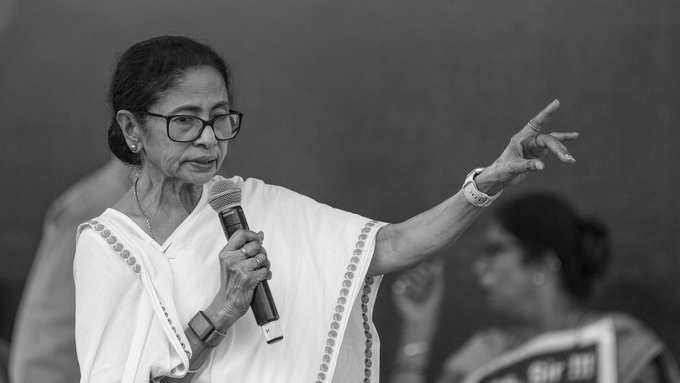
Banerjee’s outreach push: Five cultural boards planned before state elections
Ahead of the upcoming assembly elections in West Bengal, Chief Minister Mamata Banerjee on Friday announced plans to constitute five new Cultural and Development Boards for select communities, a move seen as aimed at strengthening support among key social groups in politically crucial regions.
The proposed boards will serve the Munda (ST), Kora (ST), Dom (SC), Kumbhakar (OBC), and Sadgope (OBC) communities. Banerjee said the initiative aims to preserve their cultural identity while advancing socio-economic development through improved access to education, healthcare, and employment opportunities. The outreach is framed within the constitutional mandate for social justice including provisions such as Article 15 of the Constitution of India and Article 46 of the Constitution of India which empower the state to adopt special measures for Scheduled Castes, Scheduled Tribes, and Other Backward Classes, alongside relevant welfare laws and policies aimed at reducing historical inequalities.
The Munda and Kora tribes , classified as Scheduled Tribes, are concentrated in the western tribal belt , including Bankura, Purulia, Jhargram, and parts of Paschim Medinipur districts marked by forested terrain and lower development indicators.
The Dom community , listed as Scheduled Castes, also has a strong presence in these areas and other rural pockets, historically facing social and economic marginalisation .
The Kumbhakar community , traditionally associated with pottery, and the Sadgope community , linked to agriculture and dairy activities, fall under the Other Backward Classes category and are spread across southern and western parts of the state.
Observers view the announcement as strategically timed ahead of the assembly polls expected in April. The western districts have long been a battleground between the ruling All India Trinamool Congress and the opposition Bharatiya Janata Party, where tribal, Dalit, and OBC voters play a decisive role.
The move also comes amid political tensions following controversy during President Droupadi Murmu’s recent visit to north Bengal. Banerjee said similar boards created since 2013 reflect her government’s commitment to inclusive development . With elections to the 294-member assembly approaching, the initiative underscores the ruling party’s effort to consolidate support across diverse social constituencies .