
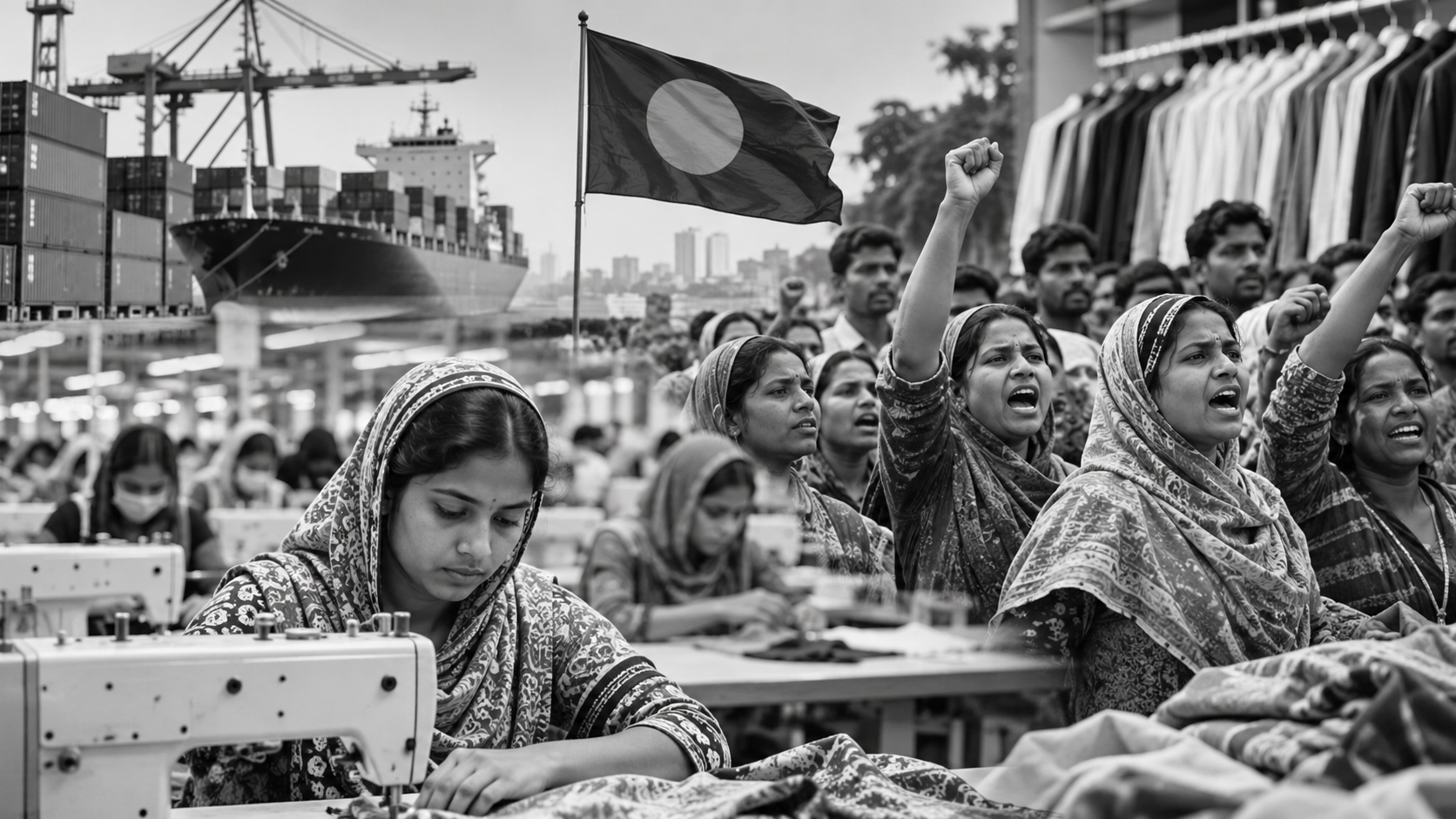
Bangladesh Raises Garment Workers' Minimum Wage by 36% After Protests
Bangladesh on Wednesday raised the minimum monthly wage for garment workers by 36 per cent to Tk 17,000 (USD 136) from Tk 12,500 (USD 100), following weeks of sometimes violent protests that disrupted factory operations, halted production and threatened export orders in the country's largest manufacturing industry. However, the revised wage remains below workers' final demand of Tk 18,000 and significantly short of their initial demand of Tk 32,000.
The decision was taken by the six-member Minimum Wage Board after nearly 12 hours of negotiations between factory owners and workers' representatives in Dhaka's Segunbagicha. Four members voted in favour of Tk 17,000, while two supported the workers' final proposal of Tk 18,000. The new structure will take effect from December 1, with revised salaries expected in January 2027.
Under the revised structure, fourth-grade workers will receive Tk 17,000 monthly, third-grade employees Tk 19,200, second-grade workers Tk 20,000 and first-grade workers Tk 21,500. Workers had initially demanded Tk 32,000, subsequently reducing their demand to Tk 22,000 and finally Tk 18,000, citing rising food, housing, transportation and healthcare expenses.
The protests, which began in late October, affected more than 600 factories across major garment-producing areas. According to the Bangladesh Garment Manufacturers and Exporters Association (BGMEA), production losses reached USD 428 million across 317 surveyed factories during the first 18 days of November. Buyers also shifted orders worth approximately USD 254 million, covering 59 million garments, to other countries.
Bangladesh is the world's second-largest garment exporter after China. The industry employs more than four million workers and contributes over 80 per cent of the country's export earnings. Bangladesh Bank reported garment exports of USD 39.35 billion in FY2025, accounting for 8.52 per cent of nominal GDP.
The revised minimum remains considerably below the estimated Dhaka living-wage benchmark of Tk 33,343 cited by the Global Living Wage Coalition. Meanwhile, manufacturers have warned that higher labour costs, inflation and production disruptions could weaken competitiveness against India, Vietnam and China.
International brands, including H&M, Zara, Walmart and Gap, are also facing calls to share the additional labour costs through responsible purchasing practices. The International Labour Organization (ILO) has urged evidence-based wage negotiations and sustained dialogue between workers, employers and the government.
The wage dispute comes as Bangladesh prepares for its scheduled 2029 graduation from the United Nations' Least Developed Country category, potentially changing its preferential trade arrangements. Manufacturers are being urged to invest in automation, worker skills, sustainable production and higher-value apparel to protect export competitiveness.
The latest settlement offers workers some relief but leaves unresolved the wider challenge of balancing decent wages, industrial stability and Bangladesh's position in global apparel supply chains.