
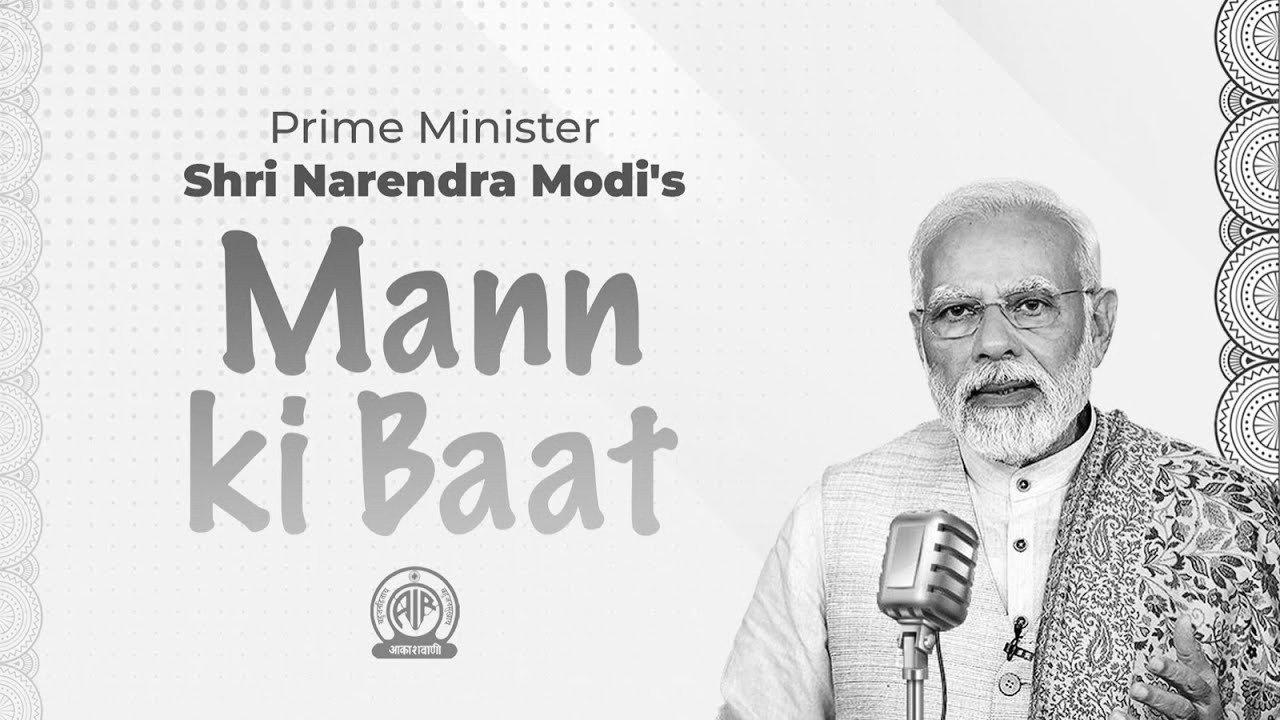
Blending Technology, Tradition and Humanity: PM Modi’s Mann Ki Baat Message
Prime Minister Narendra Modi’s latest Mann Ki Baat broadcast presented a wide canvas of ideas that blended technology, compassion, culture, and citizen responsibility , reflecting India’s evolving national priorities. The address drew heavily on the recently concluded Global AI Impact Summit in New Delhi , portraying it as a landmark moment in shaping how artificial intelligence can serve humanity. By showcasing AI solutions that assist dairy farmers in monitoring livestock health and productivity, the summit highlighted the government’s emphasis on technology that improves livelihoods at the grassroots level. Equally striking was the use of AI to digitise and preserve ancient manuscripts such as the Sushruta Samhita , demonstrating how modern tools can safeguard civilisational knowledge while making it accessible to future generations.
The Prime Minister also pointed to India’s emergence as a key voice in global AI development through the launch of indigenous AI models and the push for multilingual, inclusive digital ecosystems. This focus aligns with India’s broader ambition to lead in “AI for social good” , ensuring technology reaches rural communities, supports governance, and preserves cultural heritage.
Beyond technology, the address celebrated the global footprint of the Indian diaspora through cricketers of Indian origin representing countries such as Canada, the United States, Oman, and New Zealand. Their journeys were portrayed as symbols of enduring cultural roots and India’s expanding soft power.
A deeply emotional segment recounted the story of 10-month-old Aalin Sherin Abraham from Kerala, whose parents chose organ donation after her death. The decision saved lives and ignited national awareness about organ donation, an area where India continues to face shortages. Complementing this message were inspiring accounts of transplant recipients reclaiming active lives, reinforcing the transformative impact of such acts.
The Prime Minister also highlighted efforts to replace colonial-era symbols with national icons, including the unveiling of a statue of C. Rajagopalachari , India’s first Indian Governor-General, at Rashtrapati Bhavan. The gesture signals a broader effort to align public spaces with India’s post-colonial identity and heritage.
Addressing rising cybercrime, he cautioned citizens against digital fraud and urged vigilance in banking practices, especially regarding KYC updates and OTP sharing. The message echoed ongoing financial literacy campaigns aimed at strengthening trust in India’s rapidly digitising economy.
Agriculture featured prominently as an arena of innovation. Examples of integrated farming, biodiversity conservation, and export-oriented produce illustrated a shift from mere production to value addition and sustainability. India’s position as the world’s largest rice producer and its expanding agricultural exports underscore the sector’s global significance.
The broadcast also touched upon cultural revival, citing the renewed observance of Kerala’s historic Mamangam tradition as evidence of India reconnecting with its heritage. Tributes to former Tamil Nadu Chief Minister Jayalalithaa acknowledged regional leadership and women’s empowerment, while messages to students encouraged resilience beyond exam stress.
Concluding with greetings for Ramzan and Holi, the Prime Minister urged citizens to support Swadeshi products and strengthen local economies through conscious consumption.
Taken together, the address portrayed a nation striving to harmonise innovation with tradition, economic progress with compassion, and national pride with global engagement, a vision of development rooted in both technological advancement and civilisational continuity.