
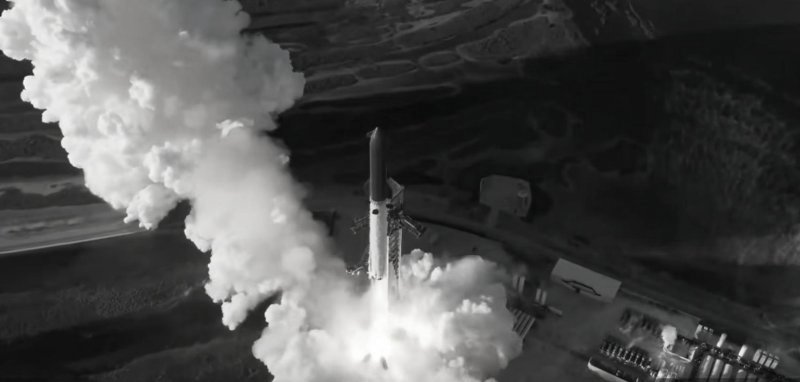

Booster Explodes, But Starship Reaches Orbit in SpaceX's Most Ambitious Test Yet
SpaceX's ambitious attempt to recover both stages of its massive Starship rocket in a single mission suffered a setback on Friday after its first-stage booster fell into the Gulf of Mexico and exploded. However, the spacecraft successfully reached orbit, marking a major milestone in Elon Musk's plans for future Moon and Mars missions.
The booster was supposed to return to SpaceX's Starbase launch facility in Texas, where giant mechanical arms attached to the launch tower would catch it mid-air. Instead, it was diverted offshore, preventing the company from achieving its planned historic double catch. SpaceX did not immediately explain what went wrong.
Despite the setback, Starship continued its journey and deployed 26 advanced Starlink satellites shortly after reaching orbit. It is expected to complete 15 laps around Earth at an altitude of approximately 275 km before attempting to return to the launch site on Saturday. The flight could last up to 22 hours.
The return attempt will be particularly significant as it marks the first effort to catch the spacecraft itself using the launch tower's mechanical arms. Friday's mission was also the first recovery attempt involving the upgraded 72-metre Super Heavy booster. The spacecraft measures 52 metres, making the complete rocket 124 metres tall, the world's biggest and most powerful.
SpaceX has previously completed three successful booster catches but has never recovered a Starship spacecraft. Its 14 earlier spacecraft either landed in the ocean as planned or were destroyed during testing. The September flight was the first to reach orbit, although no recovery attempt was made.
Musk wants complete rocket reusability to enable a dramatic increase in launch frequency and eventually support Moon bases and human missions to Mars. SpaceX plans to begin Starship launches from Florida within months, with Louisiana operations planned in the coming years. Starship is eventually expected to replace the company's Falcon rockets, which still discard their second stages after every flight.
The programme is also central to NASA's Artemis missions. NASA is paying SpaceX billions of dollars to develop a Starship lunar lander, while Jeff Bezos' Blue Origin is developing its competing Blue Moon lander.
During next summer's Artemis III mission, astronauts are expected to practise docking with both spacecraft in Earth's orbit, preparing for a crewed lunar landing as early as 2028. NASA Administrator Jared Isaacman welcomed Starship's successful orbital flight, saying the agency looked forward to using its in-orbit Starlink capabilities during Artemis III.