
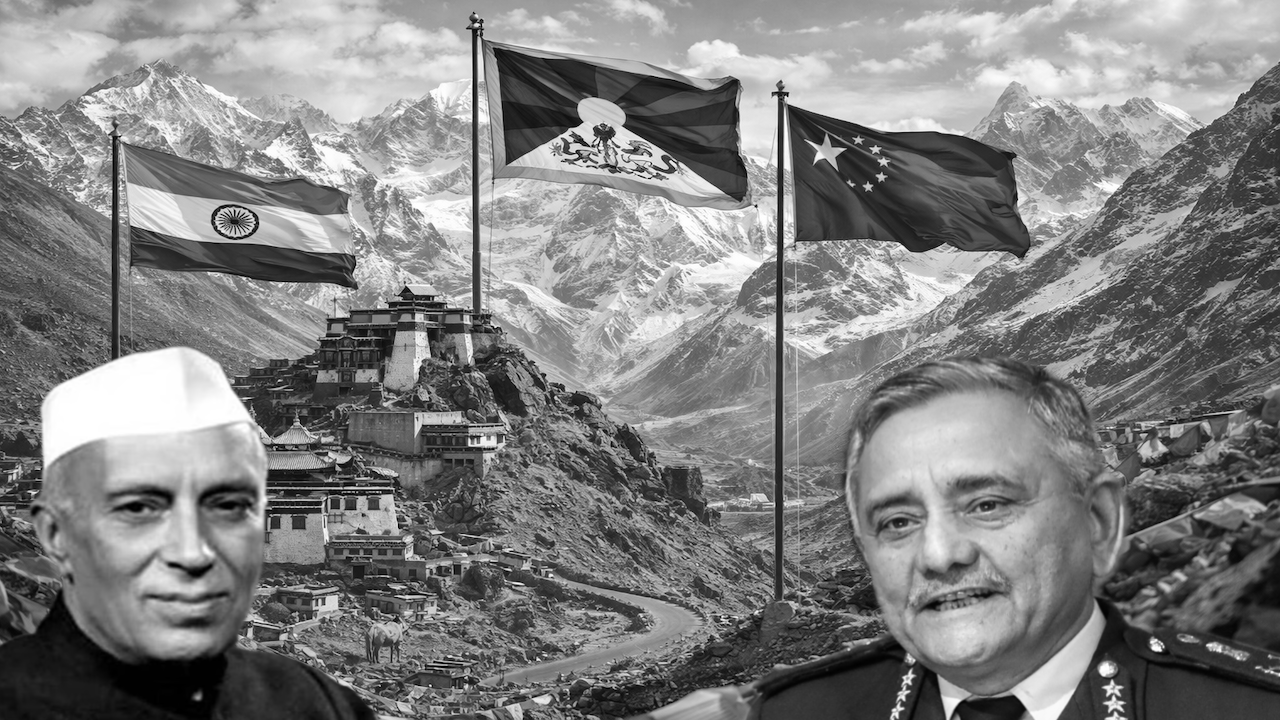
Border dispute arose after India recognised Tibet as part of China: CDS Chauhan
Chief of Defence Staff Anil Chauhan on Saturday said the roots of the India, China boundary dispute lie in New Delhi’s recognition of Tibet as part of China in 1954 through the Panchsheel Agreement , and in the differing interpretations of that pact by the two countries.
Speaking at a strategic forum in Dehradun, Gen Chauhan said India believed the Panchsheel Agreement, based on the five principles of peaceful coexistence , had implicitly settled the northern frontier by identifying key Himalayan passes for trade and pilgrimage. China, however, viewed the agreement as limited to trade and not as a formal boundary settlement, which eventually led to a full scale border dispute .
The disagreement later escalated into the 1962 war , centred on Aksai Chin in the western sector and the McMahon Line in the eastern sector. Since then, the boundary has been governed by the Line of Actual Control (LAC) , which remains undefined in several stretches and is divided into western, middle and eastern sectors. Overlapping perceptions of the LAC have triggered repeated standoffs.
Tensions rose sharply after the 2020 Galwan Valley clash , the most serious confrontation in decades. Since then, both sides have maintained heavy troop deployments and upgraded border infrastructure. China has said the issue should be handled through dialogue and not define overall ties, while India maintains that peace and tranquillity along the border are essential for normal bilateral relations.
Diplomatic and military level talks continue to address friction points, but progress has been gradual. Analysts say Gen Chauhan’s remarks place the dispute in a historical context , reinforcing India’s view of its boundary claims even as negotiations to stabilise the LAC remain ongoing.
The CDS also underlined the need for an integrated Himalayan strategy , combining military preparedness, infrastructure development and broader security planning, as India navigates a complex and evolving relationship with China.