
Border Pillar Work Is Underway: Nepal, India Push Mapping To Fix Occupation Disputes
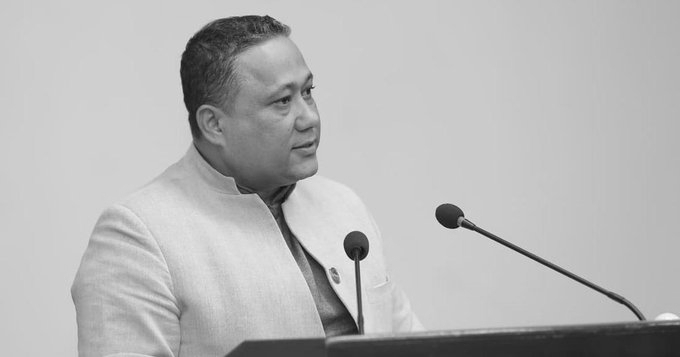
Foreign Minister Shisir Khanal told Parliament that a Joint Working Group (JWG) will address issues related to cross-border occupation and boundary discrepancies between Nepal and India, while clarifying Prime Minister Balendra Shah’s controversial remarks in the House of Representatives.
Khanal said the next meeting of the Nepal-India Joint Working Group (JWG) on Border Management will be held in India in August. He stressed that both sides are working through technical mapping, pillar restoration, and boundary verification mechanisms to resolve discrepancies on the ground.
The issue escalated after the Prime Minister reportedly stated that both Nepal and India may have encroached on each other’s territory at certain locations and suggested involvement of third parties such as China and the UK. India rejected any third-party mediation , reaffirming that border matters must be resolved bilaterally.
Khanal clarified in Parliament that the comments were based on technical field assessments , which indicate that areas used by one country may legally fall within the other’s territory. He added, “The Prime Minister was referring to these technical facts and ongoing mapping exercises.”
He also confirmed progress on missing and damaged border pillars , noting that both governments are jointly working on reinstallation and reconstruction across the 1,700+ km frontier, where thousands of pillars remain missing or require repair.
According to recent bilateral data, nearly 98% of the boundary has been demarcated, though disputes such as Kalapani and Susta remain unresolved. Nepal and India continue to rely on long-standing mechanisms like the Joint Technical Committee and JWG framework established for confidence-building.
Khanal further said Nepal remains committed to bilateral diplomacy , rejecting external mediation and reiterating that “no problem is too complex when resolved through mutual respect.” He added that his recent India visit helped deepen cooperation in trade, energy, connectivity, water resources, security, and people-to-people ties , while reviewing joint projects for better implementation.