
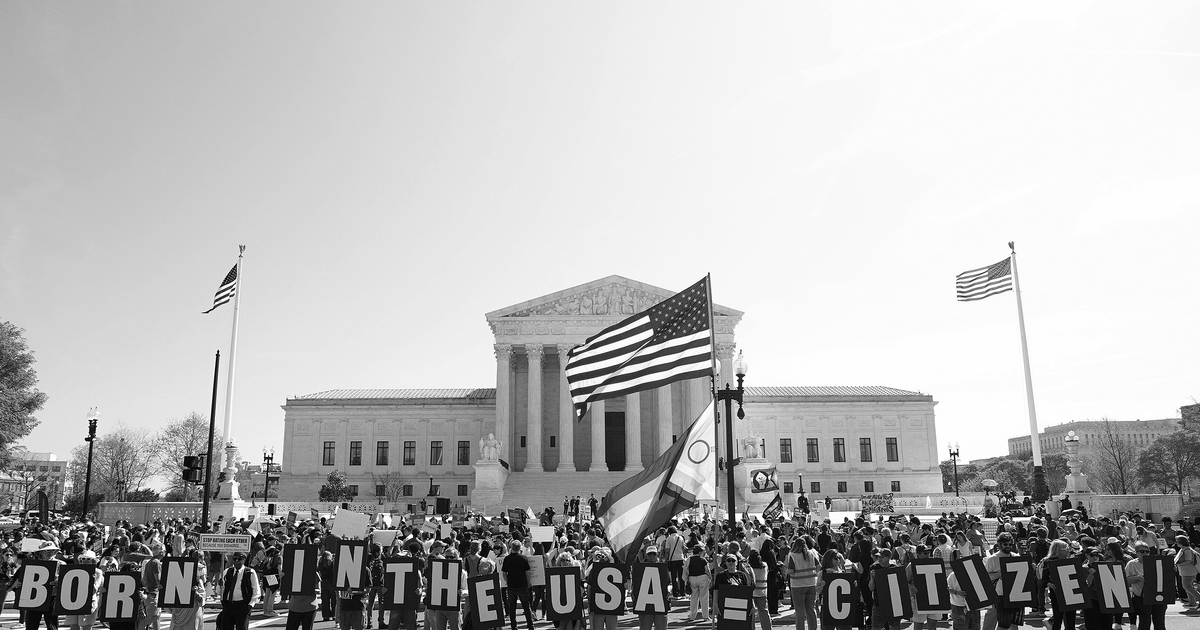
Born in USA Equals Citizen of USA: Supreme Court Shuts Down Trump’s Order
In a significant constitutional ruling, the Supreme Court of the United States has struck down an executive order issued by President Donald Trump that sought to end birthright citizenship for children born in the United States to undocumented immigrants and temporary visa holders.
In a 6–3 decision authored by Chief Justice John Roberts , the court held that such children are “subject to the jurisdiction” of the country and therefore entitled to citizenship at birth under the Fourteenth Amendment . The ruling reaffirmed long-standing constitutional interpretation rooted in the post Civil War era, reinforcing that citizenship is automatically granted to nearly all individuals born on US soil.
The court drew strong support from the historic 1898 precedent United States v. Wong Kim Ark , which has consistently upheld birthright citizenship regardless of parental immigration status. The majority opinion emphasized that the promise of citizenship is a foundational principle of the American constitutional system, describing it as a guarantee that cannot be altered through executive action alone.
Trump’s order, signed at the start of his second term in January 2025, had aimed to deny citizenship to children born to individuals unlawfully present in the country and those on temporary visas, including students and tourists. However, the policy never came into effect, as lower courts across the country quickly ruled it unconstitutional .
While the administration described the broader term as a political victory and signaled continued efforts to target so-called birth tourism through enforcement measures, the ruling marks a clear judicial setback for one of Trump’s key immigration priorities.
The decision has been widely welcomed by immigrant rights advocates and members of the Indian American community , which includes nearly 5.2 million people in the United States. Community leaders said the ruling brings clarity and relief, particularly for families affected by long immigration backlogs and uncertain visa pathways.
Prominent voices such as Chintan Patel of Indian American Impact described the judgment as a strong affirmation of belonging and constitutional equality, while others termed it a major victory for immigrant families seeking stability in the United States.
Several Indian American lawmakers, including Raja Krishnamoorthi , Pramila Jayapal , and Suhas Subramanyam , also praised the ruling, stating that no executive authority can override constitutional guarantees. They emphasized that the Fourteenth Amendment’s promise of equal citizenship remains intact.
Despite the setback, Donald Trump has indicated that he may seek legislative action through Congress to revisit the issue, setting the stage for further political and legal debate over immigration and citizenship policy in the months ahead.