
BRICS Adopts Indore Declaration, Launches Four Global Agriculture Platforms
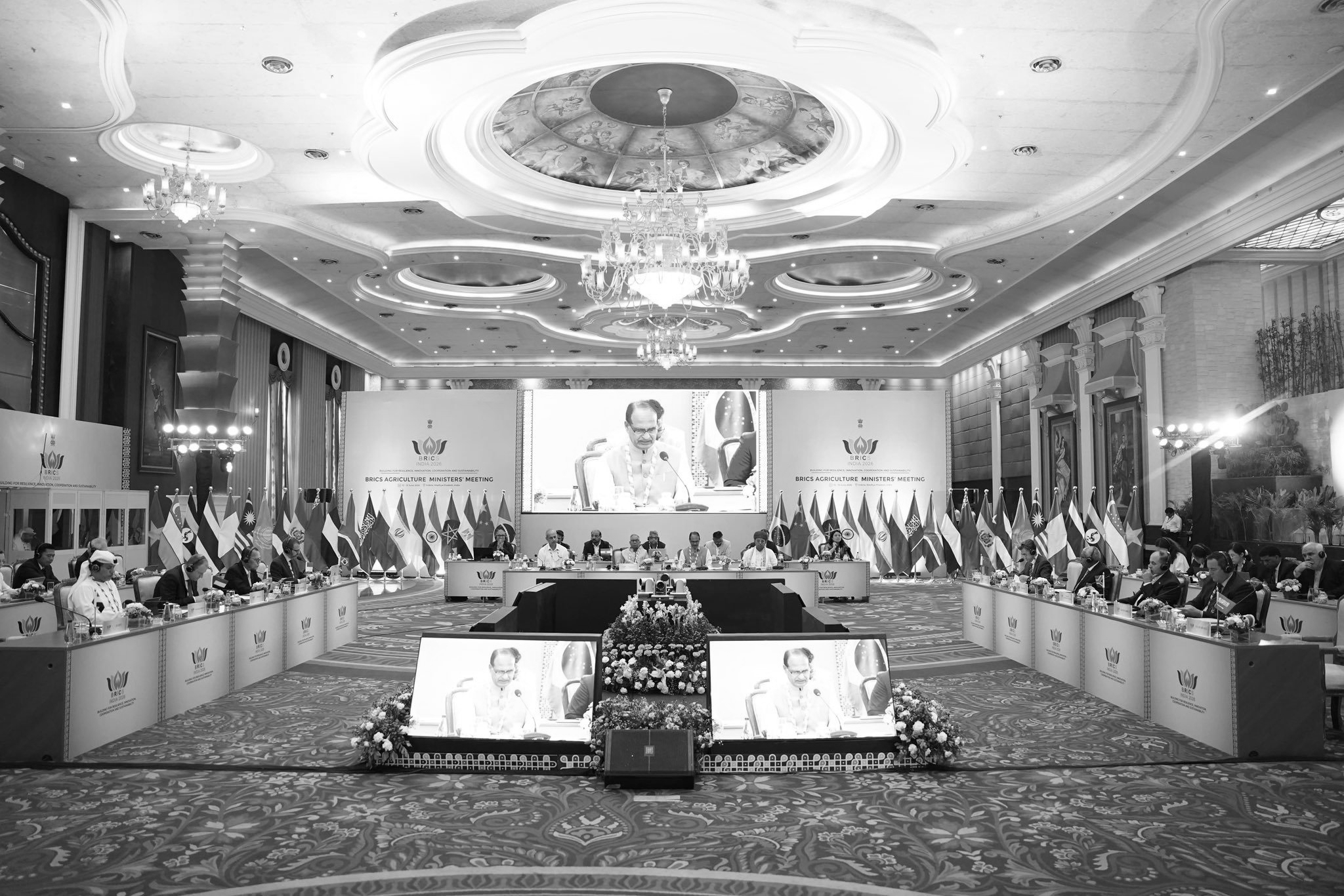
The BRICS Agriculture Ministers’ Meeting held in Indore concluded with the unanimous adoption of the “Indore Declaration” , marking a significant milestone in global cooperation on agriculture, food systems, climate resilience and farmer welfare. The declaration reflects a shared commitment among member nations to place farmers at the centre of global agricultural transformation , while strengthening food security, sustainability, innovation and trade cooperation across the BRICS bloc.
Addressing the media after the meeting, Union Minister for Agriculture & Farmers Welfare Shri Shivraj Singh Chouhan said the declaration represents a collective global resolve at a time when the world is facing multiple uncertainties, including climate change, supply chain disruptions and food system vulnerabilities. He said the BRICS platform has emerged as a strong voice for nearly half of the world’s population , with member countries collectively accounting for around 42 per cent of global agricultural land and a significant share of global foodgrain production. According to him, this makes BRICS an influential grouping in shaping the future of global agriculture and food security.
The meeting witnessed participation from nearly 100 delegates , including around 60 representatives from BRICS member and partner countries , reflecting the scale and seriousness of engagement on agricultural issues. Officials noted that discussions were conducted in a structured manner across senior officials’ meetings and ministerial-level deliberations, under India’s BRICS presidency.
The core discussions of the meeting were built around four key priorities: food security and nutritional security , promotion of agricultural trade and cooperation , climate-resilient and regenerative farming systems , and strengthening innovation, technology and partnerships in agriculture . These priorities were framed to address both immediate concerns such as availability and affordability of food, and long-term challenges such as climate adaptation and sustainable productivity growth.
A major focus of the deliberations was the situation of small and marginal farmers , also referred to as family farmers in several countries. Member nations discussed challenges such as access to quality inputs, availability of credit, market linkages, and ensuring remunerative prices for agricultural produce . The declaration emphasises improving the livelihoods of these farmers, who form the backbone of food production systems across BRICS countries.
The Indore Declaration itself is positioned as a comprehensive framework for cooperation in agriculture. It records a shared commitment to advancing food security, nutrition outcomes, farmer welfare, agricultural trade, investment, innovation and climate-resilient farming practices . It also highlights the importance of sustainable agricultural development and inclusive growth in rural economies. Officials emphasised that the declaration is not merely a policy statement but a roadmap for long-term institutional cooperation among BRICS countries in agriculture and food systems.
One of the most significant outcomes of the meeting is the announcement of four new institutional initiatives aimed at strengthening cooperation and knowledge exchange among member countries.
The first initiative is the BRICS Network of Centres of Excellence on Agro-Ecology and Regenerative Agriculture , which will focus on joint research, capacity building and exchange of best practices in natural, organic and regenerative farming systems. The network aims to promote climate-resilient agriculture and reduce dependence on chemical inputs while improving soil health and sustainability. India’s Indian Institute of Farming Systems Research, Modipuram will play a key role as the national centre contributing to this network.
The second initiative is the BRICS Network on Digital Agriculture , designed to strengthen cooperation in emerging technologies such as artificial intelligence, geospatial systems, digital public infrastructure and data-driven farming solutions . This platform is intended to bridge the technology gap among member countries and ensure that innovation directly benefits farmers. The initiative will be coordinated by IIT Delhi , with participation from all member nations contributing their technological and policy experiences.
The third initiative is the Global Forum on Farmers’ Rights in Seed Systems , which focuses on protecting farmers’ rights over seeds and preserving indigenous agricultural knowledge. The forum aims to safeguard traditional seed varieties, biodiversity and heritage farming systems , which are increasingly under threat due to climate change and the growing dominance of hybrid and commercial seed varieties. The initiative recognises that while modern seeds are essential for productivity, traditional seeds play a critical role in resilience, nutrition and ecological balance .
The fourth initiative is the BRICS AgriN Network (Agro Inputs, Genetic Resources and Information Network) . This platform will facilitate cooperation in agricultural inputs, genetic resources, seeds and information sharing among member countries. It aims to improve access to high-quality agricultural inputs and genetic material , especially for countries and farmers with limited resources. The network is expected to support technology transfer, capacity building and collaborative innovation in agriculture.
In addition to these new initiatives, member countries agreed to strengthen the existing BRICS Agricultural Research Platform and transform it into a “Knowledge-to-Action Hub” . The objective is to ensure that agricultural research does not remain confined to laboratories but is rapidly translated into practical solutions for farmers. This reflects a broader “lab-to-land” approach , focusing on faster dissemination of innovation and technology at the grassroots level.
On trade and economic cooperation, BRICS countries reaffirmed their commitment to a fair, transparent, inclusive and rules-based multilateral trading system . Discussions also included proposals such as a potential BRICS Grain Exchange , which could help stabilise agricultural markets, improve price discovery and strengthen food security among member nations. Several bilateral and multilateral meetings were also held on reducing trade barriers, improving customs cooperation and expanding agricultural exports.
Climate change emerged as a major concern throughout the discussions. Member countries highlighted risks posed by rising temperatures, unpredictable weather patterns and El Niño conditions , which can significantly affect agricultural production. The declaration calls for stronger cooperation in climate adaptation strategies, regenerative agriculture practices and sustainable land management . It also explores mechanisms related to carbon credits for farmers , encouraging environmentally sustainable farming practices that can also generate additional income for agricultural communities.
Another important area of discussion was the issue of post-harvest losses and food wastage , which contributes not only to economic losses but also to environmental degradation and increased carbon emissions. Member countries explored strategies to improve storage, logistics, processing and supply chain efficiency to reduce such losses.
On the issue of fertilisers and agricultural inputs, Shri Chouhan reaffirmed India’s commitment to supporting farmers by ensuring the availability of key fertilisers at affordable prices. He stated that despite global price fluctuations and geopolitical tensions affecting supply chains, urea and DAP will continue to be provided at subsidised rates , with the government bearing the additional financial burden. He also emphasised the need for balanced fertiliser use and warned against excessive dependence on chemical inputs.
The government’s broader push towards natural farming, organic farming and sustainable agricultural practices was also highlighted during the meeting. Awareness campaigns such as “Khet Bachao Abhiyan” were mentioned as part of efforts to promote environmentally responsible farming methods.
Technology access for small farmers was another important theme. The meeting recognised that not all farmers can afford expensive machinery, and therefore models such as Custom Hiring Centres and cooperative-based equipment sharing systems are being promoted. These systems enable small and marginal farmers to access modern equipment, including drones and precision farming tools, at affordable costs.
The declaration also places strong emphasis on the role of youth and women in agriculture , recognising them as key drivers of future transformation. Member countries acknowledged the growing importance of agri-startups, agribusiness ventures and agripreneurship , particularly in India, where thousands of startups are already operating in the agricultural sector. The aim is to encourage innovation, technology adoption and new business models that make agriculture more attractive to younger generations.
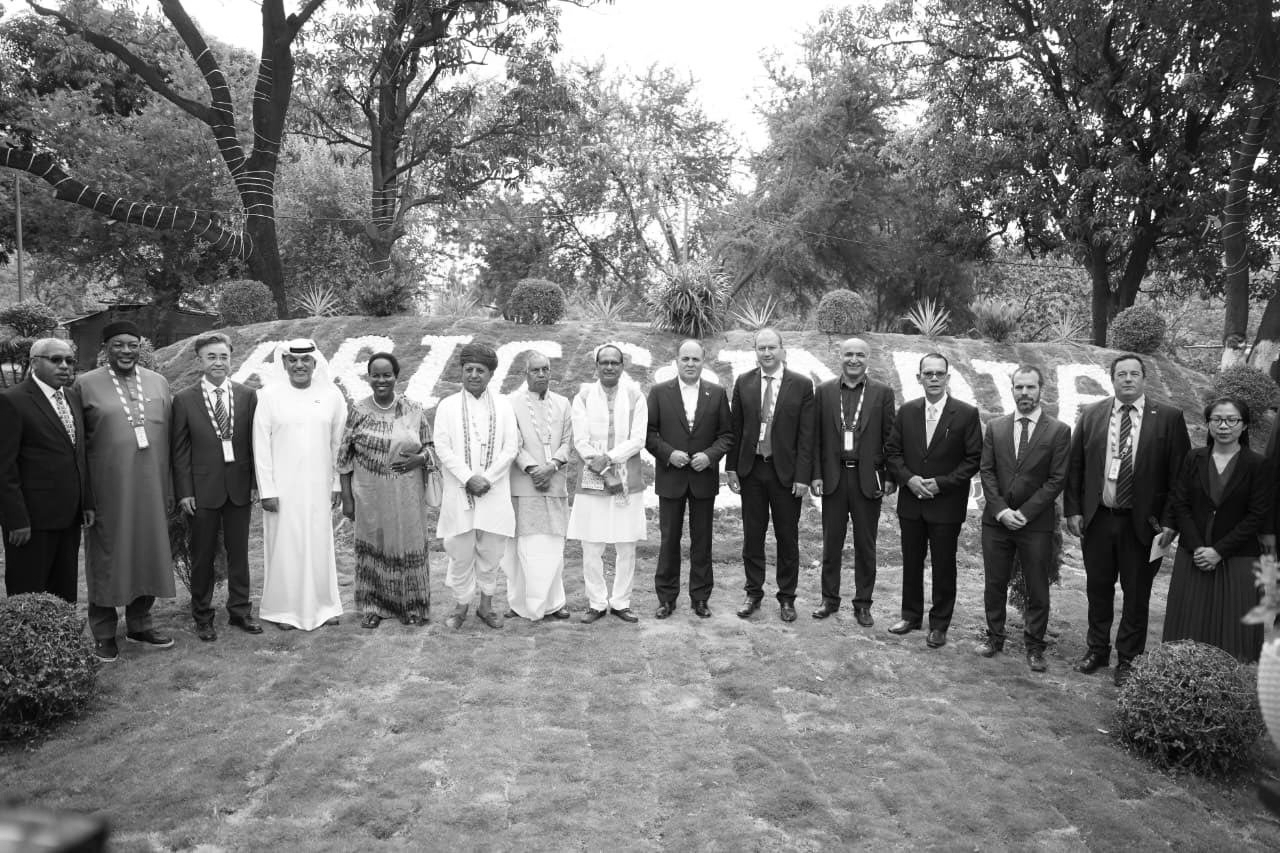
Indore itself emerged as a symbolic centre of this global agricultural dialogue, with delegates expressing appreciation for the hospitality and cultural richness of the region. Activities such as visits to local landmarks and participation in plantation drives under the “Ek Ped Maa Ke Naam” initiative added a cultural and environmental dimension to the meeting. A “BRICS Vatika” was also established as part of the environmental outreach.
The successful organisation of the meeting was made possible through coordinated efforts under the leadership of India’s BRICS presidency, with active involvement from multiple ministries and institutions. Officials described the event as a strong example of a “Whole of Government” approach , reflecting coordinated national effort in hosting an international diplomatic engagement of high significance.
In conclusion, the Indore Declaration represents a comprehensive and forward-looking framework for agricultural cooperation among BRICS nations. It combines immediate priorities such as food security and farmer welfare with long-term goals of sustainability, innovation and climate resilience. By launching new institutional mechanisms and strengthening existing platforms, BRICS has positioned itself as an important global actor in shaping the future of agriculture and food systems.