
BRICS Talks Big, Delivers Small: 140 Points, 11 Leaders, But Where Are The Concrete Results As Summit Concludes?
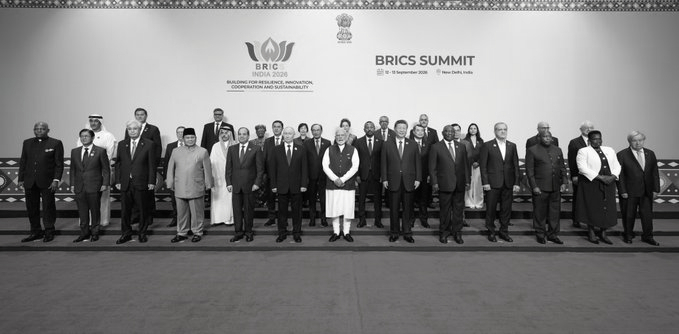
The 18th BRICS Summit closed in New Delhi on Sunday, and by the only test that matters, what changes on the ground because of it, the answer is: almost nothing. Prime Minister Narendra Modi called the bloc's "voice" stronger than ever, urging leaders to replace the "pyramid of privilege" in global governance and telling delegates BRICS now represents roughly 50% of the world's population, 40% of global GDP and over 25% of global trade. Those numbers have been recited at every BRICS summit since 2009. What's never followed them is a binding mechanism that converts scale into outcome, and this summit was no exception.
The New Delhi Declaration, a 140-point political statement, not a treaty like the New Development Bank's founding document, is the clearest evidence of that gap. It condemned the Pahalgam attack, urged "maximum restraint" in West Asia, voiced concern over "deliberate attacks" on civilian and nuclear infrastructure, and flagged "growing risks" of nuclear conflict, but skipped any mention of the US strike on Iran. Getting even that adopted took talks running to 4 am on September 12 to bridge Iran and the UAE's clashing positions, and on Ukraine the text retreated to a generic call for "dialogue, consultation and diplomacy" that spared founding member Russia any direct mention. Iran's President Pezeshkian used his own remarks to slam Western sanctions for damaging global food security and welfare. Beyond the headline lines, the declaration also touched obesity, traditional medicine, narcotics trafficking, disease surveillance and TB cooperation, cross-border scam networks, fugitive-offender cooperation, carbon border taxes, biodiversity financing, AI's economic potential, Paris Agreement commitments, cultural heritage protection, and the fact that no woman has ever led the UN as Secretary-General. The declaration even reached back to the Nehru-era Bandung Conference for its language on solidarity, prompting the Congress to quip "mera saaya saath hoga" at the government's borrowing of Nehruvian framing. Praveen Donthi of the International Crisis Group called the whole exercise a "reasonably satisfied" outcome given how low expectations were, a low bar, cleared by inches.
The one genuinely new geopolitical marker was Xi Jinping and Modi both offering to help mediate Ukraine peace talks, which Vladimir Putin welcomed, an offer, not a plan. Putin separately pushed for UN Security Council expansion favouring Asia, Africa and Latin America, accusing resistant Western powers of "colonial" thinking, and proposed a BRICS grain market and insurance framework to cushion members from global pressure. Xi pitched a five-point initiative for a "large integrated market" and called on BRICS to play its "due role" in West Asia peace efforts. China also signalled support for India's own permanent UNSC bid, arguably the summit's single most concrete political marker, still with no process or timeline attached.
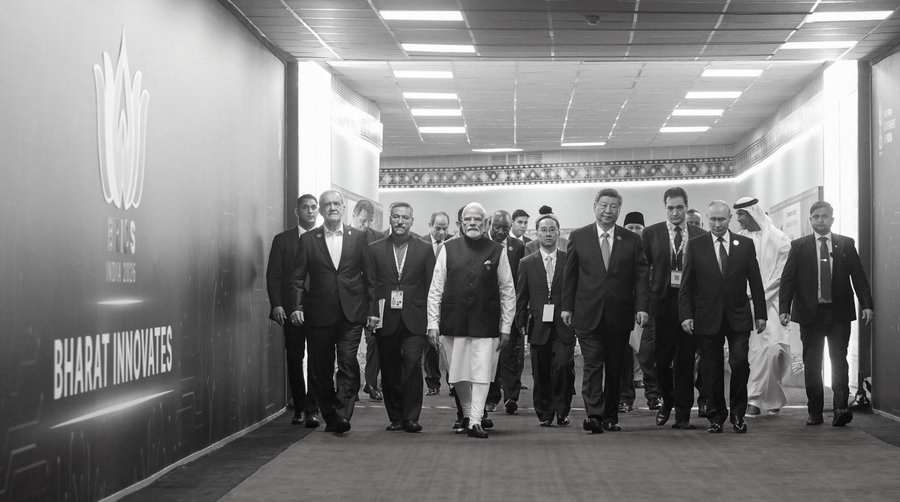
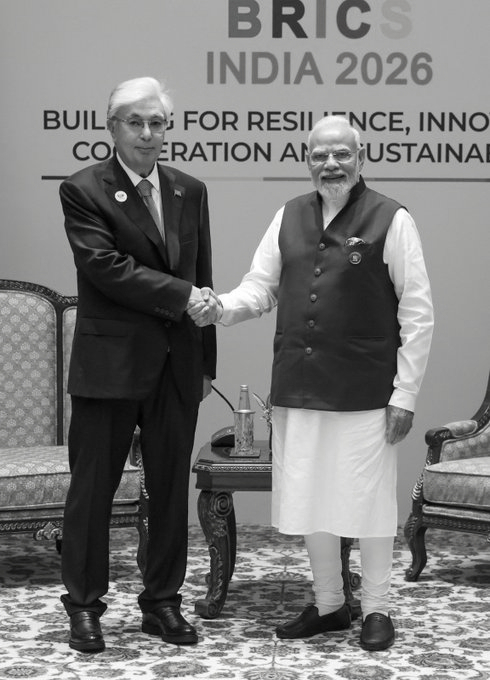
Modi's diplomatic marathon ran to 15 world leaders across two days, reaffirming ties with Kazakhstan and the Philippines and warning against the "weaponisation" of technology and critical minerals. The Modi-Xi bilateral, their first substantial meeting in three years, produced the summit's only dated, verifiable deliverable: resumed Guangzhou-Delhi flights from September 21. A "fair, reasonable" border settlement and fixing India's $112.16 billion trade deficit with China remained stated intentions, not mechanisms. Xi skipped Modi's gala dinner, built around millet pulao, paneer lababdar and shahtoot phirni, which briefly turned political, with the BJP calling it a success and the Congress accusing the government of imposing its "dietary preferences" on guests. EEPC India argued that removing non-tariff barriers, not declarations, is what would actually boost BRICS trade.
Security and politics filled the space concrete outcomes didn't. Over 120 trains were diverted or cancelled, the India-Nepal border was tightened, and three men linked to the banned Sikhs for Justice were arrested for pro-Khalistan graffiti near Singhu. Domestically, the government's allies claimed victory loudly, J-K BJP called the Pahalgam language a defeat for Pakistan, Mayawati termed the consensus declaration a diplomatic achievement, the SJM, VHP and the Assam and Arunachal chief ministers all credited Modi directly, while the Opposition pushed back just as hard: Congress's Priyank Kharge questioned the Centre's conduct going in, and PDP's Mehbooba Mufti welcomed the Pahalgam condemnation while asking why India stayed silent on Gaza and Iran. Foreign journalists covering the summit called the declaration a "breakthrough," with several planning a post-summit visit to the Taj Mahal and Mumbai.
Set against all of that: one flight route, one UNSC nod without a process, and a media-partnership signature. That is the entire concrete yield of a two-day summit of 11 heads of state, everything else is intention dressed as achievement.