

Can BRICS Solve Iran’s War? Tehran Looks To India Ahead Of Delhi Summit
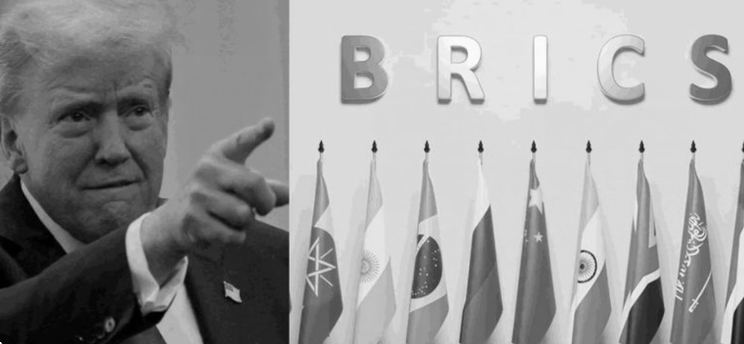
Can BRICS solve Iran’s war? That question is gaining urgency ahead of the September 12–13 BRICS Summit in New Delhi, where Iranian President Masoud Pezeshkian is expected to push Tehran’s diplomatic, economic and strategic interests as the conflict with the United States continues to destabilise the Gulf and wider West Asia.
For Iran, BRICS is no longer only an economic grouping. Tehran wants greater trade with India, stronger connectivity through Chabahar, alternative financial channels, national-currency trade and support for its bid to join the New Development Bank (NDB). Iranian Central Bank Governor Abdolnaser Hemmati has said Tehran wants deeper monetary cooperation with BRICS members and is preparing to join the NDB, although the bank has not independently confirmed Iran’s membership.
India is central to that strategy. Chabahar Port gives New Delhi access to Afghanistan and Central Asia while bypassing Pakistan and is an important part of the International North-South Transport Corridor. India and Iran have discussed fully operationalising the Shahid Beheshti terminal, Indian investment and the Chabahar-Zahidan rail connection. Tehran also sees India as a potentially important diplomatic bridge with Washington and Gulf countries.
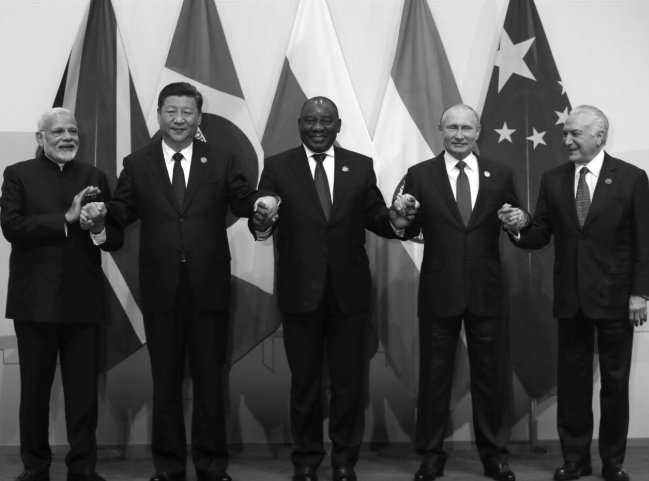
But BRICS faces a fundamental problem: the bloc itself is divided over Iran’s war. Iran and the UAE have sharply different positions on the West Asia conflict, and earlier BRICS ministerial talks failed to produce a joint statement. India, as chair, is now trying to bridge those differences and finalise the Delhi Declaration, with West Asia, Palestine, energy security, supply chains, national currencies and reform of global institutions among the major issues.
The urgency is being driven by a rapidly expanding regional conflict. Iran has threatened to establish a new restricted maritime zone in the Gulf, potentially extending from the US blockade perimeter, with vessels entering the zone potentially placed on an Iranian sanctions list. Tehran has also said it will not fully reopen the Strait of Hormuz while what it describes as US attacks, threats and sabotage continue. Iran and Oman are meanwhile working on a proposed shipping corridor through Iranian and Omani waters, with Tehran saying maps for the route are close to being signed.
Hormuz is crucial because it carries a major share of global oil and gas trade. Shipping traffic has already fallen sharply, while Iran has expanded its blacklist of vessels barred from the waterway. At the same time, traffic through Bab al-Mandab, the Red Sea gateway to the Gulf of Aden, has increased as shipping looks for alternatives.
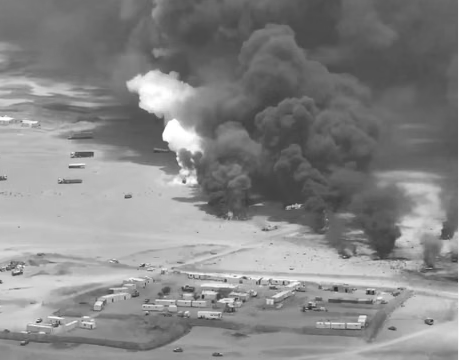
That second chokepoint has now become another major battlefield. Yemen’s Iran-aligned Houthis launched a large missile and drone attack on southern Saudi Arabia, targeting areas including Abha, Khamis Mushait, Jizan and Najran. Saudi authorities said 73 people, including women and children, were wounded. Energy facilities were hit, fires broke out and some operations were temporarily halted. Houthi claims included attacks on Saudi Aramco installations and the King Khalid air base.
The Jizan refinery, one of Saudi Arabia’s largest, has a capacity of about 400,000 barrels per day. The Houthis said their assault was retaliation for more than 120 Saudi strikes in Yemen over three days and threatened wider attacks. Saudi coalition spokesman Major General Turki al-Malki called the assault a dangerous escalation and said Riyadh would take necessary measures to defend its sovereignty and civilians.
The fighting is also spreading inside Yemen. The Houthis have accused Saudi Arabia of striking a prison in al-Hazm, killing seven people, while Riyadh has not commented on that allegation. The Houthis have declared a blockade against Saudi-linked shipping and are pushing towards areas around Bab al-Mandab and Mocha. More than 21,000 people have reportedly been displaced in the latest escalation, while the WHO has reported more than 1,000 people killed or wounded since late August.
Iranian commanders say domestic air-defence production is being accelerated following the recent 40-day war. Air Defence Commander Brigadier General Alireza Elhami has said indigenous systems were deployed during the conflict and claimed they helped bring down more than 200 enemy aircraft. That figure is an Iranian military claim and has not been independently verified. Iran says sanctions have forced it to develop domestic systems and that there are no major production bottlenecks.
Iran’s wider arsenal includes ballistic and cruise missiles and Shahed one-way attack drones. The strategic calculation is that Tehran can continue producing comparatively lower-cost missiles and drones while the US and its partners must spend expensive interceptors defending bases and ships.
That has created pressure on America’s missile-defence stocks. CSIS estimated that US Patriot interceptor inventories had fallen from about 2,330 before the war to 759–827, while THAAD stocks had declined from roughly 452 to 234–278 by late July. Analysts have warned that replenishing these systems could take years.
The Trump administration has pushed back against claims that the US is running dangerously short of weapons. President Donald Trump has said America has substantial ammunition reserves, particularly older and mid-level systems, while acknowledging tighter supplies of some advanced munitions. The Pentagon has simultaneously pressed defence companies to accelerate production.
The nuclear issue makes diplomacy even harder. The IAEA says it still lacks the information and access needed to verify Iran’s nuclear material and facilities, with Rafael Grossi warning that the situation is an urgent proliferation concern. Tehran has blamed the US and Israel’s attacks for the loss of access and insists its nuclear programme is peaceful. Western powers are now pushing for the issue to be referred back to the UN Security Council.
The Gulf states are also preparing for a prolonged crisis. The UAE has said its energy exports and trade cannot be held hostage and is expanding eastern ports, pipelines, rail links and alternative trade corridors. Emirati official Anwar Gargash has acknowledged that relations with Iran may eventually need to be restored, but said rebuilding trust will be much harder. Qatar, meanwhile, continues to stress the importance of its US alliance while arguing that Gulf countries need greater security self-reliance.
But BRICS has no NATO-style military command and cannot simply force Washington and Tehran to stop fighting. Its members are themselves divided, while India must balance its growing relationship with Iran against ties with the UAE, Saudi Arabia and the United States.