
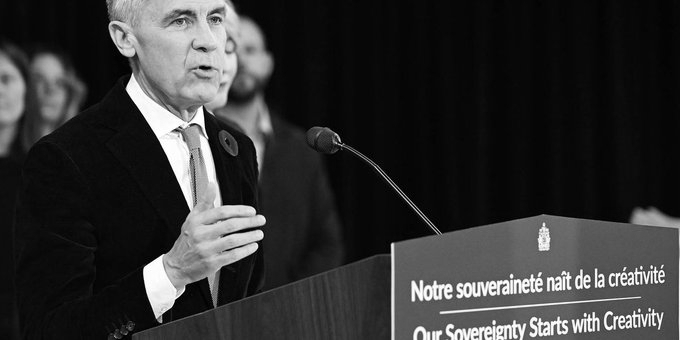
Carney Says Trump Remains Key To Canada-US Trade Deal Despite Democratic Midterm Wins
Canadian Prime Minister Mark Carney has said US President Donald Trump and his administration will remain the key decision-makers in Canada-US trade negotiations, despite Democrats' sweeping victories in last week's US midterm elections. His remarks indicate that Ottawa will continue engaging directly with the White House rather than relying on the incoming Democratic-controlled Congress.
Speaking to reporters in Montreal on Tuesday, Carney said the US executive branch would determine trade agreements over the next two to three years. “In a negotiation, it's always a good idea to have one negotiator,” he said, stressing that trade discussions remain the federal government's responsibility.
The Democratic victories have created a dilemma for Canada, which must decide whether to accept a deal that reduces but retains some Trump-era tariffs or hold out for a return to free trade. Democrats campaigned against the tariffs, arguing that they have contributed to higher prices. Senator Ron Wyden has also made repealing the duties a priority, although Trump could veto any legislation passed by Congress.
The US imposed 50 per cent tariffs on billions of dollars' worth of Canadian goods, prompting retaliatory measures from Ottawa. Canada suspended negotiations in August after Trump made demands involving Canadian sovereignty, cultural protections and French-language programming. Carney said some disagreements have since been resolved, but difficult issues remain.
Carney confirmed that he spoke with Trump over the weekend and could meet him at upcoming international summits. Trump had earlier claimed the two countries were close to an agreement.
Meanwhile, Carney criticised automaker Stellantis for shifting planned Jeep Compass production from its Brampton, Ontario, plant to Illinois, accusing the company of betraying Canadian workers.
Carney, who emerged as a prominent critic of Trump's economic policies after his January Davos speech, also said he would meet Chinese President Xi Jinping at next week's APEC summit in Shenzhen. He argued that Canada's economic relationship with China carries fewer security risks than Washington's broader relationship with Beijing.