
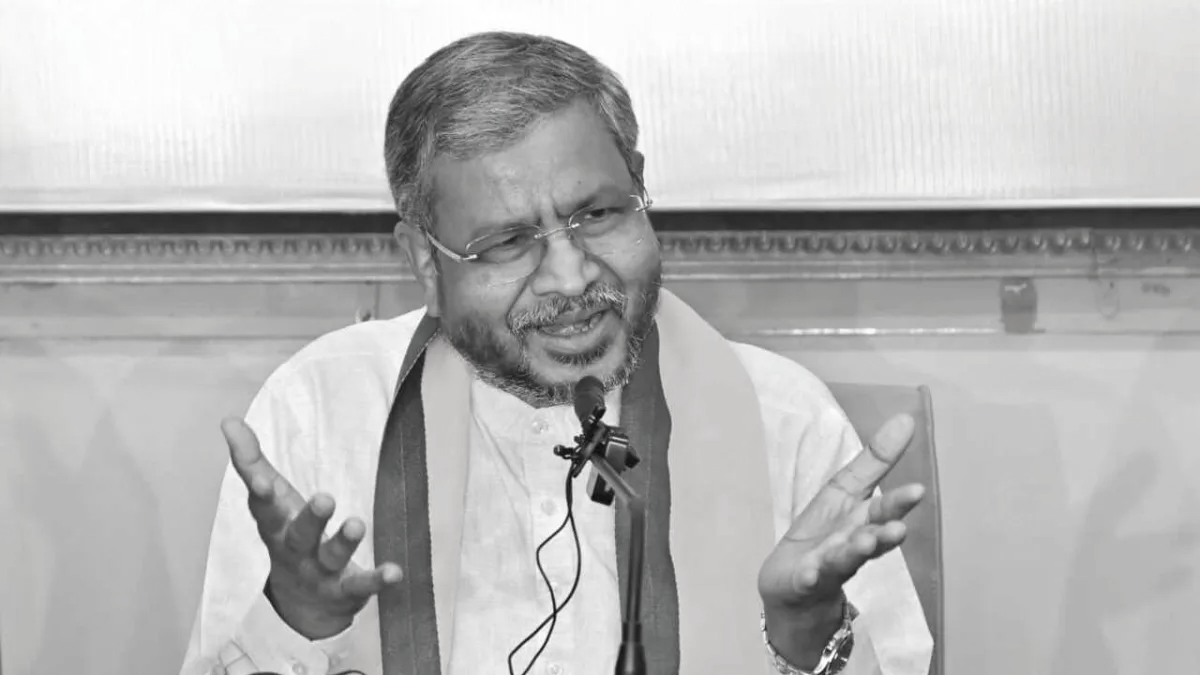
Case filed against LoP, 100 others over poll code violation in Jharkhand
An FIR has been lodged against Leader of the Opposition in the Jharkhand Assembly , Babulal Marandi , and nearly 100 BJP workers for allegedly violating the Model Code of Conduct (MCC) in Giridih district ahead of the civic polls today.
Marandi is a senior BJP leader and the first Chief Minister of Jharkhand , having served from 2000 to 2003 after the state was carved out of Bihar. He currently serves as the Leader of the Opposition in the state Assembly and remains one of the most prominent political figures in Jharkhand.
According to district officials, the complaint was filed on Saturday evening by a Flying Surveillance Team (FST) after Marandi was allegedly found holding a meeting with party workers inside a hotel in the Town police station area, hours after the campaigning deadline ended at 5 pm . Giridih Deputy Commissioner Ramniwas Yadav confirmed that a case had been registered at the Town police station following the complaint.
Police officials said the FIR names Marandi and around 100 others for reportedly organising or attending a meeting during the 48-hour silence period mandated before polling. Under Rule 127 of the Jharkhand Municipal Election and Election Petition Rules, 2012, and Section 126 of the Representation of the People Act, 1951, no public meeting can be called, organised or attended within 48 hours prior to the close of polls. The silence period came into effect in 48 urban local bodies across the state from 5 pm on Saturday.
Reacting to the allegations, Marandi dismissed the charge, stating that he had gone to the hotel restaurant for dinner. “Whenever a political leader visits a place for a meal, people gather automatically,” he told reporters, denying that he was conducting a meeting.
Polling for the urban local bodies will be held on February 23 , with counting scheduled for February 27 . Although ULB elections in Jharkhand are officially non-party contests without electoral symbols, candidates are openly backed by political parties, making the contest politically significant.