
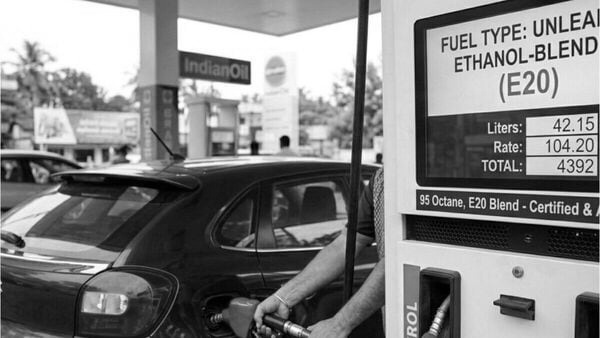
Centre Defends E20 Fuel, Says No Evidence of Engine Damage in Extensive Studies
The Centre on Thursday defended its Ethanol Blended Petrol (EBP) Programme, asserting that extensive scientific studies and large-scale field experience have found no evidence that E20 petrol causes abnormal engine wear, corrosion or reduced vehicle life, while maintaining that the initiative has strengthened India's energy security and helped shield consumers from global crude oil price shocks.
In a written reply in the Lok Sabha, Minister of State for Petroleum and Natural Gas Suresh Gopi said the programme was implemented through a phased and scientifically validated approach in consultation with NITI Aayog, the Automotive Research Association of India (ARAI), the Society of Indian Automobile Manufacturers (SIAM), oil marketing companies (OMCs) and automobile manufacturers.
The minister said more than 20 crore two-wheelers and over three crore petrol cars have been operating on E15 and E20 fuel blends for over two-and-a-half years without any verified evidence of widespread engine failures linked to ethanol blending. Service records from leading automobile manufacturers similarly reported no abnormal corrosion, component wear or reduction in vehicle life, with manufacturers continuing to honour warranty commitments.
The government added that E20 fuel offers higher octane, improved anti-knock performance, better combustion and lower emissions, contributing to cleaner and more efficient engine operation. Highlighting the economic rationale, Gopi said public sector OMCs procure ethanol to ensure adequate supply, support farmers and reduce dependence on imported crude, rather than maximise profits. He noted that despite an average under-recovery of around ₹11 per litre on petrol between March and June 2026, OMCs kept retail fuel prices below market levels.
Calling ethanol blending a strategic investment, the minister said the programme has helped cushion India against crude oil price volatility during the ongoing West Asian crisis. While global crude prices have risen 70-80 per cent since February 2026, domestic petrol prices increased by only 7-8 per cent, underscoring the role of biofuels in enhancing price stability, foreign exchange savings and long-term energy security, he added.