
Centre Gears Up for National VB-G RAM G Launch with 100 Officers
As India prepares for one of the biggest transformations in its rural employment architecture, the Centre has launched an extensive nationwide support mechanism to ensure a smooth transition to the Viksit Bharat–Guarantee for Rozgar and Ajeevika Mission (Gramin) (VB-G RAM G) Act, 2025 . The Ministry of Rural Development has announced the deployment of more than 100 Area Officers across States and Union Territories ahead of the Act's rollout on July 1, 2026 , marking the final stage of preparations for the ambitious programme.
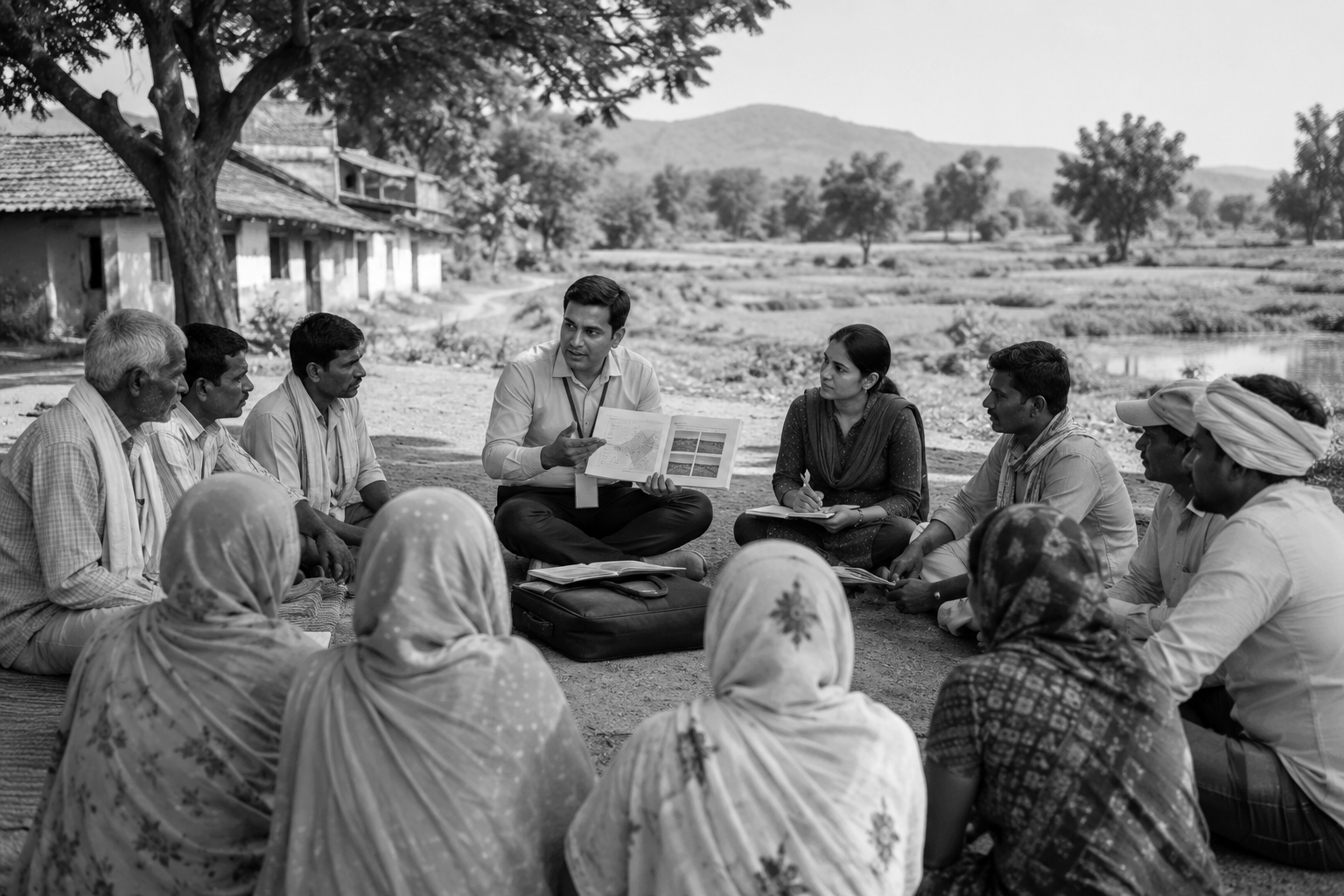
The officers will serve as facilitators and resource persons during the implementation phase, working closely with State Governments, district administrations and field-level officials. Their role will be to strengthen local capacities, facilitate knowledge sharing, support implementation efforts and help resolve operational challenges that may arise during the transition. The initiative is aimed at ensuring seamless coordination among stakeholders and smooth operationalisation of the new framework across the country.
To prepare them for this responsibility, the Department of Rural Development organised a dedicated orientation programme covering the Act's provisions, implementation framework, institutional arrangements and technology-enabled governance systems. The programme was chaired by Rohit Kansal , Secretary, Rural Development, while Rohini R. Bhajibhakare , Joint Secretary, conducted the orientation sessions.
The deployment assumes significance because the VB-G RAM G Act represents the most substantial reform of India's rural employment system since the launch of MGNREGA in 2005. The new legislation seeks to move beyond a wage-employment programme and transform rural employment into a broader engine of sustainable rural development . It integrates guaranteed employment with livelihood promotion, climate resilience, rural infrastructure creation and digital governance.
A key feature of the new law is the increase in the annual employment guarantee from 100 days to 125 days per rural household , offering enhanced livelihood security for millions of rural families. The Act also introduces Viksit Gram Panchayat Plans (VGPPs) , GIS-based planning tools and convergence of multiple development schemes to create durable community assets and improve rural productivity.
The government has already undertaken extensive preparations ahead of the rollout. An interim allocation of ₹95,692 crore for FY 2026-27 has been approved, underscoring the scale of the programme. All States and Union Territories have been onboarded onto the DBT-SPARSH platform to ensure direct benefit transfers, while nearly 93 per cent of active workers have completed e-KYC verification. A nationwide Face Authentication-based Attendance System has also been rolled out to improve transparency and accountability.
According to official data, 27 States and Union Territories have already made budgetary provisions for implementing the Act, while six States/UTs have notified their State Schemes under the new framework. The remaining administrations are in advanced stages of finalising their implementation plans.
The Area Officer initiative is expected to play a critical role in bridging the gap between policy and implementation. By providing continuous institutional support on the ground, the officers will help States and districts navigate the transition and ensure that the programme's objectives are effectively translated into outcomes. As the country moves closer to the July 1 launch, the success of the VB-G RAM G framework will be closely watched as a key component of the broader Viksit Bharat @2047 vision for inclusive and sustainable rural development.