
China Achieves First Controlled Recovery of Orbital Rocket Booster More Than a Decade After SpaceX
China on Friday achieved a major milestone in its space programme by successfully recovering the first-stage booster of the Long March-10B , becoming the country's first successful controlled recovery of an orbital-class reusable rocket booster.
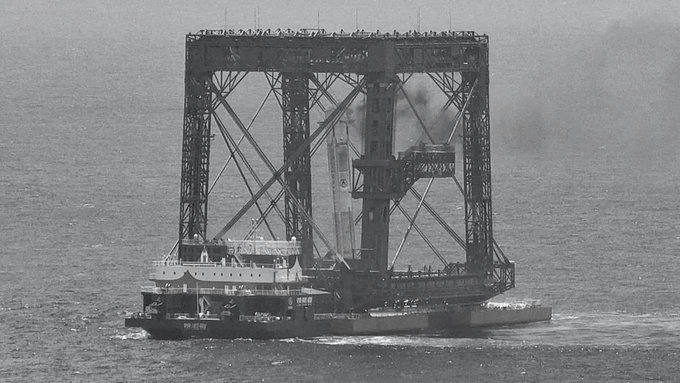
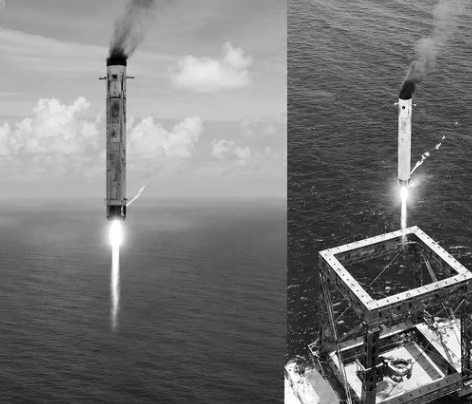
The Long March-10B lifted off from south China's Hainan Province and successfully placed its payload into the designated orbit, according to state-run Xinhua . After separating from the second stage, the first-stage booster descended back toward Earth and was captured on a sea-based recovery platform using a specially designed net-capture system . Both the launch and the recovery were completed successfully.
For many readers, a reusable rocket booster can be compared to the engine section of a rocket that provides most of the thrust needed to lift the vehicle off the ground. Traditionally, these boosters are discarded after a single flight, often falling into the ocean or burning up in the atmosphere. A reusable booster is designed to return safely so it can be inspected, refurbished and flown again, helping to reduce launch costs and making future missions more economical.
The achievement comes more than a decade after SpaceX , founded by Elon Musk , became the first company to successfully recover an orbital-class booster in December 2015 . That breakthrough changed the global space industry by demonstrating that large rockets could be reused multiple times instead of being thrown away after every launch.
China has been pursuing similar technology for several years. Last year, two Chinese reusable rockets attempted SpaceX-style vertical landings using grid fins and landing legs, but both efforts ended unsuccessfully. Friday's mission is therefore being viewed as a significant technological breakthrough for the country's rapidly expanding commercial space sector.
The reusable liquid-fuelled Long March-10B stands about 63 metres tall and five metres in diameter, with a lift-off thrust of roughly 890 tonnes and a launch mass of around 760 tonnes . In its reusable configuration, it can carry up to 16 tonnes to low-Earth orbit , underscoring China's growing ambitions in the increasingly competitive global space race.