
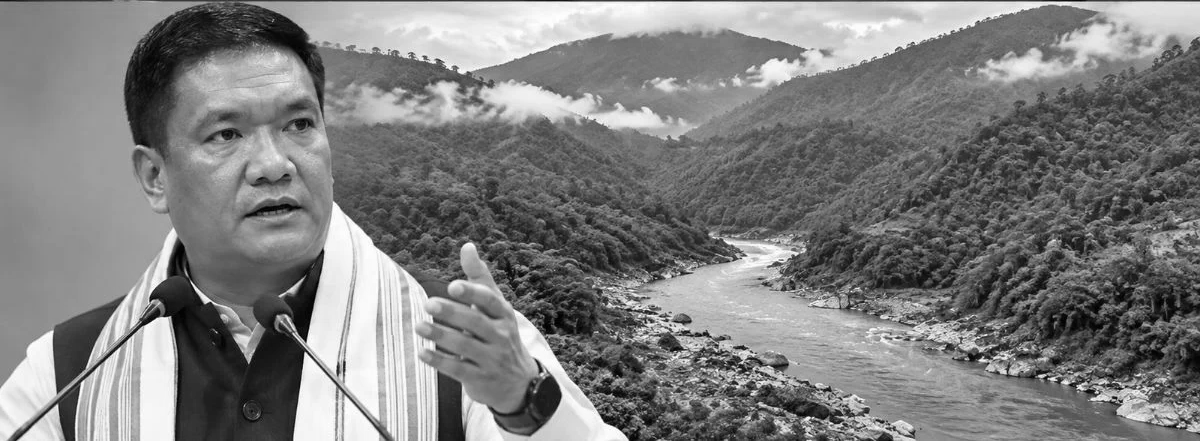
China's 60,000-MW Dam Plan Raises Alarm, Arunachal CM Defends ₹2 Lakh Cr Siang Project
Arunachal Pradesh Chief Minister Pema Khandu has described the proposed ₹2 lakh crore Siang Upper Multipurpose Project (SUMP) as a strategic necessity for India's water security and defence, citing concerns over China's reported plan to build a massive hydropower project on the Yarlung Tsangpo river in Tibet.
Khandu said the Indian project was primarily intended to regulate and monitor upstream water flows rather than generate electricity, helping protect downstream regions from possible disruptions.
China is reportedly planning a 60,000-MW hydropower project on the river, which flows through Arunachal Pradesh as the Siang, Assam as the Brahmaputra and Bangladesh as the Jamuna. Beijing has included the project in its five-year plan and reportedly laid its foundation stone in 2025. However, it has not shared sufficient details despite requests from India and Bangladesh.
Khandu pointed to the absence of a binding international water-sharing framework as a major concern. The proposed SUMP would have a storage capacity of around 9.2 billion cubic metres (BCM), against the reported 5.2 BCM capacity of China's project, allowing India to regulate flows and respond to changes in water discharge.
Designated a national project in 2008, SUMP made little progress for years. Momentum picked up after China's leadership visit to the region in 2021 and the inclusion of its mega dam proposal in its development plan.
The project has faced strong local opposition, with protests witnessing violence, damage to public and private property and deployment of security personnel. Khandu acknowledged that the government had not adequately explained the project's implications and said committees were engaging community organisations, student bodies and youth groups.
He clarified that the pre-feasibility report (PFR) was only an initial technical exercise, not final approval for construction, and villages need not sign MoUs for it. Detailed studies, followed by Social and Environmental Impact Assessments, would establish affected villages, properties and backwater extent. He promised compensation for land, homes and agricultural and horticultural assets, along with rehabilitation packages.
Khandu said people were free to support or oppose the project, but intimidation and coercion would not be tolerated. He also urged the media to present different viewpoints and avoid misinformation.