
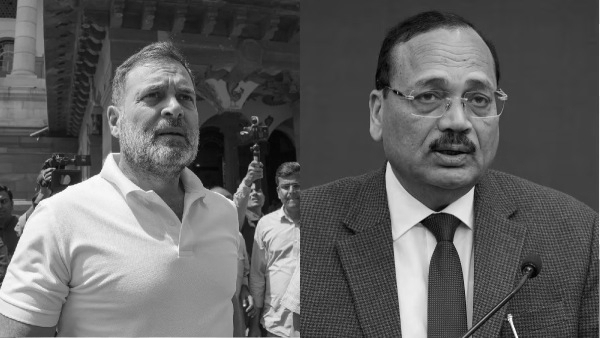
CJI Surya Kant Declines Rahul Gandhi’s Request for Meeting Over ‘Vote Chori’
Chief Justice of India Surya Kant has declined to meet Congress leader Rahul Gandhi over allegations of “vote chori”, citing similar matters pending before the Supreme Court, sources said.
Gandhi and Congress president Mallikarjun Kharge, the Leaders of Opposition in the Lok Sabha and Rajya Sabha, respectively, had sought an appointment with the CJI between 4 pm and 5 pm on Monday to submit a memorandum outlining their demands.
The memorandum called for an end to alleged electoral malpractice, the resignation of Chief Election Commissioner Gyanesh Kumar, suspension of the Special Intensive Revision (SIR) of electoral rolls, and a return to paper ballots.
Responding to Gandhi’s request, the CJI said administrative proceedings could not be used to pass judicial orders and advised the Congress leader to approach the court through a petition, which could be considered on Tuesday, the sources said.
The CJI also emphasised that the Supreme Court remained accessible to citizens whose fundamental rights were violated. He reportedly said the court could not interfere with executive functions through its administrative side.
Meanwhile, opposition parties have announced a march to the Supreme Court on Monday to press their demands. The Congress has named the protest “Chalo Delhi – March for Democracy”, with participants scheduled to assemble at the Connaught Place-Barakhamba Road junction at 1.30 pm.
In a post on X, Gandhi said the march would bring together people across political affiliations, gender, caste, community and state boundaries. He also condemned the alleged use of force against young protesters during demonstrations in Delhi on Saturday. Earlier, INDIA bloc leaders had marched from Parliament to Vijay Chowk and submitted a memorandum to President Droupadi Murmu.
Speaking in Bengaluru, Kharge accused Prime Minister Narendra Modi and Union Home Minister Amit Shah of creating turmoil in the country. He also alleged that police deployment and detentions during the protests reflected the government's apprehension over the youth-led agitation.
The opposition has continued to demand greater accountability in electoral processes and changes to the ongoing voter-roll revision exercise.