
Colonial Traditions Out, Indian Identity In: Army Introduces New Uniform Manual
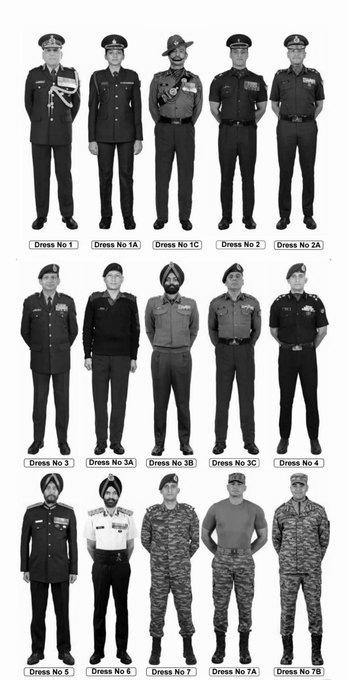
The Indian Army has introduced a sweeping overhaul of its dress regulations with the release of the 174-page "Army Uniforms-2026" manual , marking one of the most significant revisions to military attire and grooming standards in recent years. The changes are being viewed as part of a broader effort to align the Army's traditions with India's cultural identity while moving away from several practices inherited from the colonial era.
Among the most notable changes is the introduction of the closed-neck bandi jacket as an approved formal dress option for officers. Inspired by traditional Indian attire, the jacket replaces some Western-styled ceremonial elements and reflects a growing emphasis on indigenous symbolism within the armed forces. The Army has also redesigned its winter dress regulations, introducing the Angola shirt and trouser uniform along with berets for all ranks , creating greater uniformity, comfort and practicality.
Several long-standing ceremonial practices have been discontinued. The use of ceremonial pouch belts has been removed from multiple dress categories, while reviewing officers will no longer be required to carry swords during parades and formal inspections . The manual also drops colonial-era terminology, including the use of the word "royal" in various references, signalling a conscious effort to reshape military traditions around Indian rather than British heritage.
The updated regulations impose stricter grooming standards as well. Detailed norms govern moustache length, hairstyles, tattoos and overall personal appearance . Visible cosmetics, strong perfumes and flashy accessories have been discouraged to maintain a professional and uniform military image. Clear guidelines have also been issued on personal grooming and presentation, reinforcing the Army's emphasis on discipline and standardisation .
At the same time, the revised manual introduces greater flexibility for women officers . They will now have the option of wearing sober-coloured sarees or kurta-salwar combinations with dupattas during authorised occasions, reflecting a more inclusive approach while retaining the dignity and decorum expected in military settings.
Officials have linked the reforms to Prime Minister Narendra Modi's 2021 call to eliminate colonial-era practices and symbols from national institutions. The changes also complement the Army's wider indigenisation drive , which has seen increasing adoption of Indian traditions, symbols and domestically developed systems across the force. Public reaction has largely been positive, with many viewing the reforms as a blend of tradition, practicality and national pride that reflects the evolving identity of a modern and self-confident Indian Army.