
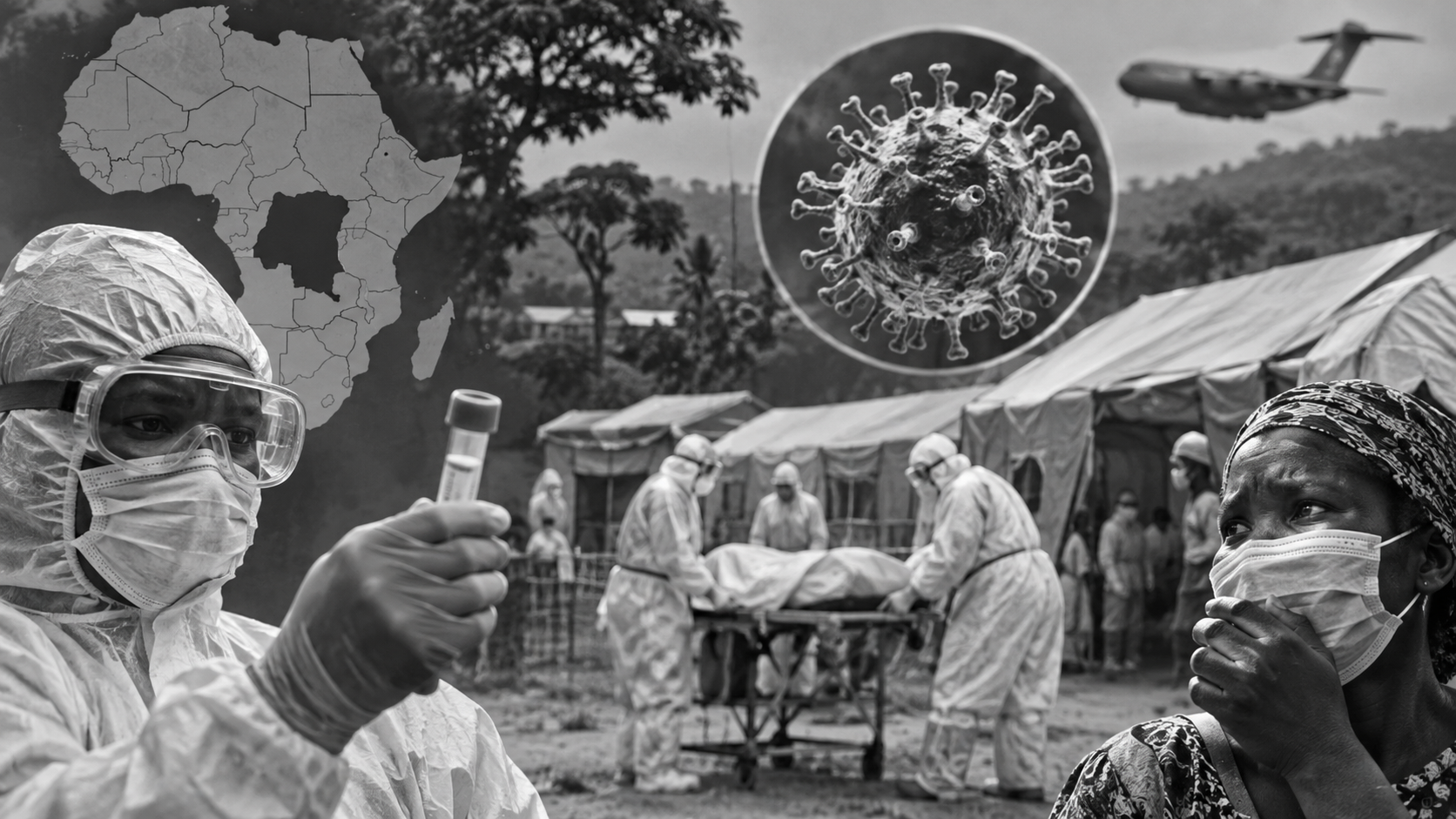
Congo Ebola Outbreak Becomes Second Deadliest in History, Claims 5,026 Lives
The Ebola outbreak in the Democratic Republic of Congo (DR Congo) has entered a critical phase, with the death toll crossing 5,000 and infections exceeding 10,000, raising serious concerns over the ability of health authorities to contain the disease. The latest government figures released on October 31, 2026, show that 5,026 people have died out of 10,351 infected, representing a fatality rate of nearly 50 per cent. Caused by the Bundibugyo virus, the outbreak has also spread beyond Congo, raising fears of wider transmission across Africa.
Declared in mid-May, the outbreak has become the second-deadliest Ebola outbreak in history, behind the 2014–2016 West Africa epidemic, which killed approximately 11,000 people. The disease has spread across 67 health zones in eight Congolese provinces, with Ituri and North Kivu among the worst-affected regions. Difficulties in identifying infection sources have complicated containment, with nearly 80 per cent of new cases reportedly emerging outside monitored transmission chains.
Conflict, displacement, inadequate healthcare facilities and attacks on medical personnel have further disrupted response operations. Shortages of medical supplies, healthcare worker strikes and community distrust have also hindered contact tracing and early treatment. Nearly one-third of reported deaths occurred before patients could access healthcare facilities, highlighting the challenges of reaching vulnerable communities.
The outbreak has raised international concerns after cases were reported in Uganda, France, Kenya and Nigeria. Kenya recorded an imported case in October involving a traveller from Congo through Uganda, while Nigeria confirmed an imported case in Abuja on October 20. Uganda has introduced a 21-day quarantine requirement for citizens returning from Congo to strengthen border surveillance and prevent further transmission.
The WHO and Africa CDC have intensified their response, following the launch of a $518 million emergency plan in June. WHO Director-General Tedros Adhanom Ghebreyesus also visited Congo to assess containment efforts and healthcare requirements.
Meanwhile, vaccine research and treatment trials have gained urgency. Congo received 70,000 Ervebo vaccine doses in August, with vaccination efforts subsequently targeting frontline workers in Bunia. However, Ervebo is not licensed specifically against the Bundibugyo strain. The WHO-backed PARTNERS clinical trial is evaluating MBP134 and remdesivir as potential treatments. Russia has also announced an experimental vaccine, although its effectiveness requires scientific validation.
India has strengthened travel surveillance and airport screening, including precautionary measures in Hyderabad, Kerala and Andhra Pradesh. Suspected cases reported at Hyderabad's Gandhi Hospital subsequently tested negative. India also delivered 45 tonnes of medical supplies to Uganda through an Indian Air Force C-17 aircraft.