
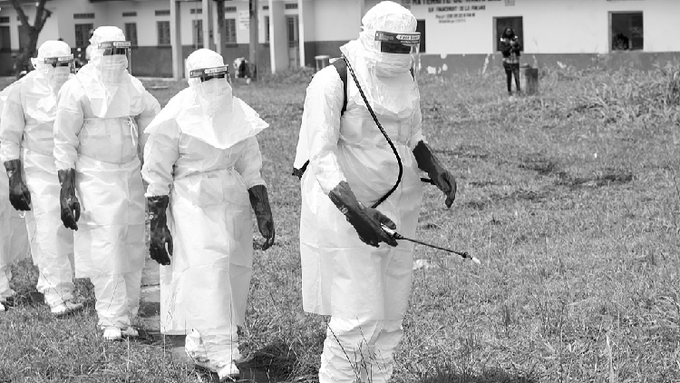
Congo's Ebola Crisis Deepens: Over 11,000 Cases Recorded as Six-Month Response Falters
Six months after an Ebola outbreak was declared in the Democratic Republic of Congo, the deadly virus continues to spread, with health authorities struggling to contain infections amid inadequate surveillance, funding concerns, armed conflict and shortages of medical staff.
More than 11,000 cases have been recorded, with nearly half of those infected dying, according to government data. The outbreak has become the deadliest among Congo's 17 recorded Ebola outbreaks and threatens to surpass the West African epidemic of 2014-2016, which claimed around 11,000 lives.
The scale of the crisis is compounded by weak contact tracing and isolation measures. According to the Africa Centres for Disease Control and Prevention, around 80 per cent of new cases are being detected outside the health surveillance system, indicating that most infections are going untracked.
The virus has spread to eight of Congo's 26 provinces, with new infection hotspots continuing to emerge. Nearly one-third of deaths are occurring at homes or in communities, where burials and other procedures without specialist supervision increase the risk of further transmission.
The response has also been hit by funding and management concerns. The Africa CDC recently questioned the whereabouts of more than USD 700 million in Ebola response funds. Meanwhile, health workers have repeatedly gone on strike over months of unpaid salaries, leaving some infected patients without proper treatment.
Children are among the worst affected. UNICEF data show that they accounted for 35 per cent of recorded deaths through November 4. Children below five made up 21 per cent of all deaths, while nearly 72 per cent of infected children in this age group died.
The situation is further complicated by armed conflict in eastern Congo, particularly in Ituri and North Kivu. Attacks on health workers and medical facilities have disrupted containment efforts.
Cases have also been confirmed in Nigeria, Kenya and Uganda, making this the most geographically widespread Ebola outbreak on record. Experts warn that bringing the epidemic under control could take more than a year.