
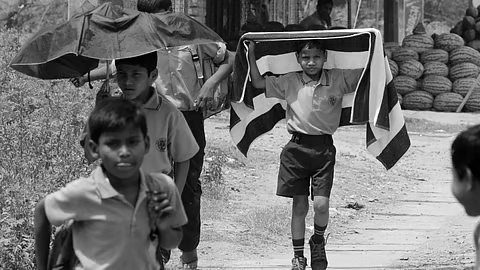
CRY Report: Nearly 7 in 10 Indian Children Missed School During 2026 Heatwave
India's brutal summer of 2026 has left a lasting mark on millions of school going children, with a new report revealing that nearly seven in ten children across the country missed school or routine activities because of extreme heat during May and June . The findings come from child rights NGO CRY , whose assessment titled "Feeling the Heat: Children's Voices on Heat, Well Being and Learning in India" surveyed 3,096 children aged 10 to 17 across 27 states and Union Territories .
The numbers paint a striking picture of a generation quite literally sweating through its education. As many as 88 percent of children said this summer felt hotter than any previous year, while 68 percent reported skipping school or daily routines due to heat related distress. Even those who did make it to class struggled to focus, with 76 percent admitting the heat directly hurt their ability to concentrate on studies. Afternoons emerged as the most brutal stretch of the day for 47 percent of respondents, while over 45 percent said school hours themselves had become unbearably uncomfortable.
India endured repeated heatwave conditions through the summer, with temperatures crossing 45 degrees Celsius in several states, forcing many schools to revise timings, cut outdoor activities, or shut down entirely for stretches at a time. This is not an isolated spike either. According to the India Meteorological Department's Annual Climate Statement 2025 , 2024 stands as India's warmest year since records began in 1901 , while the decade spanning 2016 to 2025 has been confirmed as the country's hottest ever recorded.
Beyond missed classes, the report exposes a worrying health toll on young bodies. Roughly 63 percent of children reported experiencing dehydration , 51 percent suffered from headaches , and 44 percent described extreme fatigue during peak heat periods. The crisis followed children home too, with over half reporting frequent power cuts or overheated living spaces, and nearly three in ten facing water shortages on top of it all.
Perhaps most troubling is the report's spotlight on inequality. Children from daily wage and manual labour households bore the heaviest burden, with 71 percent reporting severe heat related distress compared to just 46 percent among children from more economically stable families, a gap that lays bare how climate stress hits the most vulnerable hardest.